Req 3c — Meal Timing
One of the hardest things about cooking is not the cooking itself — it is getting everything done at the same time. Cold mashed potatoes next to a perfectly cooked steak is not a great meal. Timing is what separates a good cook from a great one.
The Backward Planning Method
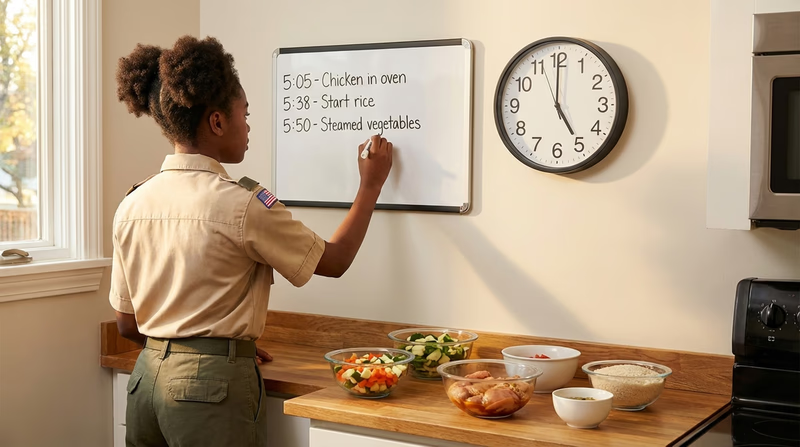
Professional chefs use backward planning — they start with the time they want to serve the meal and work backward to figure out when to start each dish.
Here is how it works:
- Set your serving time. “Dinner is at 6:00 PM.”
- List every dish you are preparing and how long each one takes to cook (plus any prep time like chopping, marinating, or preheating).
- Identify the longest item. This is the dish you start first.
- Work backward from 6:00 PM, scheduling when to start each dish so they all finish around the same time.
Example: A Simple Dinner
| Dish | Prep Time | Cook Time | Total | Start By |
|---|---|---|---|---|
| Baked chicken | 10 min | 45 min | 55 min | 5:05 PM |
| Steamed broccoli | 5 min | 8 min | 13 min | 5:47 PM |
| Rice | 2 min | 20 min | 22 min | 5:38 PM |
| Salad | 10 min | 0 min | 10 min | 5:50 PM |
By mapping it out, you can see that the chicken goes in the oven first, the rice starts about 20 minutes later, the broccoli starts toward the end, and the salad is assembled last. Everything hits the table at 6:00.
Tips for Managing Meal Timing
Start with prep work (mise en place). “Mise en place” is a French term that means “everything in its place.” Before you turn on a single burner, chop all your vegetables, measure your spices, open your cans, and lay out your tools. This eliminates last-minute scrambling and lets you focus on cooking.
Know your equipment. If you only have one oven and two burners, you cannot bake chicken, boil pasta, and pan-fry vegetables all at the same time unless you plan the sequence carefully. At camp, you might have one stove and one fire — plan your cooking order around what is available.
Use resting time wisely. Many meats need to “rest” for 5–10 minutes after cooking (this lets the juices redistribute). Use that resting time to finish side dishes, set the table, or plate the food.
Account for preheating. Ovens take 10–15 minutes to reach temperature. Grills take 15–20 minutes. Charcoal needs 20–30 minutes to become hot coals. Build these times into your plan.
Timing at Camp
Meal timing at camp is even more challenging because you have less control. Fire takes time to build. Wind can cool things down. You may be sharing cooking equipment with other patrol members. Planning ahead — and building in extra time — is critical.
You will put these timing skills into practice in Req 4e when you time your home cooking, and again in Req 5 when you cook for your patrol outdoors.