Req 4a — Menu Planning
This is where everything comes together. You have learned about food groups, nutrition labels, cooking methods, and food safety. Now you are going to plan real meals for real people — starting with three full days of home cooking.
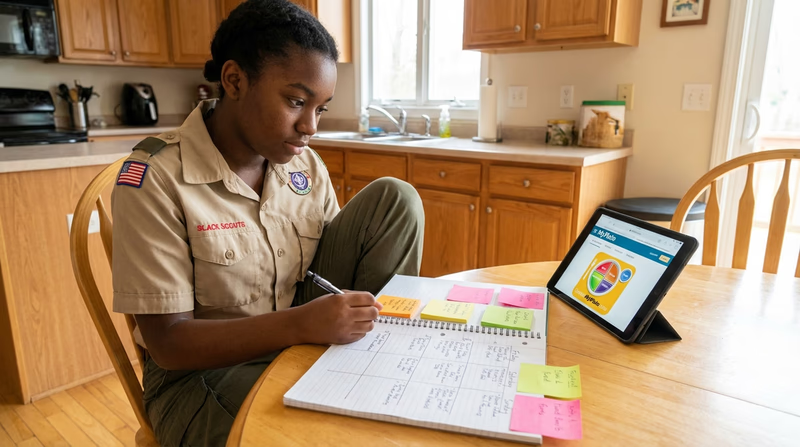
Building Your Menu Plan
Planning a menu is like solving a puzzle. You need every piece to fit: nutrition, safety, variety, skill level, available equipment, and the preferences of the people you are feeding.
Step 1: Know Your Audience
Before you plan a single meal, talk to the adult (or adults) you will be serving. Find out:
- Do they have any food allergies or intolerances? (Review Req 1d)
- Are there foods they strongly dislike?
- Are there dietary restrictions (vegetarian, low-sodium, diabetic)?
Write these down and keep them visible while you plan.
Step 2: Use MyPlate as Your Framework
For each meal, make sure your plate includes:
- A serving of protein (meat, fish, eggs, beans, or nuts)
- A serving of grains (preferably whole grains)
- A serving of fruits and/or vegetables (aim for half your plate)
- A serving of dairy (milk, yogurt, cheese, or a fortified alternative)
Not every single meal needs to be perfectly balanced, but your overall daily intake should cover all five food groups in the recommended amounts you learned in Req 2a.
Step 3: Plan for Variety
Three days of meals means nine meals plus a dessert. Avoid repeating the same protein, grain, or cooking method across meals. This is also your chance to use at least five of the ten cooking methods from Req 3a — plan your menus around the methods you want to practice.
Meal Planning Template
Here is a framework to organize your thinking. You will fill in your own choices:
| Day 1 | Day 2 | Day 3 | |
|---|---|---|---|
| Breakfast | |||
| Lunch | |||
| Dinner | |||
| Dessert | (plan 1 dessert for any day) |
For each meal, write down:
- The dish name
- Which food groups it covers
- Which cooking method(s) you will use
- Any food safety considerations (especially for raw meats, eggs, and dairy)
Equipment and Utensils List
The requirement asks you to list the equipment and utensils needed. Think through each meal and write down everything you will need to prepare, cook, and serve it.
Common Kitchen Equipment
Check which items you need for your planned meals
- Cutting board and knife
- Measuring cups and spoons
- Mixing bowls
- Pots (small, medium, large)
- Skillets/frying pans
- Baking sheets and baking pans
- Oven mitts and pot holders
- Spatula, tongs, wooden spoon, ladle
- Colander/strainer
- Food thermometer
- Can opener
- Grater
- Whisk
Do not forget serving equipment — plates, bowls, cups, napkins, and utensils for the table.
Food Safety in Your Plan
Your menu plan should show your counselor that you are thinking about safety at every step. For each meal, note:
- How you will store perishable ingredients before cooking (refrigeration)
- How you will prevent cross-contamination (separate cutting boards for raw meat, handwashing)
- The safe internal cooking temperatures for any meats, poultry, or eggs
- How you will handle leftovers (refrigerate within 2 hours)