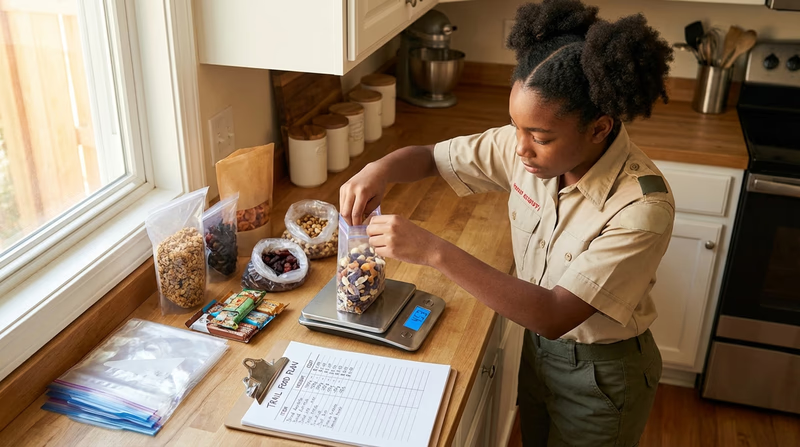
Req 6b — Trail Shopping List
Trail food shopping is different from grocery shopping for home cooking. You are optimizing for weight and shelf stability, not just taste and nutrition. Every item on your list needs to earn its place in your pack.
Building Your Trail Shopping List
Go through each of your four meals and one snack. For every ingredient, write down:
- The exact amount needed (per person × number of people)
- The weight of that amount
- The cost
Example for a group of 4:
| Meal | Item | Amount | Weight | Cost |
|---|---|---|---|---|
| Breakfast | Instant oatmeal packets | 8 packets (2 per person) | 12 oz | $4.00 |
| Breakfast | Dried fruit | 1 cup | 4 oz | $2.00 |
| Breakfast | Mixed nuts | ½ cup | 3 oz | $1.50 |
| Lunch | Tortillas | 8 (2 per person) | 14 oz | $3.00 |
| Lunch | Peanut butter | 8 tbsp | 5 oz | $1.50 |
| Lunch | Honey packets | 8 packets | 2 oz | $2.00 |
| Dinner | Instant rice | 4 cups dry | 12 oz | $2.50 |
| Dinner | Tuna packets | 4 packets | 10 oz | $6.00 |
| Dinner | Dried veggie mix | 1 cup | 2 oz | $3.00 |
| Snack | Trail mix | 2 cups | 8 oz | $4.00 |
Calculating Total Weight
Add up the weight column to get your total food weight. For a one-day trip with 3–5 people, aim for about 1.5–2 pounds of food per person per day. This gives you roughly 2,500–3,000 calories per person — enough to fuel a day of hiking.
Calculating Cost Per Meal
Just as you did for camp cooking, add up the ingredient costs for each meal and divide by the number of people to get a per-person cost. Trail meals tend to be inexpensive — $2–5 per person per meal is typical for simple backpacking food.
Smart Shopping for Trail Food
- Check the bulk bins. Many grocery stores sell nuts, dried fruit, oatmeal, and trail mix by the pound — you buy exactly what you need, reducing waste and cost.
- Compare fresh vs. dried. Dried and dehydrated options are lighter but can be more expensive per serving. Balance weight savings against budget.
- Don’t forget fuel. Add the cost of stove fuel (a small canister is usually $5–8) and any water purification supplies to your total.