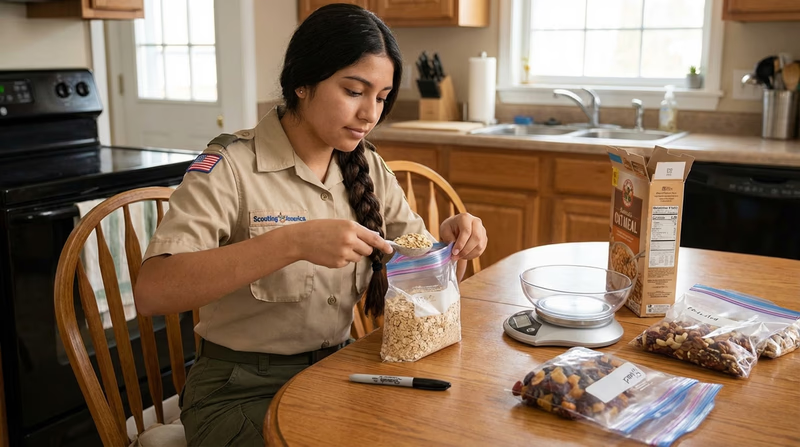
Req 6c — Repackaging & Reducing Waste
6c.
Share and discuss your menu and shopping list with your counselor. Your plan must include how to repackage foods for your hike or backpacking trip to eliminate as much bulk, weight, and garbage as possible.
Repackaging is one of the smartest things you can do before a trail trip. Store packaging is designed to look good on a shelf — not to be carried on your back. By repackaging at home, you cut weight, reduce bulk, and minimize the trash you have to pack out.
Why Repackage?
- Reduce weight. Cardboard boxes, glass jars, and rigid plastic containers add ounces that you do not need to carry.
- Reduce bulk. A box of crackers takes up far more space than the same crackers in a zip-lock bag.
- Reduce garbage. Less packaging on the trail means less trash to pack out. Trail cooking already generates less waste, and repackaging pushes that number even lower.
- Simplify preparation. Pre-mix ingredients at home (like oatmeal with dried fruit and brown sugar) so you just add hot water on the trail.
Repackaging Techniques
Zip-lock bags are the most common repackaging tool. They are lightweight, sealable, and can be squeezed flat to eliminate air.
- Transfer dry goods (oatmeal, rice, pasta, trail mix, spices) from boxes and heavy bags into quart- or gallon-size zip-lock bags.
- Write the contents and preparation instructions on the bag with a permanent marker.
- Squeeze out as much air as possible before sealing.
Pre-mixing meals saves time and reduces the number of items you need to carry:
- Combine instant oatmeal, dried fruit, brown sugar, and powdered milk in one bag — just add hot water.
- Pre-mix spice blends so you have one bag instead of five separate spice containers.
- Combine instant rice with a dehydrated sauce mix in one bag.
Remove excess packaging layers:
- Take crackers out of the cardboard box but leave them in the inner sleeve.
- Remove energy bars from the display box but keep them in individual wrappers.
- Transfer peanut butter from a heavy jar to a lightweight squeeze tube or small container.
- Repackage cooking oil into a small, leakproof bottle instead of carrying a full-size bottle.
What to Discuss with Your Counselor
When you present your trail plan, your counselor will want to see:
- Your complete menu (breakfast, lunch, dinner, snack) for 3–5 people
- Your shopping list with quantities, weights, and costs
- Your repackaging plan — which items you will repackage and how
- Your waste reduction strategy — how much trash you expect to generate and how you will pack it out
Repackaging Checklist
Do this at home before the trip
- All dry goods transferred to zip-lock bags
- Pre-mixed meals assembled and labeled
- Cooking instructions written on each bag
- Excess packaging discarded at home (not on the trail)
- Liquids (oil, sauces) in leak-proof containers
- All items weighed and weight recorded
- A designated “trash bag” packed for trail waste