Req 6f — Load Sharing & Food Storage
On the trail, nobody should carry everything — and nobody should carry nothing. Distributing the load fairly is a leadership skill, and storing food properly is a safety imperative.
Dividing the Load
The goal is to distribute food and cooking equipment so that everyone carries a fair share and no one is overburdened. Here is how to approach it:
Step 1: Weigh Everything
Before the trip, lay out all group food and cooking equipment and weigh each item. Divide the total weight by the number of people to get a target weight per person.
Step 2: Distribute Thoughtfully
Not everyone in your group is the same size or fitness level. Consider these factors:
- Larger, stronger hikers can carry slightly more group weight.
- Smaller or less experienced hikers should carry slightly less — but still contribute.
- Everyone carries some food. If one person carries all the food and gets separated from the group, nobody eats.
- Spread critical items. The stove should be in one pack, the fuel in another, and the pot in a third. If someone falls behind, the group can still function.
Step 3: Reassess During the Hike
As food gets eaten, the weight distribution changes. At rest stops or after meals, shift remaining food to rebalance the load. The person who carried the heaviest food item for the morning hike should carry less in the afternoon.
Cleaning the Cooking Area
Trail kitchen cleanup follows the same Leave No Trace principles from Req 5h, but in a more austere environment:
Trail Kitchen Cleanup
Complete these before breaking camp
- Scrape all food scraps into your trash bag (never scatter or bury them)
- Wash cookware with a small amount of water and biodegradable soap
- Strain dishwater through a bandana to catch food particles; pack out the particles
- Scatter strained gray water broadly, at least 200 feet from water sources
- Inspect the cooking area — pick up any micro-trash (tiny wrappers, crumbs, bits of foil)
- If you used a fire, ensure it is completely out — drown, stir, and feel
- Leave the area looking as if no one was ever there
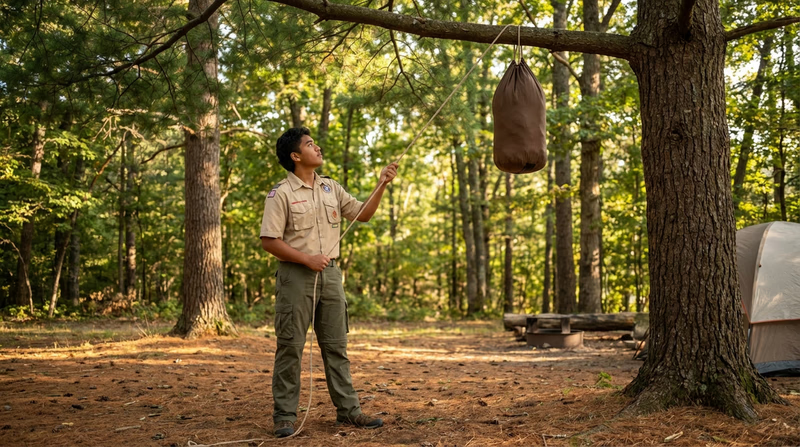
Storing Food from Animals
Wildlife will find your food if you do not protect it. Animals have a much stronger sense of smell than humans, and once they learn to associate hikers with food, they become dangerous nuisances.
Bear Canister
- A rigid, animal-proof container that you carry in your pack.
- Required in many wilderness areas (check regulations).
- Store at least 100 feet from your sleeping area on the ground — not hung from a tree (bears can get to hung canisters).
Bear Bag (PCT Method or Counterbalance)
- A stuff sack hung from a tree branch using a rope system.
- The bag should hang at least 12 feet off the ground, 6 feet from the tree trunk, and 5 feet below the branch.
- This method takes practice — learn it before your trip.
Bear Box (Where Available)
- Some established campsites and trail shelters have metal bear boxes.
- Store all food, trash, and scented items inside and latch it securely.
What Your Counselor Wants to Hear
When discussing this requirement, explain:
- How you divided food and equipment — what each person carried and why.
- How you cleaned your cooking area — what specific steps you took.
- How you stored food overnight — which method you used and why.
- What you would change — did your load distribution feel fair? Was your food storage effective?