 Getting Started
Introduction & Overview
A bike disappears from an unlocked garage. A classmate’s social media account gets hacked. A neighbor’s package vanishes from their porch. Crime touches every community — and preventing it starts with people like you who pay attention, speak up, and take action.
The Crime Prevention merit badge goes beyond understanding what crime is. It equips you with practical tools to make your home, school, neighborhood, and online life safer. You will learn how laws protect communities, how physical spaces can be designed to discourage crime, and how to recognize dangers — from cybercrime to substance abuse — before they escalate.
Then and Now
Then
For most of human history, crime prevention meant one thing: punishment harsh enough to scare people straight. The Code of Hammurabi, carved into stone nearly 4,000 years ago in ancient Babylon, laid out penalties for theft, fraud, and assault — “an eye for an eye” was the guiding principle. In medieval Europe, towns relied on a “hue and cry” system where anyone who witnessed a crime was expected to shout and chase the offender, and the whole community was obligated to join the pursuit.
Organized policing as we know it didn’t exist until 1829, when Sir Robert Peel established the London Metropolitan Police. His officers — nicknamed “Bobbies” — were revolutionary because their primary mission was prevention, not just catching criminals after the fact. Peel’s famous principle still echoes today: “The police are the public and the public are the police.”
Now
Modern crime prevention has evolved far beyond patrols and punishment. Today, researchers study why crimes happen in certain places and times, and communities use that data to stop problems before they start. Crime Prevention Through Environmental Design (CPTED) shapes how buildings, parks, and neighborhoods are built — better lighting, clear sightlines, and welcoming public spaces all reduce opportunities for crime.
Technology has transformed the landscape too. Security cameras, smart doorbells, and community alert apps help neighbors watch out for each other. But technology has also created entirely new categories of crime: identity theft, phishing scams, cyberbullying, and ransomware attacks that didn’t exist a generation ago. The modern crime preventer needs to be as comfortable securing a Wi-Fi password as locking a front door.
Get Ready!
Crime prevention isn’t about living in fear — it’s about being prepared, staying aware, and knowing you can make a real difference. Whether you’re helping your family secure your home, learning to spot online scams, or teaching younger Scouts how to stay safe, this badge gives you skills that protect people every single day.
Kinds of Crime Prevention
Personal Safety and Awareness
The most basic form of crime prevention starts with you. Situational awareness — paying attention to your surroundings, trusting your instincts, and avoiding risky situations — is your first line of defense. This includes knowing how to protect yourself online, recognizing warning signs of dangerous situations, and understanding the three R’s of personal safety: Recognize, Resist, and Report.
Community Crime Prevention
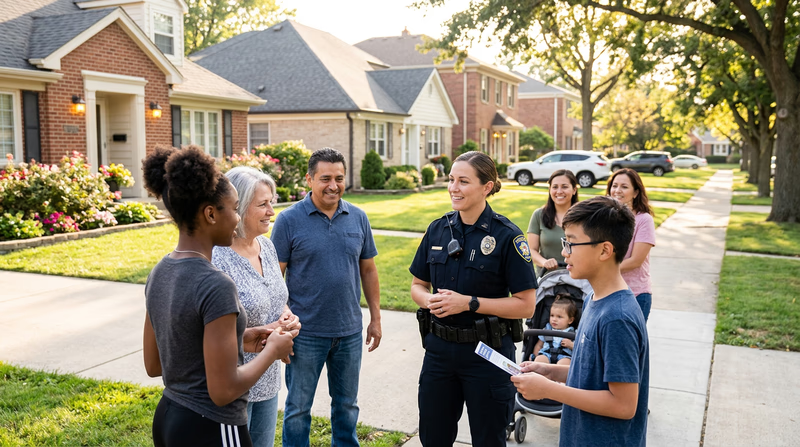
When neighbors know each other and look out for one another, crime drops. Community crime prevention includes Neighborhood Watch programs, community policing partnerships, after-school programs for youth, and citizen patrols. These efforts work because criminals prefer easy targets in places where nobody is paying attention.
Environmental Design
Crime Prevention Through Environmental Design (CPTED) is the science of making physical spaces harder to victimize. Well-lit parking lots, trimmed hedges that don’t provide hiding spots, buildings with windows facing the street, and clear boundaries between public and private space all send a message: this place is watched and cared for. You’ll explore this concept when you conduct your security survey in Requirement 4b.
Technology and Cybersecurity
From security cameras and alarm systems to encrypted passwords and two-factor authentication, technology is a powerful crime prevention tool. But it cuts both ways — the same internet that connects you to friends also exposes you to scammers, hackers, and predators. Learning to use technology safely is one of the most important crime prevention skills you can develop today.
Education and Awareness Programs
Knowledge is one of the strongest defenses against crime. Drug prevention programs like DARE and Too Good for Drugs, anti-bullying campaigns in schools, and public awareness efforts about scams and fraud all work to stop crime before it starts. When people understand the consequences of criminal behavior — and know alternatives — they make better choices.