
Crime Prevention Merit Badge — Complete Digital Resource Guide
https://merit-badge.university/merit-badges/crime-prevention/guide/
Introduction & Overview
A bike disappears from an unlocked garage. A classmate’s social media account gets hacked. A neighbor’s package vanishes from their porch. Crime touches every community — and preventing it starts with people like you who pay attention, speak up, and take action.
The Crime Prevention merit badge goes beyond understanding what crime is. It equips you with practical tools to make your home, school, neighborhood, and online life safer. You will learn how laws protect communities, how physical spaces can be designed to discourage crime, and how to recognize dangers — from cybercrime to substance abuse — before they escalate.
Then and Now
Then
For most of human history, crime prevention meant one thing: punishment harsh enough to scare people straight. The Code of Hammurabi, carved into stone nearly 4,000 years ago in ancient Babylon, laid out penalties for theft, fraud, and assault — “an eye for an eye” was the guiding principle. In medieval Europe, towns relied on a “hue and cry” system where anyone who witnessed a crime was expected to shout and chase the offender, and the whole community was obligated to join the pursuit.
Organized policing as we know it didn’t exist until 1829, when Sir Robert Peel established the London Metropolitan Police. His officers — nicknamed “Bobbies” — were revolutionary because their primary mission was prevention, not just catching criminals after the fact. Peel’s famous principle still echoes today: “The police are the public and the public are the police.”
Now
Modern crime prevention has evolved far beyond patrols and punishment. Today, researchers study why crimes happen in certain places and times, and communities use that data to stop problems before they start. Crime Prevention Through Environmental Design (CPTED) shapes how buildings, parks, and neighborhoods are built — better lighting, clear sightlines, and welcoming public spaces all reduce opportunities for crime.
Technology has transformed the landscape too. Security cameras, smart doorbells, and community alert apps help neighbors watch out for each other. But technology has also created entirely new categories of crime: identity theft, phishing scams, cyberbullying, and ransomware attacks that didn’t exist a generation ago. The modern crime preventer needs to be as comfortable securing a Wi-Fi password as locking a front door.
Get Ready!
Crime prevention isn’t about living in fear — it’s about being prepared, staying aware, and knowing you can make a real difference. Whether you’re helping your family secure your home, learning to spot online scams, or teaching younger Scouts how to stay safe, this badge gives you skills that protect people every single day.
Kinds of Crime Prevention
Personal Safety and Awareness
The most basic form of crime prevention starts with you. Situational awareness — paying attention to your surroundings, trusting your instincts, and avoiding risky situations — is your first line of defense. This includes knowing how to protect yourself online, recognizing warning signs of dangerous situations, and understanding the three R’s of personal safety: Recognize, Resist, and Report.
Community Crime Prevention
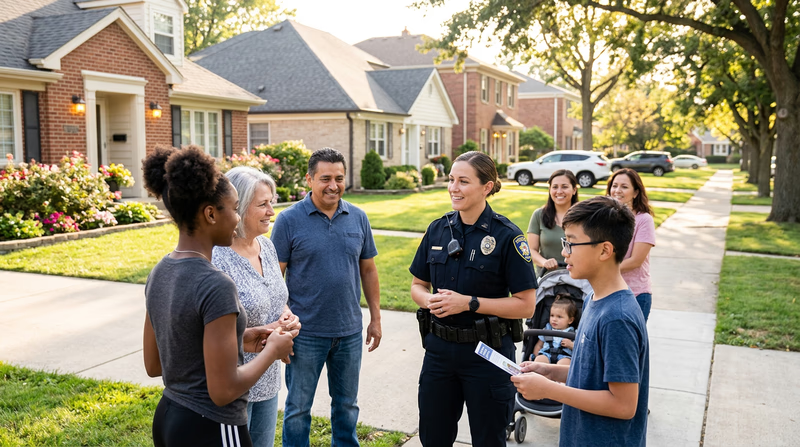
When neighbors know each other and look out for one another, crime drops. Community crime prevention includes Neighborhood Watch programs, community policing partnerships, after-school programs for youth, and citizen patrols. These efforts work because criminals prefer easy targets in places where nobody is paying attention.
Environmental Design
Crime Prevention Through Environmental Design (CPTED) is the science of making physical spaces harder to victimize. Well-lit parking lots, trimmed hedges that don’t provide hiding spots, buildings with windows facing the street, and clear boundaries between public and private space all send a message: this place is watched and cared for. You’ll explore this concept when you conduct your security survey in Requirement 4b.
Technology and Cybersecurity
From security cameras and alarm systems to encrypted passwords and two-factor authentication, technology is a powerful crime prevention tool. But it cuts both ways — the same internet that connects you to friends also exposes you to scammers, hackers, and predators. Learning to use technology safely is one of the most important crime prevention skills you can develop today.
Education and Awareness Programs
Knowledge is one of the strongest defenses against crime. Drug prevention programs like DARE and Too Good for Drugs, anti-bullying campaigns in schools, and public awareness efforts about scams and fraud all work to stop crime before it starts. When people understand the consequences of criminal behavior — and know alternatives — they make better choices.
Req 1 — Laws and Society
This requirement covers five foundational topics about law and crime:
- Why we have criminal laws — the purpose behind the rules
- Types of crimes — property crimes, crimes against people, white collar crime, and environmental crime
- Why people commit crimes — the factors that lead to criminal behavior
- Following the law when no one is watching — integrity and ethics
- The meaning of crime prevention — what it really means to stop crime before it happens
Why We Have Criminal Laws
Imagine a school with no rules. No dress code, no schedule, no consequences for cheating or fighting. How long before things spiral out of control? Criminal laws serve the same purpose for society that rules serve for your school or troop — they set boundaries, protect people, and create order.
Criminal laws exist to:
- Protect individuals and their property from harm, theft, and fraud
- Maintain public order so communities can function safely
- Deter harmful behavior by establishing consequences
- Deliver justice when someone is harmed
- Reflect shared values — what a society collectively agrees is right and wrong
Laws aren’t static. They evolve as society changes. A century ago, there were no laws against cyberbullying because the internet didn’t exist. As new threats emerge, communities create new protections.
Types of Crimes
Crimes generally fall into four broad categories. Understanding these categories helps you recognize criminal behavior and talk about it clearly with your counselor.
Property Crimes
Property crimes involve taking or damaging someone else’s belongings without using force against a person. These are the most common type of crime in the United States.
- Burglary — unlawfully entering a building to commit a crime inside
- Larceny/Theft — taking someone’s property (shoplifting, pickpocketing, bike theft)
- Motor vehicle theft — stealing a car, truck, or motorcycle
- Arson — intentionally setting fire to property
- Vandalism — deliberately damaging or destroying property (graffiti, breaking windows)
Crimes Against People
These crimes involve direct harm or the threat of harm to another person. They are generally considered more serious than property crimes.
- Assault — physically attacking or threatening to attack someone
- Robbery — taking property from a person by force or threat of force
- Kidnapping — unlawfully taking and holding someone against their will
- Homicide — unlawfully causing the death of another person
White Collar Crime
White collar crimes are non-violent offenses committed for financial gain, often by people in business or professional positions. They may not seem as dramatic as a robbery, but they can devastate families and entire communities.
- Fraud — deceiving someone for financial gain (insurance fraud, tax fraud)
- Embezzlement — stealing money entrusted to your care (an employee stealing from their company)
- Identity theft — using someone else’s personal information to commit fraud
- Insider trading — using confidential business information to profit in the stock market
Environmental Crime
Environmental crimes harm the natural world and the communities that depend on it.
- Illegal dumping — disposing of hazardous waste improperly
- Poaching — illegally hunting or capturing protected wildlife
- Pollution violations — knowingly releasing harmful substances into air, water, or soil
- Illegal logging or mining — harvesting natural resources in violation of environmental laws
Why People Commit Crimes
There is no single reason people break the law. Criminologists — researchers who study criminal behavior — have identified several contributing factors:
- Economic pressure — Poverty, unemployment, and financial desperation can push people toward theft or fraud
- Substance abuse — Drugs and alcohol impair judgment and can drive people to commit crimes to fund addiction
- Peer pressure — Especially for young people, the desire to fit in or prove loyalty to a group can lead to criminal behavior
- Opportunity — An unlocked car, an unattended wallet, or a poorly lit alley can tempt someone who might not otherwise commit a crime
- Mental health challenges — Untreated mental illness can contribute to some criminal behavior
- Learned behavior — People who grow up around crime may see it as normal
- Anger and revenge — Strong emotions can override good judgment
Understanding why people commit crimes isn’t about making excuses. It’s about identifying where prevention can make the biggest difference. If poverty is a driver, job training programs help. If opportunity is a factor, better security reduces temptation. Crime prevention works best when it addresses root causes.
Following the Law When No One Is Watching
This is really a question about character. Anyone can follow the rules when a teacher, parent, or police officer is watching. The real test is what you do when nobody would ever know.
Think about it this way: you find a wallet with $200 in cash on a park bench. No one is around. No cameras. Would you take the money or try to return it? Your answer reveals something about your values — and your values are the strongest crime prevention tool you’ll ever have.
The Scout Law says a Scout is Trustworthy. That means doing the right thing even when it’s inconvenient, even when no one would catch you, and even when the wrong choice seems easier. A community where most people live by this principle is a community with less crime.
The Meaning of Crime Prevention
Crime prevention is more than police patrols and security cameras. At its core, crime prevention means taking proactive steps to reduce the opportunity for crime and address the conditions that cause it.
There are three levels of crime prevention:
- Primary prevention — Addresses root causes before crime happens. Education programs, youth activities, after-school programs, and community development all fall here.
- Secondary prevention — Targets people or places at higher risk. Mentoring at-risk youth, improving lighting in high-crime areas, and substance abuse intervention programs are examples.
- Tertiary prevention — Focuses on people who have already committed crimes, working to prevent them from reoffending. Rehabilitation programs, job training for former offenders, and restorative justice fit here.
As a Scout, you are already practicing primary crime prevention every time you participate in troop activities, mentor younger Scouts, or volunteer in your community. These activities build the kind of connected, purposeful community where crime struggles to take root.
FBI Crime Data Explorer Explore national and state-level crime statistics from the FBI's Uniform Crime Reporting program. Link: FBI Crime Data Explorer — https://cde.ucr.cjis.gov/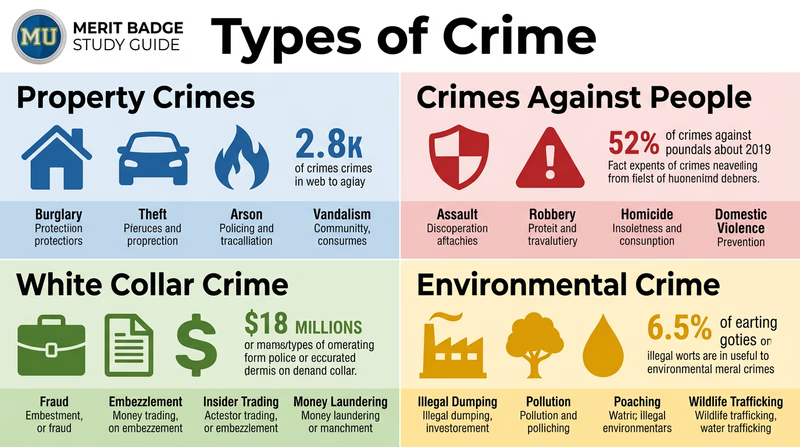
Req 2 — Groups Working to Prevent Crime
Crime prevention is a team effort. No single group — not even the police — can prevent crime alone. This requirement asks you to research how seven different groups contribute, from ordinary citizens to the courts. Here’s a guide to what each group does and how they work together.
Citizens, Including Youth
You don’t need a badge or a uniform to prevent crime. Citizens are the eyes and ears of every community, and young people play a bigger role than you might think.
How citizens contribute:
- Neighborhood Watch programs — Neighbors agree to watch for suspicious activity and report it. These programs reduce burglary and vandalism by making criminals feel observed.
- Reporting crimes and tips — Calling 911, using anonymous tip lines like Crime Stoppers, or reporting suspicious online activity
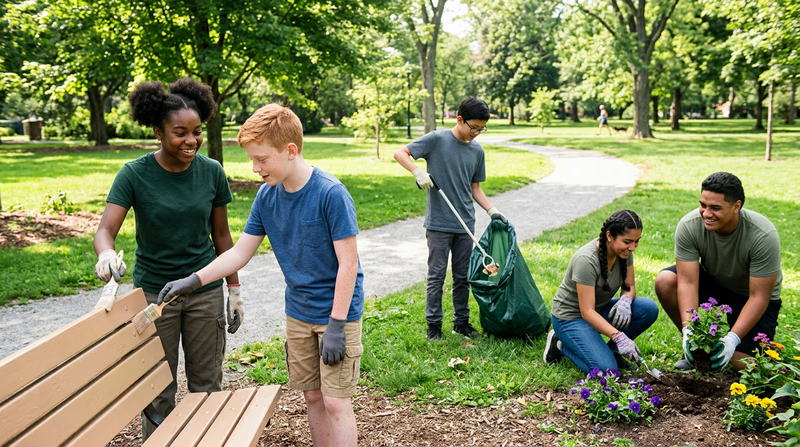
- Volunteering — Mentoring at-risk youth, participating in community cleanups, and organizing events that bring people together
- Modeling good behavior — Simply being a responsible, engaged member of your community discourages crime
Youth-specific contributions:
- Peer mediation programs in schools
- Anti-bullying campaigns led by students
- Scouting and other youth organizations that build character and leadership
- Youth advisory councils that give young people a voice in community safety planning
Schools
Schools are more than places to learn math and science — they’re critical hubs for crime prevention. Most young people spend more waking hours at school than anywhere else, making schools a natural place to teach safety and build positive behaviors.
How schools contribute:
- Anti-bullying and conflict resolution programs — Teaching students to resolve disagreements without violence
- School Resource Officers (SROs) — Trained law enforcement officers who build relationships with students and respond to safety concerns
- Drug and alcohol awareness education — Programs like Too Good for Drugs that teach decision-making skills
- Safety drills and emergency planning — Preparing students and staff for various emergency scenarios
- Counseling services — Helping students deal with problems before they escalate
- Positive school culture — Schools with strong communities and engaged students experience fewer disciplinary issues and less crime
Neighborhood, Social, and Civic Groups
When people are connected to their community, crime goes down. Social isolation is one of the strongest predictors of crime in a neighborhood, which is why groups that bring people together are powerful crime prevention tools.
- Neighborhood associations organize block parties, community gardens, and cleanup events that build trust between neighbors
- Faith-based organizations provide youth programs, food banks, shelter, and mentoring
- Service clubs (Rotary, Lions, Kiwanis) fund community projects and scholarships
- Youth organizations like Scouting, Boys & Girls Clubs, and 4-H give young people structured activities, mentors, and a sense of belonging
- Community athletic leagues provide positive outlets and adult supervision during after-school hours — a peak time for juvenile crime
Private Security
Private security guards, systems, and companies protect businesses, residential communities, events, and critical infrastructure. The private security industry in the United States actually employs more people than public law enforcement.
How private security contributes:
- Security guards and patrols — Visible presence at malls, office buildings, hospitals, and residential areas deters crime
- Alarm and monitoring systems — Home and business security systems alert authorities to break-ins, fires, and other emergencies
- Loss prevention teams — Retail stores employ specialists to detect and prevent shoplifting (you’ll learn more about this in Requirement 5)
- Cybersecurity firms — Companies that protect digital infrastructure from hackers, data breaches, and cyberattacks
- Event security — Trained personnel who manage crowd safety at concerts, sporting events, and public gatherings
Private security works alongside — not as a replacement for — public law enforcement. Security guards can observe, report, and deter, but they have different legal authority than police officers.
Law Enforcement Agencies
Law enforcement is the most visible part of crime prevention, but their role goes far beyond arresting criminals.
Local police departments and sheriff’s offices:
- Patrol neighborhoods and respond to 911 calls
- Investigate crimes and collect evidence
- Run community policing programs (bike patrols, Coffee with a Cop, youth academies)
- Conduct crime analysis to identify patterns and deploy resources strategically
State police and highway patrols:
- Enforce traffic laws on highways and state roads
- Investigate crimes that cross local jurisdictions
- Provide forensic lab services and specialized units to smaller departments
Federal agencies:
- FBI — Investigates federal crimes including terrorism, cybercrime, organized crime, and civil rights violations
- DEA — Enforces drug laws and combats drug trafficking
- ATF — Regulates firearms and investigates arson and explosives cases
- Secret Service — Protects national leaders and investigates financial crimes like counterfeiting
- U.S. Marshals — Apprehend fugitives and protect the federal court system
Courts
Courts are where justice happens — where the facts of a case are weighed and outcomes are decided. They play a crime prevention role in several ways:
- Deterrence — The possibility of being tried and convicted discourages criminal behavior
- Incapacitation — Sentencing convicted criminals to prison removes them from the community temporarily
- Rehabilitation orders — Courts can mandate drug treatment, anger management, community service, or counseling
- Restorative justice programs — Some courts bring offenders face-to-face with victims to understand the harm they caused and make amends
- Protective orders — Courts issue restraining orders that protect victims of domestic violence and stalking
The court system includes criminal courts (which handle crimes), civil courts (which handle disputes between people or organizations), and juvenile courts (which handle cases involving minors with a greater focus on rehabilitation than punishment).
Corrections and Rehabilitation Programs
After a person is convicted, the corrections system takes over. Its goal is twofold: protect the public and help offenders become law-abiding citizens.
Corrections includes:
- Prisons and jails — Incarceration removes offenders from the community. Jails hold people awaiting trial or serving short sentences; prisons hold those convicted of more serious crimes for longer terms.
- Probation and parole — Supervised release that allows offenders to live in the community under strict conditions instead of (or after) incarceration
- Rehabilitation programs — Education classes, job training, substance abuse treatment, and cognitive behavioral therapy offered inside correctional facilities
- Reentry programs — Help former offenders transition back to the community with housing, employment assistance, and mentoring
The most effective crime prevention happens when all seven of these groups work together. Citizens report suspicious activity. Police investigate. Courts deliver justice. Corrections work to prevent reoffending. And community groups, schools, and youth like you fill in the gaps that the justice system alone can’t reach.
National Crime Prevention Council Home of McGruff the Crime Dog — resources on community crime prevention, neighborhood safety, and youth engagement. Link: National Crime Prevention Council — https://www.ncpc.org/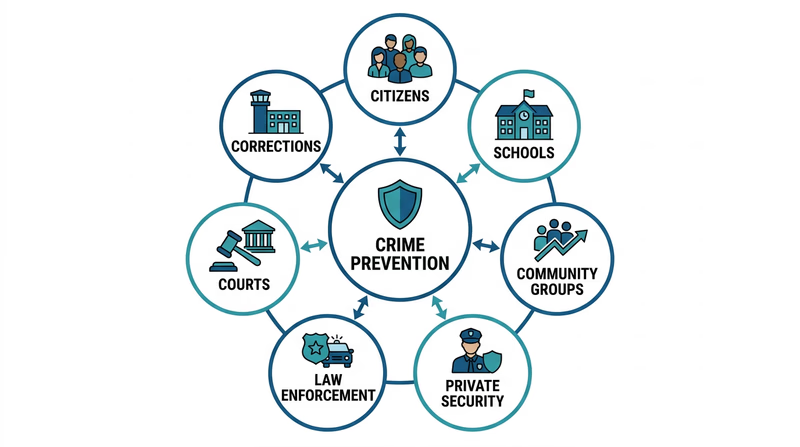
Req 3a — Researching Crimes
This is your chance to be an investigator. You’ll dig into real news stories about three different crimes, then research the bigger picture — how common are these types of crime where you live?
Getting Permission First
Before you start this research, you need two approvals:
- Your parent or guardian’s permission — Some crime stories involve disturbing details. Talk to your parent or guardian about what you’ll be researching and get their okay.
- Your counselor’s approval — Your counselor may guide you toward age-appropriate sources or specific types of crimes to research.
This isn’t a hoop to jump through — it’s a genuine safety measure. Crime news can be heavy, and it’s important to have trusted adults who know what you’re looking at and can help you process it.
Choosing Three Crimes
You need three crimes of different types. Refer back to the categories you learned in Requirement 1:
- Property crime (burglary, theft, arson, vandalism)
- Crime against a person (assault, robbery)
- White collar crime (fraud, embezzlement, identity theft)
- Environmental crime (illegal dumping, poaching, pollution violations)
Where to Find Reliable News Coverage
Not all news sources are equally reliable. For this research, stick to credible outlets:
Local news:
- Your city or regional newspaper’s website
- Local TV station news websites (ABC, NBC, CBS, Fox affiliates)
- Your local public radio station’s website
State and national news:
- Major newspapers (The New York Times, The Washington Post, your state’s largest paper)
- Wire services (Associated Press, Reuters)
- Public broadcasting (NPR, PBS)
Crime-specific data sources:
- FBI Crime Data Explorer (cde.ucr.cjis.gov)
- Bureau of Justice Statistics (bjs.ojp.gov)
- Your state’s crime statistics agency (search for “[your state] crime statistics”)
Researching How Common These Crimes Are
After finding your three news stories, the second part of this requirement asks you to zoom out. How common are these types of crimes in your state or nationally?
Here’s how to find this data:
FBI Crime Data Explorer
The FBI’s Crime Data Explorer lets you search crime statistics by state, type of crime, and year. You can see trends over time — is burglary going up or down in your state? How does your state compare to the national average?
Bureau of Justice Statistics
The Bureau of Justice Statistics publishes detailed reports on crime victimization, including crimes that aren’t reported to police. Their National Crime Victimization Survey is one of the best tools for understanding how common crime really is.
State Resources
Most states publish their own crime reports through a state bureau of investigation or department of public safety. Search for “[your state] uniform crime report” to find annual statistics.
Research Organizer
For each of your three crimes, gather this information- Crime type: Which category does it fall into?
- What happened: Summarize the key facts in 3–4 sentences
- Where it happened: Local, state, or national?
- News source: Which outlet covered it?
- How common: What do the statistics say about this type of crime in your state or nationally?
- Trend: Is this type of crime increasing, decreasing, or staying about the same?

Req 3b — Analyzing Your Research
Now it’s time to think critically about the three crimes you researched in Req 3a. This requirement asks you to move beyond “what happened” and dig into “who responded,” “why did it happen,” and “how could it have been prevented.”
Identifying the Agencies Involved
For each of your three crimes, identify every law enforcement agency and court that played a role. Remember the different levels you learned about in Requirement 2:
Law enforcement agencies to look for:
- Local police or sheriff’s department — Usually the first responders for local crimes
- State police or highway patrol — Often involved in crimes on state highways or crimes crossing county lines
- Federal agencies (FBI, DEA, ATF, Secret Service) — Involved when crimes cross state lines, involve federal laws, or are particularly large-scale
- Specialized units — Cybercrime units, fraud divisions, environmental enforcement agencies
Courts to identify:
- Municipal or district courts — Handle misdemeanors and initial hearings
- Superior or circuit courts — Handle felony trials
- Federal courts — Handle federal crimes
- Juvenile courts — Handle cases involving minors
- Appeals courts — Handle cases where a conviction is challenged
Analyzing Why the Crimes Were Committed
This is the heart of your analysis. For each crime, think about the factors that may have contributed. Refer back to the list of reasons from Requirement 1:
- Economic pressure or financial desperation
- Substance abuse or addiction
- Peer pressure or gang involvement
- Opportunity (something was easy to steal or no one was watching)
- Anger, revenge, or emotional impulse
- Greed or desire for power
- Mental health challenges
Most crimes involve more than one factor. A burglary, for example, might involve both economic pressure and opportunity (an unlocked door in an unlit neighborhood). A white collar crime might stem from both greed and the belief that “everyone does it.”
Proposing Prevention Strategies
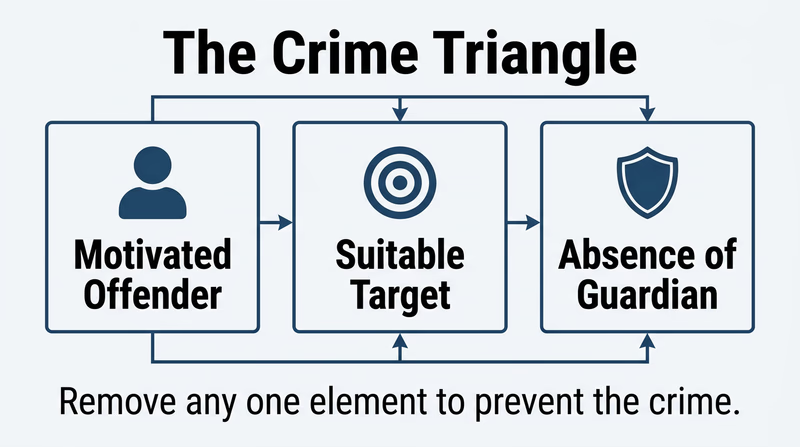
For each crime, think about what could have been done to prevent it — or to prevent similar crimes in the future. Use the Crime Triangle framework:
Reduce Motivation
- Better economic opportunities, education, and youth programs
- Substance abuse prevention and treatment
- Anti-gang intervention programs
- Mental health services
Harden the Target
- Better locks, lighting, and security systems
- Cybersecurity measures (strong passwords, two-factor authentication)
- Inventory controls and loss prevention in retail
- Environmental monitoring and enforcement
Strengthen the Guardian
- Neighborhood Watch programs and community engagement
- Security cameras and alarm systems
- More community policing and foot patrols
- Bystander intervention training
Analysis Notes Template
Complete this for each of your three crimes- Crime summary: What happened? (3–4 sentences)
- Agencies involved: Which law enforcement agencies responded or investigated?
- Courts involved: Where was the case heard? What type of court?
- Motivation analysis: Why do you think this crime was committed?
- Prevention ideas: What could have prevented this specific crime?
- Broader prevention: What would prevent similar crimes in the future?
Req 4a — How Communities Prevent Crime
This requirement covers two topics about how everyday life and physical spaces help prevent crime:
- How participation in activities — families, churches, sports teams, and clubs — prevents crime
- How the design of buildings, neighborhoods, and public spaces prevents crime
How Activities and Community Involvement Prevent Crime
Why would joining a soccer team or going to a church group reduce crime? It comes down to four powerful forces:
Structure and Supervision
Young people are most likely to get into trouble during unsupervised hours — especially between 3:00 PM and 6:00 PM on school days. Organized activities fill that gap with adult mentors who care. A Scout meeting, band practice, or basketball league means kids are in a safe place with positive role models instead of unsupervised and potentially exposed to risky situations.
Belonging and Identity
Everyone needs to feel like they belong somewhere. When that need goes unmet, gangs, negative peer groups, and criminal networks can fill the void. Families, faith communities, sports teams, and clubs provide a healthy sense of identity and belonging. A Scout who feels valued in their troop is far less likely to seek acceptance from a group that pressures them into breaking the law.
Skills and Confidence
Activities build skills — teamwork, communication, conflict resolution, goal-setting — that carry over into every part of life. A young person who has learned to resolve arguments through mediation doesn’t need to resort to violence. Someone who has practiced setting goals and working toward them has alternatives to crime when facing frustration or economic pressure.
Social Bonds
Strong relationships with family, mentors, coaches, and community leaders create what criminologists call “social bonds.” These bonds give people something to lose. When you value your relationships and your reputation in your community, the cost of committing a crime — disappointing the people who believe in you — becomes a powerful deterrent.
How Design Prevents Crime (CPTED)
Walk down two different streets. One has boarded-up windows, overgrown bushes hiding doorways, broken streetlights, and no one in sight. The other has well-lit sidewalks, trimmed landscaping, front porches where neighbors sit, and stores with big windows facing the street. Which street would a criminal choose to operate on?
This isn’t a trick question — and it’s not an accident. Crime Prevention Through Environmental Design (CPTED) is the science of designing physical spaces to reduce crime opportunities. It’s built on four core principles:
1. Natural Surveillance
People should be able to see what’s happening around them. Design features that increase visibility include:
- Windows facing streets and parking areas — “Eyes on the street” deter criminals
- Good lighting — Well-lit paths, parking lots, and building entries eliminate hiding spots
- Low landscaping — Bushes trimmed below 3 feet and tree canopies above 7 feet maintain clear sightlines
- Open floor plans in stores — Reduces shoplifting by eliminating blind spots
2. Natural Access Control
Guide people to proper entrances and make it clear where they should and shouldn’t be:
- Defined walkways and entries — Clear paths signal where visitors belong
- Fences, hedges, and gates — Mark boundaries between public and private space
- Limited entry points — Fewer unmonitored entrances mean fewer opportunities for unauthorized access
3. Territorial Reinforcement
Make it obvious that a space is owned, cared for, and watched:
- Well-maintained properties — Fresh paint, mowed lawns, and clean sidewalks signal that someone cares
- Signage — “Private Property,” “Neighborhood Watch Area,” or welcoming signs that show community engagement
- Personalization — Front gardens, decorations, and outdoor seating show a space is actively used
- The “Broken Windows” theory — One broken window left unrepaired signals neglect and invites more disorder. Keeping spaces maintained prevents escalation.
4. Maintenance
Ongoing care is essential. The best design fails if lighting burns out, hedges overgrow, or graffiti goes uncleaned. Regular maintenance keeps all three previous principles working.
Real-World CPTED Examples
| Space | CPTED Feature | How It Prevents Crime |
|---|---|---|
| Park | Open sightlines, no dense bushes near paths | Visitors can see threats; criminals feel exposed |
| Parking garage | Bright lighting on every level, painted walls | Eliminates shadows; clean appearance signals surveillance |
| School | Single monitored entrance, visitor check-in | Controls who enters; deters unauthorized access |
| Retail store | Mirrors in corners, low shelving near registers | Staff can see all areas; shoplifters feel watched |
| Neighborhood | Front porches, sidewalks, street-facing windows | Neighbors naturally watch the street; community presence deters crime |

Req 4b — Conducting a Security Survey
A security survey is a systematic walkthrough where you evaluate a location for vulnerabilities — places where crime could happen — and strengths — features that already deter crime. Think of yourself as a consultant: your job is to assess the situation and recommend improvements.
Before You Start
Choose Your Location
You can survey any one of these:
- A home (yours or a family member’s, with their permission)
- A neighborhood (a block or two around your home)
- A park (a local public park or recreation area)
- A camp building (your Scout camp’s dining hall, shower house, or meeting lodge)
Get Your Checklist
The requirement says to use a security checklist from the merit badge pamphlet or one approved by your counselor. Use our printable worksheet below, or ask your counselor if they have a preferred checklist.
Security Survey Worksheet Resource: Security Survey Worksheet — /merit-badges/crime-prevention/guide/security-survey-worksheet/Conducting the Survey
Walk through your chosen location with your checklist and adult supervisor. Take notes on everything you observe. Here’s what to evaluate in each area:
Exterior and Perimeter
- Lighting: Are all walkways, entrances, and parking areas well lit? Are any lights burned out or blocked by vegetation?
- Landscaping: Can you see clearly from the street to the building? Are bushes trimmed below 3 feet? Are tree canopies above 7 feet?
- Fencing and boundaries: Are property lines clear? Are fences, gates, or hedges in good repair?
- Entry points: How many doors and windows are accessible from outside? Are they secured with locks?
- Signage: Are there any security signs (alarm company, Neighborhood Watch, “No Trespassing”)?
- General condition: Is the property well maintained, or are there signs of neglect (peeling paint, broken windows, litter)?
Doors and Windows
- Door locks: Do all exterior doors have deadbolts? Are hinges on the inside (not exposed to tampering)?
- Sliding doors: Do they have security bars or pins to prevent forced entry?
- Windows: Do ground-floor windows have locks? Are any broken or left open?
- Door frames: Are they solid and in good condition, or could they be kicked in?
Interior
- Valuables: Are expensive items visible from outside through windows?
- Alarm system: Is there a security system? Is it activated?
- Emergency exits: Are emergency exits clearly marked and unobstructed?
- Key control: Who has keys? Are spare keys hidden in obvious places (under doormats, in fake rocks)?
Neighborhood or Park Features
- Street lighting: Are streetlights working? Are any streets or paths dark?
- Sightlines: Can you see clearly along walking paths, or do blind corners and dense vegetation create hiding spots?
- Activity level: Are there people using the space? Active spaces are safer spaces.
- Signs of disorder: Graffiti, broken equipment, litter, or abandoned vehicles can signal that a space isn’t being cared for.
Recording Your Findings
For each area you survey, note:
- What you observed — Describe the current condition
- Risk level — Is this a low, medium, or high vulnerability?
- Recommendation — What specific action would improve security?
Be specific. “The lighting is bad” isn’t helpful. “The light above the side entrance is burned out, leaving a 20-foot dark zone next to the driveway” gives actionable information.
Survey Best Practices
Tips for a thorough security assessment- Walk the entire perimeter before going inside
- Take photos (with permission) to document vulnerabilities
- Note both strengths and weaknesses — what’s already working well?
- Think like a criminal — if you wanted to break in, where would you try?
- Check every door and window, not just the obvious ones
- Look at the location from across the street — what’s visible to passersby?
You’ll use the results of this survey to build your crime prevention lesson in Req 4c, so keep your notes organized and complete.
Home Security Checklist — National Crime Prevention Council Additional home and neighborhood security resources from the National Crime Prevention Council. Link: Home Security Checklist — National Crime Prevention Council — https://www.ncpc.org/resources/home-neighborhood-safety/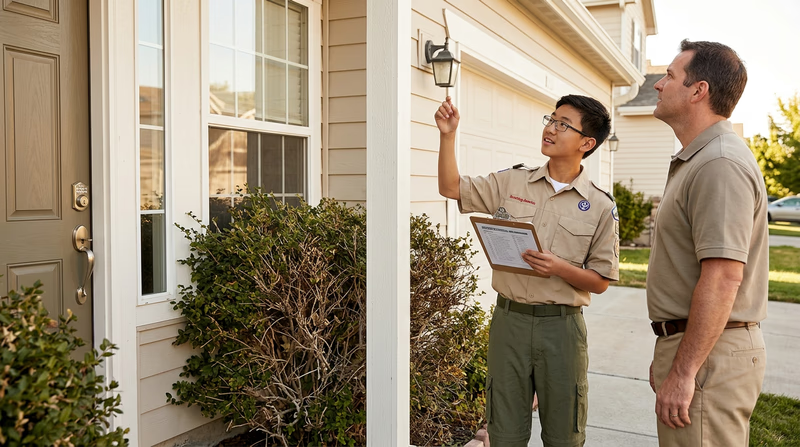
Security Survey Worksheet
Back to Requirement 4bSecurity Survey Worksheet
Crime Prevention Merit Badge — Requirement 4b
Survey Details
Exterior & Perimeter
| Feature | Good | Needs Work | Notes |
|---|---|---|---|
| Exterior lighting (walkways, entries) | |||
| Landscaping (clear sightlines) | |||
| Fences, gates, or boundaries | |||
| Property maintenance (paint, litter, etc.) | |||
| Security signage (alarm, watch program) | |||
| House numbers visible from street | |||
| Garage / outbuilding security |
Doors & Windows
| Feature | Good | Needs Work | Notes |
|---|---|---|---|
| Front door deadbolt | |||
| Back / side door locks | |||
| Sliding door security (bar or pin) | |||
| Door frames solid and intact | |||
| Ground-floor window locks | |||
| Hinges on inside of doors | |||
| Peephole or doorbell camera |
Interior & General
| Feature | Good | Needs Work | Notes |
|---|---|---|---|
| Valuables visible from outside? | |||
| Alarm system present and active | |||
| Emergency exits clear and marked | |||
| Keys controlled (no hidden spare) | |||
| Timer lights or smart lights | |||
| Smoke / CO detectors working |
Neighborhood / Park Features (if applicable)
| Feature | Good | Needs Work | Notes |
|---|---|---|---|
| Street lighting | |||
| Clear sightlines on paths / sidewalks | |||
| Activity level (people using the space) | |||
| Signs of disorder (graffiti, litter, etc.) | |||
| Emergency phone or call box nearby |
Top 3 Vulnerabilities Found
Recommended Improvements
Counselor Review
Req 4c — Teaching Crime Prevention
This is where your security survey turns into action. You’ve found the vulnerabilities — now you’ll teach others how to fix them using the EDGE method, a teaching framework that Scouts use across many badges and leadership positions.
The EDGE Method
EDGE stands for Explain, Demonstrate, Guide, Enable. It’s a four-step process for teaching any skill effectively:
| Step | What You Do | Example for Crime Prevention |
|---|---|---|
| Explain | Tell your audience what you’re teaching and why it matters | “Today I’m going to show you how to make our home more secure based on a survey I conducted.” |
| Demonstrate | Show them how to do it | Walk through the house, pointing out a vulnerability and showing the fix (e.g., installing a window lock) |
| Guide | Let them try it while you coach | Have them check the other windows and identify which ones need locks |
| Enable | Step back and let them do it independently | Assign each family member a security task to complete on their own |
Planning Your Lesson
Step 1: Choose Your Audience
Decide whether you’ll present to your family or to Scouts (your patrol or troop). This affects your approach:
- Family: You can use your actual home survey results and make specific recommendations. The lesson is personal and immediately actionable.
- Scouts: Use your survey as a case study and teach general principles they can apply to their own homes. Focus on skills everyone can use.
Step 2: Pick Your Focus
From your security survey, choose 2–3 key findings to build your lesson around. Good topics include:
- Door and window security basics
- The importance of exterior lighting
- How landscaping affects safety (CPTED principles from Req 4a)
- Online and digital security habits
- What to do if you see suspicious activity
- Creating a family safety plan
Step 3: Build Your Lesson Plan
Use this framework to organize your EDGE lesson:
Lesson Plan Template
Fill in for your specific topic- Topic: What security skill or concept are you teaching?
- Audience: Family or Scouts?
- Time: How long will the lesson take? (Aim for 10–20 minutes)
- Materials: What do you need? (Survey results, props, handouts)
- Explain: What will you tell them? (2–3 key points)
- Demonstrate: What will you show them? (A hands-on example)
- Guide: What will they try with your help? (Practice activity)
- Enable: What will they do on their own? (Take-home action item)
Step 4: Review with Your Counselor
Before you teach, share your plan with your merit badge counselor. They can help you:
- Sharpen your focus
- Suggest improvements to your EDGE approach
- Make sure your content is accurate
- Offer presentation tips
Presenting Effectively
Keep It Real
Use your actual survey findings. “I found three burned-out lights around our house” is more compelling than “Lighting is important.” Real examples from your own survey make the lesson personal and urgent.
Make It Interactive
Don’t just lecture. The best EDGE lessons involve the audience:
- Walk-and-talk: If presenting to family, walk through your home and point out what you found
- Quiz them: “Before I show you, what do you think is the biggest security weakness in our home?”
- Hands-on: Let them check a lock, test a light, or practice calling a non-emergency number
Give Action Items
End with specific, doable tasks. People remember what they’re asked to do, not what they’re told to think about.
Teaching EDGE — Scouting America Scouting America's guide to the EDGE teaching method, with additional tips and examples. Link: Teaching EDGE — Scouting America — https://www.scouting.org/training/youth/edge/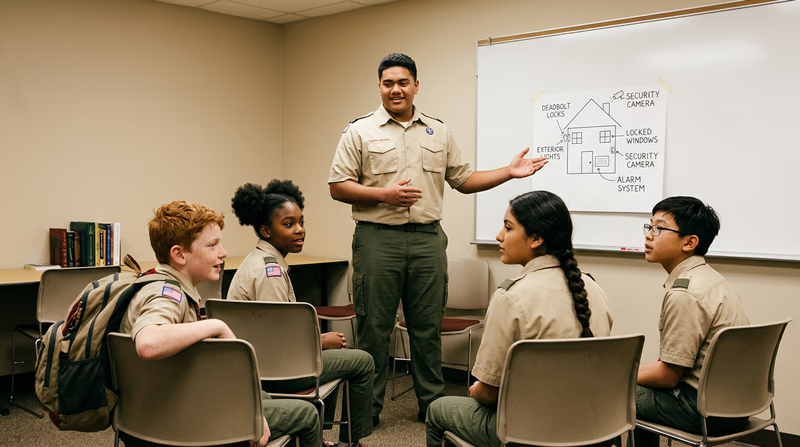
Req 5 — Retail Crime Prevention
This requirement covers two aspects of retail crime:
- The impact of shoplifting and employee theft on retail businesses
- Techniques stores use to prevent shoplifting
The Impact of Shrinkage
“Shrinkage” is the retail industry’s term for inventory loss — the gap between the merchandise a store should have and what it actually has. It’s a massive problem that affects every shopper, every employee, and every community where stores operate.
How Big Is the Problem?
Retail shrinkage costs U.S. retailers tens of billions of dollars every year. The National Retail Federation estimates that shrinkage averaged $112.1 billion in recent years. That’s not just a number — it translates into real consequences.
Where shrinkage comes from:
| Source | Approximate Share |
|---|---|
| External theft (shoplifting, organized retail crime) | ~37% |
| Employee/internal theft | ~29% |
| Process and control failures (shipping errors, pricing mistakes) | ~25% |
| Other/unknown | ~9% |
Impact on Finances
When stores lose merchandise to theft, they lose the cost of the item plus the profit they would have earned selling it. A store with thin profit margins — many retailers earn only 1–3% net profit — can be devastated by theft. A single stolen $50 item might require $1,500 to $5,000 in additional sales just to recover the lost profit.
Stores that experience high theft may:
- Raise prices to offset losses (meaning honest customers pay more)
- Reduce staff hours to cut costs
- Close locations that are no longer profitable
Impact on Customer Service
Theft drives up security costs, which means less money for staffing. Fewer employees means longer checkout lines, less help on the sales floor, and a worse shopping experience. Some stores lock up common products behind glass cases, making shopping frustrating for honest customers who need to find an employee just to buy razor blades or phone chargers.
Impact on Reputation
Stores known for theft problems may struggle to attract customers and quality employees. The perception of a store as unsafe or poorly managed drives people to shop elsewhere, creating a downward spiral.
Employee Theft
Employee theft — also called internal theft — is nearly as costly as shoplifting. It takes many forms:
- Stealing cash from the register
- Taking merchandise home
- Giving unauthorized discounts to friends or family (“sweethearting”)
- Manipulating refund systems to pocket money
- Time theft (clocking in early, taking extended breaks, or not working while on the clock)
Employee theft can be harder to detect because employees know the store’s systems, camera blind spots, and staffing schedules.
Techniques Stores Use to Prevent Shoplifting
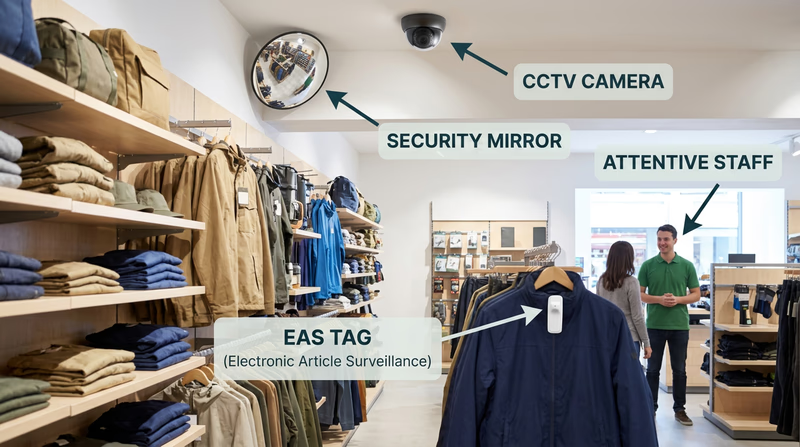
Retailers use a layered approach — no single technique is enough, but together they create a strong deterrent.
Store Layout and Design
These are CPTED principles applied to retail:
- Open floor plans — Low shelving near registers gives employees clear sightlines across the store
- Mirrors — Convex mirrors in corners and along aisles eliminate blind spots
- Checkout placement — Registers near the exit so customers must pass through a staffed area
- Fitting room controls — Limiting the number of items customers can take in and checking items when they leave
- High-value item placement — Expensive items placed near staff or in locked display cases
Technology
- Electronic Article Surveillance (EAS) — Security tags and labels that trigger alarms at exit gates if not deactivated at checkout
- CCTV cameras — Visible cameras deter theft; recorded footage helps identify and prosecute shoplifters
- Point-of-sale monitoring — Software that flags unusual transactions like excessive refunds or voided sales
- RFID tracking — Radio-frequency identification tags that track merchandise throughout the store
- Self-checkout monitoring — AI-powered cameras that detect when items aren’t scanned
People
- Trained employees — Staff who are attentive, greet every customer, and maintain a visible presence on the sales floor
- Loss prevention teams — Plainclothes and uniformed security specialists trained to detect and respond to theft
- Customer service as prevention — Simply asking “Can I help you find something?” signals awareness and deters potential shoplifters
- Employee screening — Background checks, inventory audits, and internal controls to reduce employee theft
Policies and Procedures
- Return policies — Requiring receipts or ID for returns prevents refund fraud
- Bag checks — Some stores check bags or backpacks at the entrance
- Receipt verification — Checking receipts against items at the exit (common at warehouse clubs)
- Prosecution policies — Stores that consistently prosecute shoplifters send a strong deterrent message
Req 6 — Reporting Crime
This requirement covers four critical topics about reporting crime and protecting yourself and others:
- When and how to report a crime or an impending crime
- Warning signs of child abuse and domestic violence
- The three R’s of personal safety and protection
- How reporting helps law enforcement provide resources for victims
When and How to Report a Crime
One of the most powerful things you can do to prevent crime is simply to report it. Many crimes go unreported — the Bureau of Justice Statistics estimates that more than half of all violent crimes and two-thirds of property crimes in the U.S. are never reported to police. Every unreported crime is a missed opportunity for justice and prevention.
When to Call 911
Call 911 when there is an immediate threat to life or property — a crime is happening right now, or someone is in danger right now:
- You witness a crime in progress (assault, robbery, break-in)
- Someone is injured and needs emergency medical help
- There’s a fire or explosion
- You see a suspicious person trying to enter a home or building
- Someone is threatening violence
When to Call the Non-Emergency Line
Use your local police department’s non-emergency number for situations that are not life-threatening but still need attention:
- You discover your car was broken into overnight
- You notice graffiti or vandalism
- You want to report a suspicious pattern (a car circling the block repeatedly over several days)
- You need to file a report about a past crime
Warning Signs of Child Abuse and Domestic Violence
These are difficult topics, but recognizing the warning signs can save someone’s life. As a Scout, you are trained to help others — and sometimes that means speaking up when you notice that someone is being hurt.
Signs of Child Abuse
Child abuse can be physical, emotional, sexual, or neglect. Warning signs include:
- Unexplained bruises, burns, or injuries — especially in patterns or on parts of the body usually covered by clothing
- Flinching at sudden movements or avoiding physical contact
- Wearing long sleeves or pants in hot weather to cover injuries
- Sudden changes in behavior — becoming withdrawn, aggressive, or fearful
- Frequent absences from school
- Poor hygiene, malnutrition, or appearing consistently tired
- Fear of going home or anxiety about a specific adult
- Age-inappropriate sexual knowledge or behavior
Signs of Domestic Violence
Domestic violence affects families of every background. Signs that someone may be experiencing it include:
- Unexplained injuries with unconvincing explanations (“I walked into a door”)
- A partner or family member who is extremely controlling — monitoring phone calls, controlling finances, isolating the person from friends
- Visible fear of a partner or family member
- Withdrawal from friends, activities, or social situations
- Sudden personality changes — loss of confidence, constant anxiety
How to Report
If you suspect child abuse or domestic violence:
- Tell a trusted adult — a parent, teacher, school counselor, coach, or Scout leader
- Call the Childhelp National Child Abuse Hotline: 1-800-422-4453 (available 24/7)
- Contact the National Domestic Violence Hotline: 1-800-799-7233 (or text START to 88788)
- Report to local child protective services — every state has a reporting system
The Three R’s of Personal Safety
The three R’s provide a simple framework for protecting yourself in any dangerous situation:
Recognize
Learn to identify potentially dangerous situations before they escalate. This means:
- Trusting your instincts — if something feels wrong, it probably is
- Being aware of your surroundings, especially in unfamiliar places
- Knowing the warning signs of predatory behavior (excessive friendliness from strangers, attempts to isolate you, offering gifts or special attention)
- Understanding that danger can come from people you know, not just strangers
Resist
Take action to protect yourself:
- Say “No” firmly and loudly if someone tries to touch you inappropriately or pressure you into something unsafe
- Remove yourself from the situation — leave, walk away, go to a public place
- Use the buddy system — travel with friends, especially at night
- Create distance between yourself and the threat
- Make noise — yell, scream, attract attention if you’re in danger
Report
Tell someone what happened:
- Tell a trusted adult immediately — a parent, teacher, counselor, or Scout leader
- Call 911 if you’re in immediate danger
- Don’t keep secrets about abuse or threats — the person who is hurting or threatening you is the one doing something wrong, not you
- Follow up — if the first adult you tell doesn’t take action, tell another one
How Reporting Helps Victims
When a crime is reported, it does more than start an investigation. It opens the door to support services for victims:
- Victim advocates — Many police departments and prosecutors’ offices have victim advocates who help people navigate the justice system, find safe housing, and access counseling
- Victim compensation funds — Most states have programs that help crime victims pay for medical care, counseling, and lost wages
- Protective orders — Courts can issue orders that keep offenders away from their victims
- Community resources — Reports connect victims to shelters, food assistance, legal aid, and support groups
- Crime data — Every report contributes to data that helps law enforcement allocate resources and identify crime patterns
When crimes go unreported, victims miss out on these resources. And communities miss the data they need to prevent future crimes.
Childhelp National Child Abuse Hotline 24/7 crisis line (1-800-422-4453) offering help for children and adults dealing with child abuse. Link: Childhelp National Child Abuse Hotline — https://www.childhelp.org/hotline/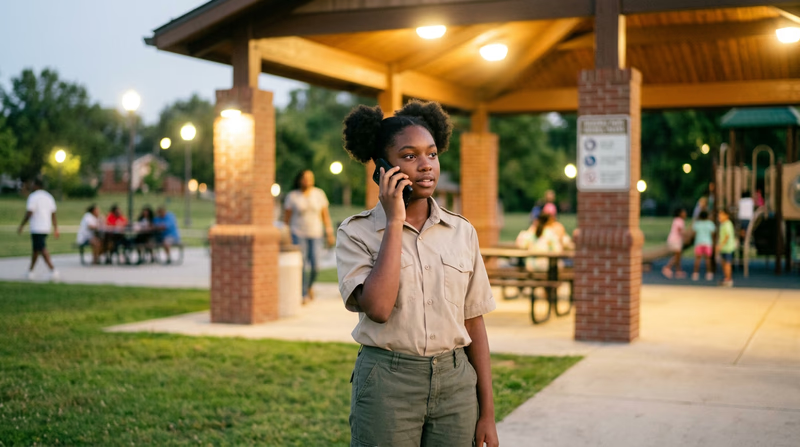
Req 7 — Peers and Crime
This requirement covers four topics about the role peers play in crime:
- The role peers play in crime, crime prevention, and experiencing crime
- How to resist peer influence
- Bullying and hazing behaviors and warning signs
- The impact of gangs on communities
The Role Peers Play
Your peers — the people around your age who you interact with at school, in activities, and online — have an enormous influence on your behavior. That influence can push in two very different directions.
Peers and Crime
Research consistently shows that having friends who engage in criminal behavior is one of the strongest predictors that a young person will also break the law. This happens through several mechanisms:
- Normalization — When everyone in your group shoplifts, vandalizes, or experiments with drugs, those behaviors start to seem normal and acceptable
- Pressure — Direct challenges like “I dare you” or “Are you scared?” push people to do things they wouldn’t do alone
- Opportunity — Groups create situations where crime becomes possible (one person acts as a lookout while another steals)
- Diffusion of responsibility — “Everyone was doing it” makes individuals feel less personally accountable
Peers and Crime Prevention
The flip side is equally powerful. Positive peer groups prevent crime by:
- Setting high standards — When your friends value honesty, respect, and achievement, those values become your norm too
- Providing accountability — Friends who call out bad decisions before they escalate
- Offering alternatives — Having fun, meaningful activities with friends means you don’t need risky behavior for excitement
- Supporting each other — Friends who notice when someone is struggling and help them get support
Your Scout troop is a prime example of a positive peer group. The Scout Oath and Scout Law create shared values, and the patrol system means you’re surrounded by peers who encourage your best self.
Peers and Experiencing Crime
Peers also affect how young people experience and respond to crime as victims or witnesses:
- A friend who witnesses bullying and speaks up can stop it
- A peer who notices warning signs in a friend’s home life might be the first person to report abuse
- Unfortunately, peers can also discourage reporting — “don’t be a snitch” culture can keep victims silent
How to Resist Peer Influence
Knowing that peer pressure exists isn’t enough. You need specific strategies to resist it in the moment, when emotions are high and thinking clearly is hard.
The STOP Method
- S — Stop before you act. Take a breath. The urge to go along usually fades if you give yourself even 10 seconds.
- T — Think about the consequences. What happens if this goes wrong? Will this affect your family, your Scout advancement, your future?
- O — Observe the situation. Who’s really pushing this? Are they looking out for you, or using you?
- P — Plan your response. Have a go-to line ready: “Nah, I’m good” or “I’ve gotta get home” or simply walk away.
Practical Exit Strategies
Sometimes you need a concrete way to leave a bad situation:
- The phone excuse: “My mom just texted — I have to go.” (Pre-arrange with a parent that you can use them as an excuse anytime.)
- The buddy system: Agree with a trusted friend that either of you can say “Let’s go” and the other will leave immediately, no questions asked.
- The broken record: Just repeat “No thanks” calmly without explaining or defending yourself. You don’t owe anyone a reason.
- The future self: Ask yourself, “Will I be proud of this decision tomorrow morning?” If not, don’t do it.
Bullying and Hazing
What Is Bullying?
Bullying is repeated aggressive behavior intended to hurt, intimidate, or control another person. It involves a real or perceived power imbalance — the target feels unable to stop it. Bullying takes several forms:
- Physical: Hitting, pushing, tripping, taking or breaking someone’s belongings
- Verbal: Name-calling, insults, threats, taunting
- Social/relational: Spreading rumors, excluding someone from a group, embarrassing someone publicly
- Cyberbullying: Harassment through texts, social media, gaming platforms, or email (covered more in Req 9)
What Is Hazing?
Hazing is forcing someone to do humiliating, degrading, or dangerous things as a condition of joining or being accepted by a group. It’s sometimes disguised as “tradition” or “initiation,” but it’s harmful and often illegal. Examples include:
- Forcing someone to eat or drink disgusting substances
- Physical endurance challenges that risk injury
- Public humiliation or embarrassment
- Sleep deprivation
- Being forced to do illegal acts to “prove loyalty”
Scouting has a zero-tolerance policy for hazing. No tradition, no matter how long-standing, justifies putting someone through a humiliating or dangerous experience.
Warning Signs That a Friend Is Being Bullied
- Sudden reluctance to go to school or participate in activities
- Unexplained injuries or damaged belongings
- Changes in eating or sleeping habits
- Loss of interest in things they used to enjoy
- Withdrawal from friends and social situations
- Declining grades
- Talking about feeling helpless, hopeless, or like nobody cares
The Impact of Gangs on Communities
Gangs are groups that use intimidation, violence, and criminal activity to maintain power over a territory. Their impact on communities extends far beyond the crimes they commit.
How Gangs Harm Communities
- Violence — Gang-related violence puts innocent bystanders at risk and creates an atmosphere of fear
- Drug distribution — Many gangs are involved in selling drugs, which fuels addiction, overdose deaths, and secondary crimes
- Economic damage — Businesses leave, property values drop, and residents who can afford to move often do
- Youth recruitment — Gangs target young people who feel disconnected, offering a sense of belonging and identity that comes with dangerous strings attached
- Strained resources — Law enforcement, hospitals, and social services are stretched thin responding to gang-related incidents
Why Young People Join Gangs
Understanding why helps point the way toward prevention:
- Belonging — Gangs offer family-like bonds to young people who feel isolated
- Protection — In high-crime areas, some youth join gangs because they feel safer inside than outside
- Money — Economic opportunity through illegal activities when legal options seem unavailable
- Identity and respect — Gangs offer status and recognition
- Family tradition — Some young people have relatives in gangs and see it as expected
What Prevents Gang Involvement
The antidotes are the same positive forces you’ve been learning about throughout this badge:
- Strong family connections and involved adults
- After-school programs and structured activities
- Mentoring relationships
- Job training and employment opportunities
- Positive peer groups — like your Scout troop
Req 8 — Substance Use and Crime
This requirement covers four topics connecting substance use to crime and prevention:
- Legal and health consequences of alcohol, tobacco and vaping, illegal drugs, and diverted prescription drugs
- How substance use contributes to violence, property crime, and victimization
- How prevention and recovery programs help prevent crime
- How to get help for yourself or someone you know
Legal and Health Consequences
Every substance carries both legal penalties and health risks. Understanding both gives you the full picture of why substance use and crime are so closely connected.
Alcohol
Legal consequences for minors:
- Underage possession or consumption is illegal in all 50 states
- Penalties include fines, community service, mandatory alcohol education, and suspension of driving privileges
- A Minor in Possession (MIP) charge goes on your record and can affect college applications, scholarships, and job opportunities
- Providing alcohol to minors is a separate crime for the person who supplies it
Health consequences:
- Impairs judgment, coordination, and reaction time
- Damages the developing brain — the brain continues developing until age 25, and alcohol can permanently affect memory, learning, and decision-making
- Risk of alcohol poisoning, which can be fatal
- Highly addictive — early use dramatically increases the risk of developing alcohol use disorder later in life
Tobacco and Vaping Products
Legal consequences:
- Federal law prohibits the sale of tobacco and vaping products to anyone under 21
- Possession by minors is illegal in many states, with penalties including fines and mandatory education programs
Health consequences:
- Nicotine is highly addictive — most adult smokers started as teenagers
- Vaping delivers nicotine along with chemicals that damage lung tissue (EVALI — E-cigarette or Vaping product use-Associated Lung Injury has hospitalized thousands)
- Smoking causes cancer, heart disease, and chronic lung disease
- Secondhand smoke harms people nearby, especially children
Illegal Drugs
Legal consequences:
- Possession, use, sale, and manufacturing of illegal drugs are all crimes
- Penalties range from fines and probation to years in prison, depending on the substance and quantity
- Drug convictions can result in loss of financial aid for college, loss of driving privileges, and a permanent criminal record
- Even in states where marijuana has been legalized for adults, it remains illegal for anyone under 21
Health consequences by substance type:
| Substance | Key Health Risks |
|---|---|
| Marijuana | Impaired memory and brain development, reduced motivation, lung damage from smoking |
| Cocaine/Crack | Heart attack, stroke, seizures, addiction, overdose death |
| Heroin/Opioids | Overdose death (leading cause of accidental death in the U.S.), severe addiction, collapsed veins |
| Methamphetamine | Extreme addiction, severe dental damage, psychosis, brain damage |
| Fentanyl | Extremely potent — a dose the size of two grains of salt can be fatal; often mixed into other drugs without the user’s knowledge |
Diverted Prescription Drugs
“Diverted” means prescription medications used by someone other than the person they were prescribed for, or used in ways not directed by a doctor.
Legal consequences:
- Possessing someone else’s prescription medication is a crime
- Sharing, selling, or distributing prescription drugs carries felony penalties
- Doctor shopping (visiting multiple doctors to get extra prescriptions) is fraud
Health consequences:
- Prescription opioids (OxyContin, Vicodin) are highly addictive and are a common gateway to heroin use
- Prescription stimulants (Adderall, Ritalin) can cause heart problems, anxiety, and psychosis when misused
- Combining prescription drugs with alcohol or other drugs multiplies the risk of overdose
How Substance Use Contributes to Crime
Substance use and crime are deeply intertwined. The connection runs in multiple directions:
Crimes Committed Under the Influence
Alcohol and drugs impair judgment, lower inhibitions, and increase aggression. The Bureau of Justice Statistics reports that approximately 40% of violent crimes involve an offender who was using alcohol at the time. Crimes committed under the influence include:
- Assault and domestic violence
- DUI/DWI (driving under the influence)
- Vandalism and property destruction
- Sexual assault
Crimes Committed to Get Drugs
Addiction creates desperate need. People addicted to expensive substances may commit crimes to fund their habit:
- Theft, burglary, and robbery
- Prostitution
- Selling drugs to others
- Fraud and identity theft
Drug-Related Crime
The illegal drug trade generates its own ecosystem of crime:
- Violent turf wars between drug organizations
- Weapons offenses
- Money laundering
- Corruption of public officials
Becoming a Victim
Substance use also makes people more likely to become crime victims. Intoxicated individuals are easier to rob, assault, or exploit because their awareness and ability to defend themselves are compromised.
Prevention and Recovery Programs
Breaking the cycle between substance use and crime requires intervention at every stage — before use begins, during active use, and after treatment.
Prevention Programs
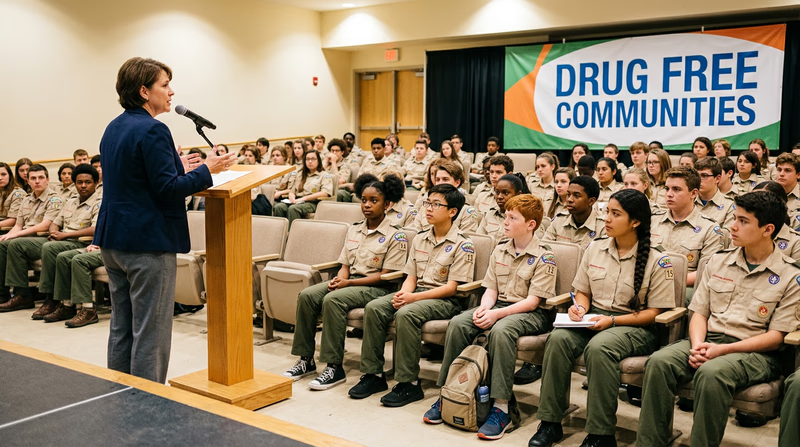
- School-based education — Programs like Too Good for Drugs teach decision-making and refusal skills
- Community coalitions — Groups that bring together schools, law enforcement, faith organizations, and families to address substance use
- Prescription drug take-back programs — Safely disposing of unused medications so they can’t be diverted
- Public awareness campaigns — Educating the public about the dangers of specific substances (especially fentanyl)
Treatment and Recovery
- Detoxification — Medically supervised withdrawal from addictive substances
- Rehabilitation — Inpatient and outpatient programs that address the root causes of addiction
- Medication-assisted treatment (MAT) — Using FDA-approved medications alongside counseling to treat opioid and alcohol addiction
- Support groups — Programs like Alcoholics Anonymous (AA), Narcotics Anonymous (NA), and Alateen provide ongoing peer support
Drug Courts
Drug courts are specialized court programs that offer treatment instead of prison for non-violent drug offenders. Participants undergo supervised treatment, regular drug testing, and court appearances. Research shows drug courts reduce recidivism (re-offending) by 8–14% compared to traditional criminal processing.
How to Get Help
If you or someone you know is struggling with substance use, help is available — and asking for it is a sign of strength, not weakness.
Crisis Resources
Save these numbers — you may need them for yourself or a friend- SAMHSA National Helpline: 1-800-662-4357 (free, confidential, 24/7)
- Crisis Text Line: Text HOME to 741741
- National Suicide Prevention Lifeline: 988
- Poison Control (for overdose): 1-800-222-1222
- Local emergency: 911
Steps to take:
- Talk to a trusted adult — A parent, school counselor, doctor, Scout leader, or religious leader
- Call the SAMHSA helpline (1-800-662-4357) for free referrals to treatment facilities, support groups, and counselors
- If someone is overdosing, call 911 immediately — Most states have Good Samaritan laws that protect people who call for help during an overdose from drug possession charges
Req 9 — Online Crime and You
This requirement covers six topics about staying safe in the digital world:
- How to avoid being the victim of online crimes
- Common online financial scams
- Effective online security
- Identity theft and how to prevent it
- How criminals use social media to target victims
- How bullying, texting, and sharing photos can become crimes
How to Avoid Being the Victim of Online Crimes
The internet is an incredible tool, but it’s also a hunting ground for criminals who exploit trust, ignorance, and carelessness. The good news: most online crimes are preventable with awareness and smart habits.
Core Principles of Online Safety
- Be skeptical — If something sounds too good to be true (free prizes, easy money, urgent requests from strangers), it almost certainly is
- Protect your information — Your full name, address, phone number, school name, and daily schedule are valuable to criminals
- Verify before you trust — Emails, messages, and websites can be faked to look like they come from trusted sources
- Think before you click — Malicious links in emails, texts, and social media messages are the most common way criminals gain access to your devices and accounts
- Keep software updated — Security updates patch vulnerabilities that criminals exploit
Common Online Financial Scams
Scammers are constantly inventing new tricks, but most schemes follow predictable patterns:
Phishing
Fake emails or messages that look like they’re from a legitimate company (your bank, Amazon, Netflix, a social media platform) asking you to “verify your account” or “update your payment information.” The link takes you to a fake website designed to steal your login credentials.
Advance Fee Fraud
You’re told you’ve won a prize, inherited money, or been selected for a special opportunity — but you need to pay a “processing fee” or “tax” first. Once you pay, the scammer disappears.
Online Shopping Scams
Fake websites or social media ads selling popular products at impossibly low prices. You pay, and either nothing arrives, or you receive a cheap counterfeit.
Tech Support Scams
A pop-up message or phone call claiming your computer has a virus. The “tech support” person asks for remote access to your computer or payment to fix the non-existent problem.
Romance Scams
A person builds a fake relationship online, then invents a crisis (medical emergency, legal trouble, travel problem) and asks for money. These scams increasingly target young people through social media and gaming platforms.
Effective Online Security
Think of online security like locking your doors — it won’t stop every determined criminal, but it eliminates most of the easy opportunities.
Password Security
- Use strong, unique passwords for every account — at least 12 characters mixing uppercase, lowercase, numbers, and symbols
- Never reuse passwords across sites — if one account is breached, all accounts with the same password become vulnerable
- Use a password manager (like Bitwarden, 1Password, or the one built into your browser) to generate and store complex passwords
- Never share your passwords with friends — even close friends
Two-Factor Authentication (2FA)
2FA adds a second verification step beyond your password — usually a code sent to your phone or generated by an app. Even if someone steals your password, they can’t access your account without the second factor. Enable 2FA on every account that offers it, especially:
- Email accounts
- Social media accounts
- Banking and financial accounts
- Gaming accounts
Safe Browsing
- Look for HTTPS (the padlock icon) in the address bar before entering any personal information
- Don’t click links in unsolicited emails or texts — type the URL directly into your browser instead
- Keep your browser, operating system, and apps updated
- Be cautious with public Wi-Fi — avoid logging into sensitive accounts on networks you don’t control
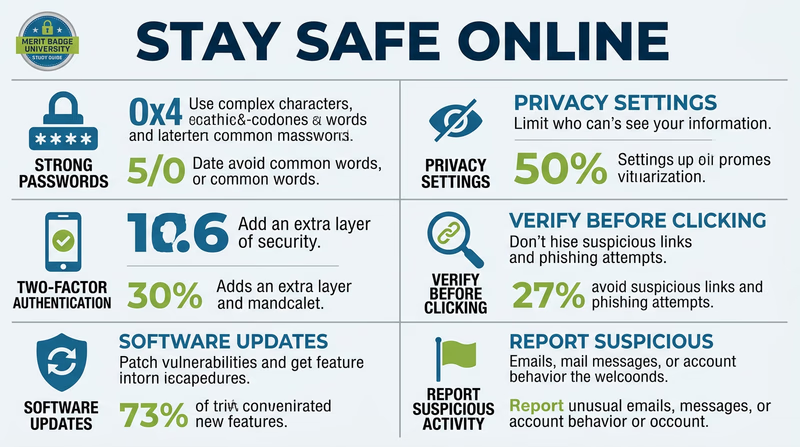
Online Security Checkup
Review these settings on your devices and accounts- Two-factor authentication enabled on email, social media, and financial accounts
- Unique, strong password for every account (use a password manager)
- Software and apps updated to latest versions
- Privacy settings reviewed on all social media accounts
- Location sharing turned off or limited to trusted contacts
- Unfamiliar apps removed from your devices
Identity Theft and How to Prevent It
Identity theft occurs when someone uses your personal information — name, Social Security number, date of birth, account numbers — to commit fraud. It can take months or years to recover from, and it can happen to anyone, including minors.
How Thieves Get Your Information
- Data breaches — Hackers break into company databases and steal millions of records at once
- Phishing — Tricking you into voluntarily providing your information
- Mail theft — Stealing bank statements, tax documents, or pre-approved credit offers from mailboxes
- Dumpster diving — Going through trash for documents with personal information
- Social engineering — Manipulating people into revealing information through conversation
- Skimming — Devices placed on ATMs or card readers that capture your card data
How to Protect Yourself
- Guard your Social Security number — Don’t carry your card in your wallet, and never give it out unless absolutely necessary
- Shred sensitive documents before discarding them
- Monitor your accounts — Check bank and credit card statements regularly for unfamiliar charges
- Freeze your credit — A credit freeze prevents anyone from opening new accounts in your name (free for minors and adults)
- Be careful what you share online — Your birthday, pet’s name, mother’s maiden name, and school name are common security question answers that criminals can harvest from social media
How Criminals Use Social Media to Target Victims
Social media is a goldmine for criminals because people voluntarily share detailed personal information.
What Criminals Look For
- Your location — Check-ins, geotagged photos, and vacation posts tell criminals when you’re away from home
- Your routine — Regular posts about school schedules, practice times, and commute routes reveal predictable patterns
- Personal details — Birthday, school, pet names, favorite teams — all useful for guessing passwords or security questions
- Emotional vulnerability — People who post about loneliness, family conflict, or frustration are targets for manipulation
- Photos — Images can be used for catfishing (creating fake profiles), blackmail, or identifying valuable items in your home
How to Protect Yourself on Social Media
- Set profiles to private — only approved followers can see your content
- Don’t accept friend/follow requests from people you don’t know in real life
- Disable location services for social media apps
- Never post that you’re home alone or that your family is on vacation
- Think before posting: “Would I be comfortable if this appeared on the front page of my school newspaper?”
How Bullying, Texting, and Sharing Photos Can Become Crimes
Many young people don’t realize that activities they consider normal — texting, sharing photos, posting online — can cross the line into criminal behavior.
Cyberbullying
Cyberbullying becomes a crime when it involves:
- Harassment — Repeated, targeted messages intended to frighten or intimidate
- Threats — Any message threatening physical harm is a criminal offense
- Stalking — Obsessive monitoring, messaging, or following someone online
- Defamation — Knowingly spreading false, harmful statements about someone
Many states have specific cyberbullying laws, and victims can seek criminal charges and civil remedies.
Sexting and Photo Sharing
Sending, receiving, or possessing explicit images of anyone under 18 is a federal crime — even if the person in the photo sent it willingly, and even if the person possessing it is also under 18. This means:
- A teenager who takes and sends an explicit photo of themselves can be charged with production and distribution of child sexual abuse material
- A teenager who receives and keeps such a photo can be charged with possession of child sexual abuse material
- Forwarding such a photo to others multiplies the charges
These are serious felonies that can result in prison time and sex offender registration that follows a person for life.
Other Digital Crimes
- Doxxing — Publishing someone’s private information (address, phone number, school) online without their consent
- Swatting — Making a false emergency report to send armed police to someone’s home (a felony that has resulted in deaths)
- Unauthorized access — Logging into someone else’s account without permission, even if you know their password
Req 10 — Interviewing a Professional
Talking to someone who works in crime prevention every day is one of the most valuable parts of this badge. You’ll hear real stories, learn about careers you may not have known existed, and get a perspective that no book or website can provide.
Who Can You Interview?
The requirement says “a law enforcement officer or a civil servant.” That gives you a wide range of options:
Law enforcement officers:
- Police officer or detective
- Sheriff’s deputy
- School Resource Officer (SRO)
- State trooper or highway patrol officer
- FBI, DEA, or ATF agent
- Probation or parole officer
- Crime scene investigator
Civil servants in crime prevention:
- Prosecutor or district attorney
- Victim advocate
- Juvenile justice counselor
- Court clerk or judge
- Code enforcement officer
- Emergency dispatcher (911 operator)
- Fire marshal or arson investigator
- Community development or crime prevention specialist
Setting Up the Interview
How to Make Contact
- Ask your counselor first — They may know someone or have a preferred contact
- Call the non-emergency line of your local police department and ask to speak with someone about a merit badge interview
- Visit a community event where law enforcement is present (National Night Out, Coffee with a Cop, career fairs)
- Ask at school — Your SRO or a guidance counselor can help
Professional Courtesy
- Introduce yourself: “My name is [Name], and I’m a Scout working on my Crime Prevention merit badge. I’d like to interview someone about their career in crime prevention.”
- Be flexible on scheduling — Law enforcement professionals have unpredictable schedules
- Offer multiple formats — In-person is ideal, but phone or video calls work too
- Respect their time — Plan for 20–30 minutes; have your questions ready
- Dress appropriately — If meeting in person, look presentable (your Scout uniform is always appropriate)
- Send a thank-you note afterward — handwritten is best, but email is fine
Interview Questions to Prepare
You’ll want to cover two main areas: how they chose their career and their duties in crime prevention. Here are strong questions to start with — you don’t need to ask all of them, but choose at least 5–7:
Career Path Questions
- What drew you to a career in crime prevention or law enforcement?
- What education and training did you need for this position?
- What was your first day on the job like?
- Is there a moment in your career that confirmed you made the right choice?
- What’s the most challenging part of your job?
- What’s the most rewarding part?
- What advice would you give a young person considering this career?
Crime Prevention Duties Questions
- What does a typical day or shift look like for you?
- How does your work specifically prevent crime (as opposed to responding after a crime happens)?
- What crime prevention strategies have you seen work best in this community?
- How has crime prevention changed during your career?
- How do you work with citizens and community groups to prevent crime?
- What’s the biggest crime prevention challenge facing this community right now?
- What role can young people play in crime prevention?
Deeper Questions (if time allows)
- How does technology help you prevent crime? Has it created new challenges?
- What misconceptions do people have about your job?
- How do you handle the stress of working in crime prevention?
Interview Preparation Checklist
Be ready before your interview- Counselor has approved your interview plan
- Interview subject confirmed with date, time, and location
- List of 5–7 questions written out (bring a printed copy)
- Notebook and pen for taking notes (or ask permission to record)
- Scout uniform ready if meeting in person
- Thank-you note supplies (card and stamp, or email drafted)
During the Interview
- Take notes — Write down key points, specific examples, and any surprising answers
- Listen more than you talk — This is their chance to share, not yours to demonstrate what you know
- Ask follow-up questions — If something interests you, dig deeper: “Can you tell me more about that?”
- Be respectful of sensitive topics — If they indicate something is confidential, don’t push
- Thank them at the end — Express genuine appreciation for their time
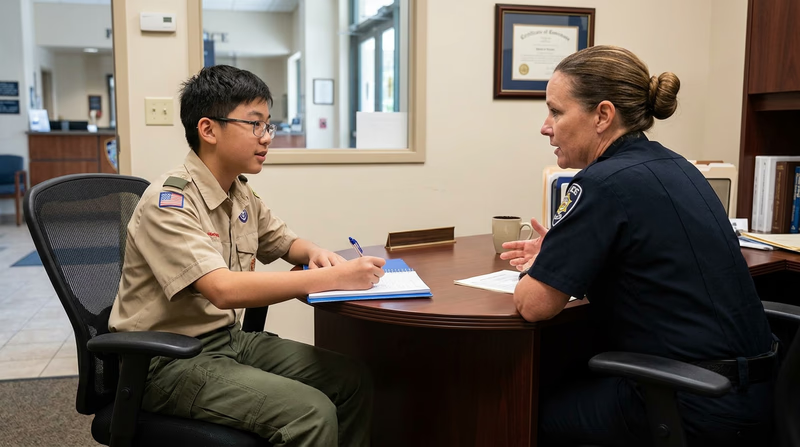
Req 11 — Crime Prevention Careers
Crime prevention careers go far beyond “police officer.” There is a wide range of fields where the skills and knowledge from this badge directly apply — from technology to law, social work to environmental science.
Three Career Categories to Explore
The requirement asks you to identify three career opportunities. Here are several options organized by category to help you choose three that interest you:
Law Enforcement and Public Safety
- Police Officer / Detective — Patrol communities, investigate crimes, and build relationships with residents through community policing
- FBI Special Agent — Investigate federal crimes including cybercrime, terrorism, organized crime, and civil rights violations
- Crime Analyst — Use data, statistics, and mapping software to identify crime patterns and help departments deploy resources strategically
- Forensic Scientist — Analyze physical evidence (DNA, fingerprints, ballistics) from crime scenes to support investigations
- Emergency Management Specialist — Plan for and coordinate responses to disasters, mass casualty events, and other emergencies
Legal and Justice System
- Prosecutor / District Attorney — Represent the government in criminal cases, making decisions about which cases to pursue and how
- Defense Attorney — Ensure that accused individuals receive fair legal representation
- Victim Advocate — Help crime victims navigate the justice system, access resources, and recover
- Probation / Parole Officer — Supervise offenders in the community, helping them comply with court-ordered conditions and avoid reoffending
- Juvenile Justice Counselor — Work with young offenders to provide rehabilitation and prevent future criminal behavior
Prevention, Technology, and Community
- Cybersecurity Analyst — Protect organizations from hackers, data breaches, and cyberattacks
- Social Worker — Address the root causes of crime by helping individuals and families access resources for mental health, substance abuse, housing, and education
- Urban Planner — Design communities using CPTED principles to create safer public spaces
- Loss Prevention Manager — Lead retail security programs to prevent shoplifting and employee theft
- School Counselor — Support students’ mental health and well-being, preventing problems before they escalate
Researching Your Chosen Career
After identifying three careers, pick the one that interests you most and dig deep. Here’s what to research:
Training and Education
| Career Level | Typical Education |
|---|---|
| Entry-level law enforcement | High school diploma + police academy (6–9 months) |
| Federal law enforcement (FBI, DEA) | Bachelor’s degree + specialized training |
| Crime analyst | Bachelor’s degree in criminal justice, data science, or statistics |
| Forensic scientist | Bachelor’s or master’s degree in forensic science, chemistry, or biology |
| Cybersecurity analyst | Bachelor’s degree in computer science or cybersecurity; certifications valuable |
| Attorney (prosecutor/defense) | Bachelor’s degree + law degree (J.D.) + bar exam |
| Social worker | Bachelor’s or master’s degree in social work (BSW/MSW) |
Certifications and Special Requirements
Many crime prevention careers require specific certifications:
- Law enforcement: Physical fitness tests, background check, psychological evaluation, police academy graduation
- Forensic science: American Board of Criminalistics certification
- Cybersecurity: CompTIA Security+, CISSP, CEH (Certified Ethical Hacker)
- Social work: State licensure (LCSW — Licensed Clinical Social Worker)
- Loss prevention: Loss Prevention Certified (LPC) or Certified Forensic Interviewer (CFI)
Where to Find Salary and Employment Data
The Bureau of Labor Statistics Occupational Outlook Handbook is your best resource for reliable career data:
Bureau of Labor Statistics — Occupational Outlook Handbook Detailed career profiles including job duties, education requirements, salary data, and employment outlook for hundreds of occupations. Link: Bureau of Labor Statistics — Occupational Outlook Handbook — https://www.bls.gov/ooh/For each career, the BLS provides:
- Median annual salary — What the typical worker in this field earns
- Job outlook — Whether the field is growing, shrinking, or stable
- Entry-level education — The minimum education most employers require
- Work environment — What daily work looks like
- Similar occupations — Related careers you might also consider
Key Research Questions
Career Research Guide
Answer these questions for your chosen career- What education or degree do I need?
- Are there certifications or licenses required?
- How long does the training take from start to entry-level job?
- What does it cost? (tuition, academy fees, certification exams)
- What is the starting salary in my state?
- What is the salary range for experienced professionals?
- Is this field growing? What’s the projected job growth over the next 10 years?
- What are the advancement opportunities? (e.g., patrol officer → detective → sergeant → lieutenant)
- What does a typical day look like?
- What skills from Scouting would help in this career?
Connecting This to Your Counselor Discussion
When you meet with your counselor, be ready to share:
- Your three career choices and why you selected them
- Detailed research on your chosen career — education, training, costs, salary, and job outlook
- Your honest assessment — Does this career interest you? Why or why not?
- Connections to this badge — How does what you learned in the Crime Prevention merit badge apply to this career?
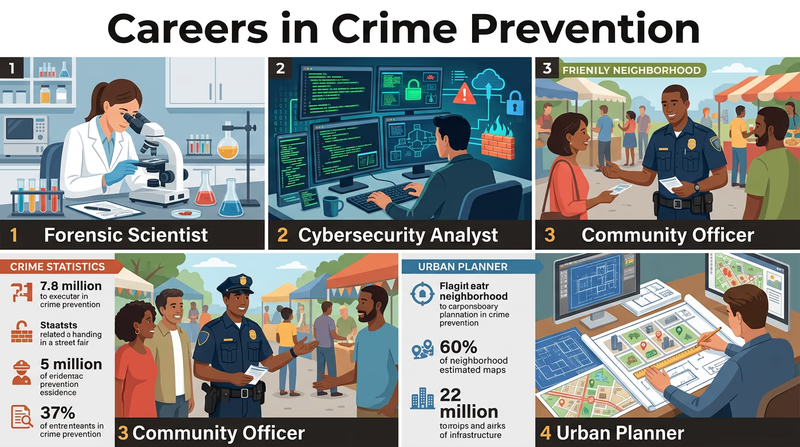
Extended Learning
A. Congratulations
You’ve completed the Crime Prevention merit badge — and in the process, you’ve gained knowledge that most adults don’t have. You understand why crimes happen, how communities work together to prevent them, how to protect yourself online and in your neighborhood, and where to turn when you or someone you know needs help. These aren’t just badge requirements — they’re life skills that will serve you and your community for decades.
Now let’s go deeper.
B. Restorative Justice — A Different Approach
Throughout this badge, you’ve learned about the traditional justice system: police investigate, courts try cases, and corrections punish offenders. But there’s a growing movement that takes a fundamentally different approach — restorative justice.
Instead of asking “What law was broken, and how should the offender be punished?” restorative justice asks “Who was harmed, what do they need, and how can the person who caused harm make it right?”
How It Works
In a typical restorative justice process, the victim, the offender, and members of the community sit together in a facilitated conversation. The victim describes the impact of the crime — not just the physical or financial damage, but the emotional toll. The offender hears this directly and takes responsibility. Together, the group creates an agreement for how the offender will make amends — often through community service, restitution, a sincere apology, or a combination.
Does It Work?
Research from the University of Pennsylvania and other institutions shows that restorative justice programs reduce reoffending rates by 25–30% compared to traditional criminal processing. Victims who participate in restorative justice processes report higher satisfaction with the outcome than those whose cases go through traditional courts. They feel heard, they get answers to their questions (“Why did you do this to me?”), and they have a say in the resolution.
Where It’s Used
Restorative justice is practiced in schools (as an alternative to suspension for bullying or fighting), juvenile courts (for first-time offenders), and even in cases involving serious crimes. New Zealand has built its entire juvenile justice system around restorative principles, and many U.S. communities are adopting similar models.
The concept isn’t new — it draws from indigenous justice traditions practiced by Native American, First Nations, and Maori communities for centuries, long before European colonization introduced adversarial court systems.
C. Forensic Science — The Science Behind the Investigation
Crime shows make forensic science look glamorous and instantaneous — a hair fiber under a microscope, and the case is solved by the commercial break. The reality is far more complex, methodical, and fascinating.
Crime Scene Processing
When investigators arrive at a crime scene, their first job is to secure and preserve it. Every piece of evidence — a fingerprint on a doorknob, a shoe impression in mud, a fiber on a windowsill — must be documented, photographed, and collected without contamination. Crime scene investigators use a systematic grid search pattern to make sure nothing is missed.
Types of Forensic Evidence
- DNA evidence — Extracted from blood, saliva, hair follicles, or skin cells. Modern techniques can develop a DNA profile from just a few cells left on a surface someone touched. The Combined DNA Index System (CODIS) database contains millions of profiles that can link suspects to crime scenes across the country.
- Fingerprint analysis — Every person’s fingerprints are unique, and they remain unchanged throughout life. The Integrated Automated Fingerprint Identification System (IAFIS) can search a fingerprint against a database of over 150 million records in minutes.
- Digital forensics — Recovering deleted files, tracing IP addresses, analyzing phone records, and extracting evidence from encrypted devices. This is the fastest-growing field in forensic science as more crime moves online.
- Ballistics — Examining bullets and shell casings to determine what weapon fired them and linking them to other crime scenes through the National Integrated Ballistic Information Network (NIBIN).
- Trace evidence — Analyzing tiny materials like fibers, glass fragments, paint chips, and soil samples that transfer between people, objects, and locations during a crime.
The Innocence Project
Forensic science doesn’t just catch criminals — it frees innocent people. The Innocence Project has used DNA evidence to exonerate over 375 people who were wrongfully convicted, including 21 who served time on death row. These cases highlight both the power of forensic science and the importance of getting it right.
D. Crime Prevention Technology — What’s Next?
The tools available for crime prevention are evolving rapidly. Some raise exciting possibilities; others raise difficult questions about privacy and civil liberties.
Predictive Policing
Using data analytics and algorithms, some police departments analyze historical crime data to predict where crimes are most likely to occur — and when. Officers are then deployed proactively to those areas. Supporters say it’s a smarter use of limited resources. Critics argue it can reinforce existing biases by directing heavier policing to communities that are already over-policed.
Surveillance Technology
- License plate readers automatically scan and record every license plate that passes a sensor, allowing police to track vehicle movements and identify stolen cars
- Facial recognition software can match faces captured on camera to databases of known individuals — but accuracy rates vary significantly across demographics, raising concerns about false identifications
- Ring and Nextdoor networks allow residents to share doorbell camera footage and neighborhood alerts, creating a distributed surveillance network
The Privacy Question
Every new crime prevention technology comes with a tradeoff: more security often means less privacy. Cameras that catch shoplifters also record the movements of every law-abiding customer. Algorithms that predict crime hotspots can lead to disproportionate surveillance of certain communities. Phone tracking that helps find kidnapping victims can also be used to monitor people’s daily lives.
As a citizen, you’ll increasingly be asked to weigh these tradeoffs. There’s no single right answer — but understanding the technology and the stakes helps you participate in these important community decisions.
Electronic Frontier Foundation — Street-Level Surveillance Resources on surveillance technology used by law enforcement, including privacy implications and community impact. Link: Electronic Frontier Foundation — Street-Level Surveillance — https://www.eff.org/issues/street-level-surveillanceE. Real-World Experiences
Attend a National Night Out Event
Visit a Courtroom
Explore a Law Enforcement Career Day
Volunteer with a Community Safety Project
F. Organizations
Home of McGruff the Crime Dog, NCPC provides resources, training, and programs for community-based crime prevention. Their website includes youth-focused materials and tools for starting crime prevention initiatives.
Organization: National Crime Prevention Council (NCPC) — https://www.ncpc.org/
NCMEC operates the CyberTipline for reporting online exploitation of children and provides resources for families on child safety, internet safety, and prevention education.
Organization: National Center for Missing & Exploited Children (NCMEC) — https://www.missingkids.org/
CISA provides cybersecurity resources for individuals, families, and organizations, including guides on protecting personal information, securing devices, and recognizing scams.
Organization: Cybersecurity and Infrastructure Security Agency (CISA) — https://www.cisa.gov/
With over 4,700 club locations, Boys & Girls Clubs provide safe spaces, mentoring, and youth development programs that are proven to reduce juvenile crime and build positive futures.
Organization: Boys & Girls Clubs of America — https://www.bgca.org/
A federal government resource providing information on what bullying is, who is at risk, and how to prevent and respond to bullying, including cyberbullying. Includes tools for youth, parents, and educators.
Organization: StopBullying.gov — https://www.stopbullying.gov/
A nonprofit legal organization that works to exonerate wrongfully convicted people through DNA testing and reform the criminal justice system to prevent future injustice.
Organization: The Innocence Project — https://innocenceproject.org/