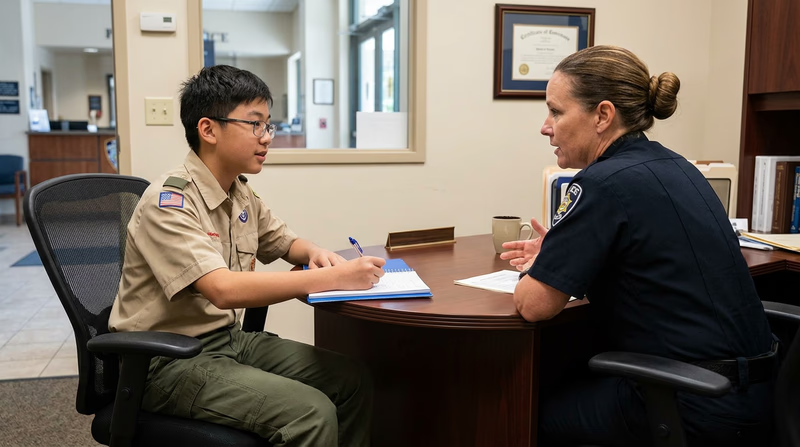
Req 10 — Interviewing a Professional
10.
Interview a law enforcement officer or a civil servant about their work in crime prevention. Learn about how they chose this career and about their duties. Discuss what you learned with your counselor.
Talking to someone who works in crime prevention every day is one of the most valuable parts of this badge. You’ll hear real stories, learn about careers you may not have known existed, and get a perspective that no book or website can provide.
Who Can You Interview?
The requirement says “a law enforcement officer or a civil servant.” That gives you a wide range of options:
Law enforcement officers:
- Police officer or detective
- Sheriff’s deputy
- School Resource Officer (SRO)
- State trooper or highway patrol officer
- FBI, DEA, or ATF agent
- Probation or parole officer
- Crime scene investigator
Civil servants in crime prevention:
- Prosecutor or district attorney
- Victim advocate
- Juvenile justice counselor
- Court clerk or judge
- Code enforcement officer
- Emergency dispatcher (911 operator)
- Fire marshal or arson investigator
- Community development or crime prevention specialist
Setting Up the Interview
How to Make Contact
- Ask your counselor first — They may know someone or have a preferred contact
- Call the non-emergency line of your local police department and ask to speak with someone about a merit badge interview
- Visit a community event where law enforcement is present (National Night Out, Coffee with a Cop, career fairs)
- Ask at school — Your SRO or a guidance counselor can help
Professional Courtesy
- Introduce yourself: “My name is [Name], and I’m a Scout working on my Crime Prevention merit badge. I’d like to interview someone about their career in crime prevention.”
- Be flexible on scheduling — Law enforcement professionals have unpredictable schedules
- Offer multiple formats — In-person is ideal, but phone or video calls work too
- Respect their time — Plan for 20–30 minutes; have your questions ready
- Dress appropriately — If meeting in person, look presentable (your Scout uniform is always appropriate)
- Send a thank-you note afterward — handwritten is best, but email is fine
Interview Questions to Prepare
You’ll want to cover two main areas: how they chose their career and their duties in crime prevention. Here are strong questions to start with — you don’t need to ask all of them, but choose at least 5–7:
Career Path Questions
- What drew you to a career in crime prevention or law enforcement?
- What education and training did you need for this position?
- What was your first day on the job like?
- Is there a moment in your career that confirmed you made the right choice?
- What’s the most challenging part of your job?
- What’s the most rewarding part?
- What advice would you give a young person considering this career?
Crime Prevention Duties Questions
- What does a typical day or shift look like for you?
- How does your work specifically prevent crime (as opposed to responding after a crime happens)?
- What crime prevention strategies have you seen work best in this community?
- How has crime prevention changed during your career?
- How do you work with citizens and community groups to prevent crime?
- What’s the biggest crime prevention challenge facing this community right now?
- What role can young people play in crime prevention?
Deeper Questions (if time allows)
- How does technology help you prevent crime? Has it created new challenges?
- What misconceptions do people have about your job?
- How do you handle the stress of working in crime prevention?
Interview Preparation Checklist
Be ready before your interview
- Counselor has approved your interview plan
- Interview subject confirmed with date, time, and location
- List of 5–7 questions written out (bring a printed copy)
- Notebook and pen for taking notes (or ask permission to record)
- Scout uniform ready if meeting in person
- Thank-you note supplies (card and stamp, or email drafted)
During the Interview
- Take notes — Write down key points, specific examples, and any surprising answers
- Listen more than you talk — This is their chance to share, not yours to demonstrate what you know
- Ask follow-up questions — If something interests you, dig deeper: “Can you tell me more about that?”
- Be respectful of sensitive topics — If they indicate something is confidential, don’t push
- Thank them at the end — Express genuine appreciation for their time