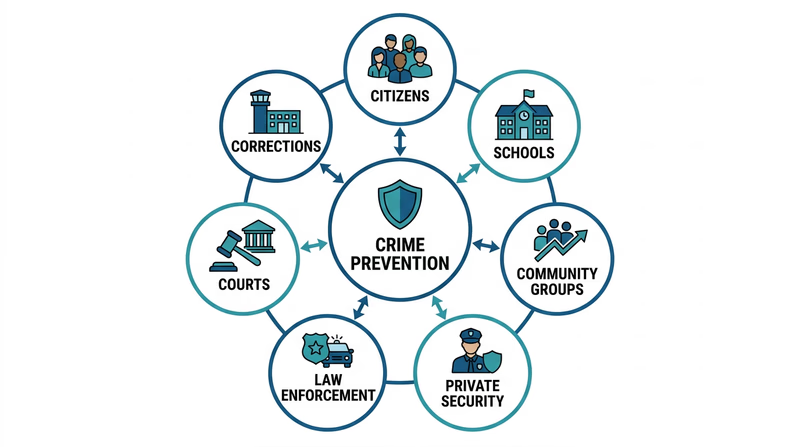
Req 2 — Groups Working to Prevent Crime
Crime prevention is a team effort. No single group — not even the police — can prevent crime alone. This requirement asks you to research how seven different groups contribute, from ordinary citizens to the courts. Here’s a guide to what each group does and how they work together.
Citizens, Including Youth
You don’t need a badge or a uniform to prevent crime. Citizens are the eyes and ears of every community, and young people play a bigger role than you might think.
How citizens contribute:
- Neighborhood Watch programs — Neighbors agree to watch for suspicious activity and report it. These programs reduce burglary and vandalism by making criminals feel observed.
- Reporting crimes and tips — Calling 911, using anonymous tip lines like Crime Stoppers, or reporting suspicious online activity
- Volunteering — Mentoring at-risk youth, participating in community cleanups, and organizing events that bring people together
- Modeling good behavior — Simply being a responsible, engaged member of your community discourages crime
Youth-specific contributions:
- Peer mediation programs in schools
- Anti-bullying campaigns led by students
- Scouting and other youth organizations that build character and leadership
- Youth advisory councils that give young people a voice in community safety planning
Schools
Schools are more than places to learn math and science — they’re critical hubs for crime prevention. Most young people spend more waking hours at school than anywhere else, making schools a natural place to teach safety and build positive behaviors.
How schools contribute:
- Anti-bullying and conflict resolution programs — Teaching students to resolve disagreements without violence
- School Resource Officers (SROs) — Trained law enforcement officers who build relationships with students and respond to safety concerns
- Drug and alcohol awareness education — Programs like Too Good for Drugs that teach decision-making skills
- Safety drills and emergency planning — Preparing students and staff for various emergency scenarios
- Counseling services — Helping students deal with problems before they escalate
- Positive school culture — Schools with strong communities and engaged students experience fewer disciplinary issues and less crime
Neighborhood, Social, and Civic Groups
When people are connected to their community, crime goes down. Social isolation is one of the strongest predictors of crime in a neighborhood, which is why groups that bring people together are powerful crime prevention tools.
- Neighborhood associations organize block parties, community gardens, and cleanup events that build trust between neighbors
- Faith-based organizations provide youth programs, food banks, shelter, and mentoring
- Service clubs (Rotary, Lions, Kiwanis) fund community projects and scholarships
- Youth organizations like Scouting, Boys & Girls Clubs, and 4-H give young people structured activities, mentors, and a sense of belonging
- Community athletic leagues provide positive outlets and adult supervision during after-school hours — a peak time for juvenile crime
Private Security
Private security guards, systems, and companies protect businesses, residential communities, events, and critical infrastructure. The private security industry in the United States actually employs more people than public law enforcement.
How private security contributes:
- Security guards and patrols — Visible presence at malls, office buildings, hospitals, and residential areas deters crime
- Alarm and monitoring systems — Home and business security systems alert authorities to break-ins, fires, and other emergencies
- Loss prevention teams — Retail stores employ specialists to detect and prevent shoplifting (you’ll learn more about this in Requirement 5)
- Cybersecurity firms — Companies that protect digital infrastructure from hackers, data breaches, and cyberattacks
- Event security — Trained personnel who manage crowd safety at concerts, sporting events, and public gatherings
Private security works alongside — not as a replacement for — public law enforcement. Security guards can observe, report, and deter, but they have different legal authority than police officers.
Law Enforcement Agencies
Law enforcement is the most visible part of crime prevention, but their role goes far beyond arresting criminals.
Local police departments and sheriff’s offices:
- Patrol neighborhoods and respond to 911 calls
- Investigate crimes and collect evidence
- Run community policing programs (bike patrols, Coffee with a Cop, youth academies)
- Conduct crime analysis to identify patterns and deploy resources strategically
State police and highway patrols:
- Enforce traffic laws on highways and state roads
- Investigate crimes that cross local jurisdictions
- Provide forensic lab services and specialized units to smaller departments
Federal agencies:
- FBI — Investigates federal crimes including terrorism, cybercrime, organized crime, and civil rights violations
- DEA — Enforces drug laws and combats drug trafficking
- ATF — Regulates firearms and investigates arson and explosives cases
- Secret Service — Protects national leaders and investigates financial crimes like counterfeiting
- U.S. Marshals — Apprehend fugitives and protect the federal court system
Courts
Courts are where justice happens — where the facts of a case are weighed and outcomes are decided. They play a crime prevention role in several ways:
- Deterrence — The possibility of being tried and convicted discourages criminal behavior
- Incapacitation — Sentencing convicted criminals to prison removes them from the community temporarily
- Rehabilitation orders — Courts can mandate drug treatment, anger management, community service, or counseling
- Restorative justice programs — Some courts bring offenders face-to-face with victims to understand the harm they caused and make amends
- Protective orders — Courts issue restraining orders that protect victims of domestic violence and stalking
The court system includes criminal courts (which handle crimes), civil courts (which handle disputes between people or organizations), and juvenile courts (which handle cases involving minors with a greater focus on rehabilitation than punishment).
Corrections and Rehabilitation Programs
After a person is convicted, the corrections system takes over. Its goal is twofold: protect the public and help offenders become law-abiding citizens.
Corrections includes:
- Prisons and jails — Incarceration removes offenders from the community. Jails hold people awaiting trial or serving short sentences; prisons hold those convicted of more serious crimes for longer terms.
- Probation and parole — Supervised release that allows offenders to live in the community under strict conditions instead of (or after) incarceration
- Rehabilitation programs — Education classes, job training, substance abuse treatment, and cognitive behavioral therapy offered inside correctional facilities
- Reentry programs — Help former offenders transition back to the community with housing, employment assistance, and mentoring
The most effective crime prevention happens when all seven of these groups work together. Citizens report suspicious activity. Police investigate. Courts deliver justice. Corrections work to prevent reoffending. And community groups, schools, and youth like you fill in the gaps that the justice system alone can’t reach.
National Crime Prevention Council Home of McGruff the Crime Dog — resources on community crime prevention, neighborhood safety, and youth engagement.