Req 3b — Analyzing Your Research
Now it’s time to think critically about the three crimes you researched in Req 3a. This requirement asks you to move beyond “what happened” and dig into “who responded,” “why did it happen,” and “how could it have been prevented.”
Identifying the Agencies Involved
For each of your three crimes, identify every law enforcement agency and court that played a role. Remember the different levels you learned about in Requirement 2:
Law enforcement agencies to look for:
- Local police or sheriff’s department — Usually the first responders for local crimes
- State police or highway patrol — Often involved in crimes on state highways or crimes crossing county lines
- Federal agencies (FBI, DEA, ATF, Secret Service) — Involved when crimes cross state lines, involve federal laws, or are particularly large-scale
- Specialized units — Cybercrime units, fraud divisions, environmental enforcement agencies
Courts to identify:
- Municipal or district courts — Handle misdemeanors and initial hearings
- Superior or circuit courts — Handle felony trials
- Federal courts — Handle federal crimes
- Juvenile courts — Handle cases involving minors
- Appeals courts — Handle cases where a conviction is challenged
Analyzing Why the Crimes Were Committed
This is the heart of your analysis. For each crime, think about the factors that may have contributed. Refer back to the list of reasons from Requirement 1:
- Economic pressure or financial desperation
- Substance abuse or addiction
- Peer pressure or gang involvement
- Opportunity (something was easy to steal or no one was watching)
- Anger, revenge, or emotional impulse
- Greed or desire for power
- Mental health challenges
Most crimes involve more than one factor. A burglary, for example, might involve both economic pressure and opportunity (an unlocked door in an unlit neighborhood). A white collar crime might stem from both greed and the belief that “everyone does it.”
Proposing Prevention Strategies
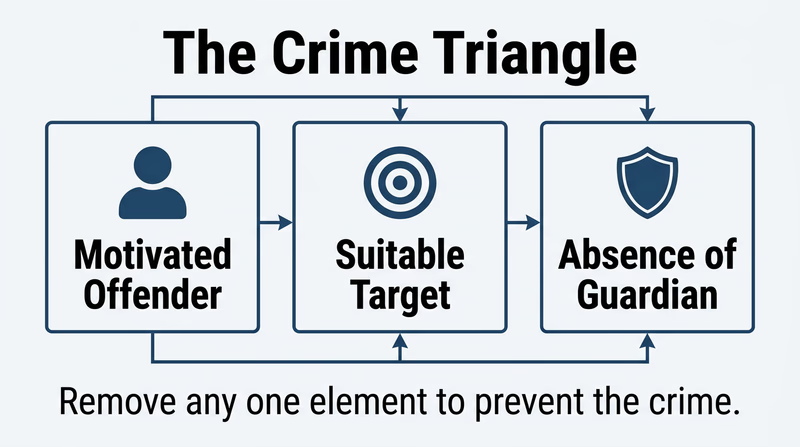
For each crime, think about what could have been done to prevent it — or to prevent similar crimes in the future. Use the Crime Triangle framework:
Reduce Motivation
- Better economic opportunities, education, and youth programs
- Substance abuse prevention and treatment
- Anti-gang intervention programs
- Mental health services
Harden the Target
- Better locks, lighting, and security systems
- Cybersecurity measures (strong passwords, two-factor authentication)
- Inventory controls and loss prevention in retail
- Environmental monitoring and enforcement
Strengthen the Guardian
- Neighborhood Watch programs and community engagement
- Security cameras and alarm systems
- More community policing and foot patrols
- Bystander intervention training
Analysis Notes Template
Complete this for each of your three crimes
- Crime summary: What happened? (3–4 sentences)
- Agencies involved: Which law enforcement agencies responded or investigated?
- Courts involved: Where was the case heard? What type of court?
- Motivation analysis: Why do you think this crime was committed?
- Prevention ideas: What could have prevented this specific crime?
- Broader prevention: What would prevent similar crimes in the future?