Req 4b — Conducting a Security Survey
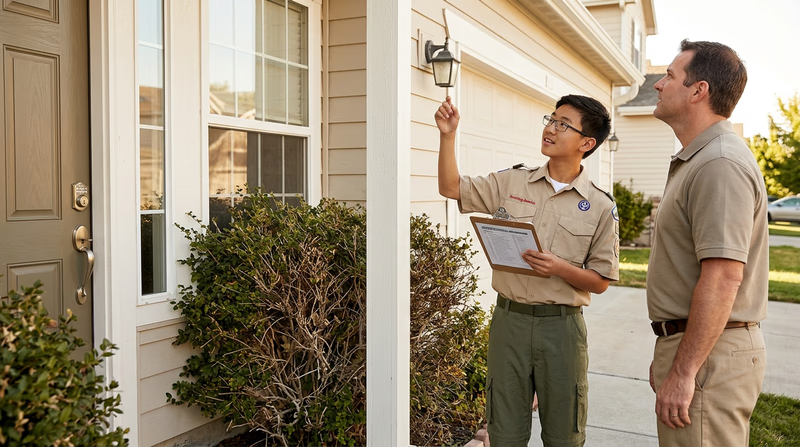
A security survey is a systematic walkthrough where you evaluate a location for vulnerabilities — places where crime could happen — and strengths — features that already deter crime. Think of yourself as a consultant: your job is to assess the situation and recommend improvements.
Before You Start
Choose Your Location
You can survey any one of these:
- A home (yours or a family member’s, with their permission)
- A neighborhood (a block or two around your home)
- A park (a local public park or recreation area)
- A camp building (your Scout camp’s dining hall, shower house, or meeting lodge)
Get Your Checklist
The requirement says to use a security checklist from the merit badge pamphlet or one approved by your counselor. Use our printable worksheet below, or ask your counselor if they have a preferred checklist.
Security Survey WorksheetConducting the Survey
Walk through your chosen location with your checklist and adult supervisor. Take notes on everything you observe. Here’s what to evaluate in each area:
Exterior and Perimeter
- Lighting: Are all walkways, entrances, and parking areas well lit? Are any lights burned out or blocked by vegetation?
- Landscaping: Can you see clearly from the street to the building? Are bushes trimmed below 3 feet? Are tree canopies above 7 feet?
- Fencing and boundaries: Are property lines clear? Are fences, gates, or hedges in good repair?
- Entry points: How many doors and windows are accessible from outside? Are they secured with locks?
- Signage: Are there any security signs (alarm company, Neighborhood Watch, “No Trespassing”)?
- General condition: Is the property well maintained, or are there signs of neglect (peeling paint, broken windows, litter)?
Doors and Windows
- Door locks: Do all exterior doors have deadbolts? Are hinges on the inside (not exposed to tampering)?
- Sliding doors: Do they have security bars or pins to prevent forced entry?
- Windows: Do ground-floor windows have locks? Are any broken or left open?
- Door frames: Are they solid and in good condition, or could they be kicked in?
Interior
- Valuables: Are expensive items visible from outside through windows?
- Alarm system: Is there a security system? Is it activated?
- Emergency exits: Are emergency exits clearly marked and unobstructed?
- Key control: Who has keys? Are spare keys hidden in obvious places (under doormats, in fake rocks)?
Neighborhood or Park Features
- Street lighting: Are streetlights working? Are any streets or paths dark?
- Sightlines: Can you see clearly along walking paths, or do blind corners and dense vegetation create hiding spots?
- Activity level: Are there people using the space? Active spaces are safer spaces.
- Signs of disorder: Graffiti, broken equipment, litter, or abandoned vehicles can signal that a space isn’t being cared for.
Recording Your Findings
For each area you survey, note:
- What you observed — Describe the current condition
- Risk level — Is this a low, medium, or high vulnerability?
- Recommendation — What specific action would improve security?
Be specific. “The lighting is bad” isn’t helpful. “The light above the side entrance is burned out, leaving a 20-foot dark zone next to the driveway” gives actionable information.
Survey Best Practices
Tips for a thorough security assessment
- Walk the entire perimeter before going inside
- Take photos (with permission) to document vulnerabilities
- Note both strengths and weaknesses — what’s already working well?
- Think like a criminal — if you wanted to break in, where would you try?
- Check every door and window, not just the obvious ones
- Look at the location from across the street — what’s visible to passersby?
You’ll use the results of this survey to build your crime prevention lesson in Req 4c, so keep your notes organized and complete.
Home Security Checklist — National Crime Prevention Council Additional home and neighborhood security resources from the National Crime Prevention Council.