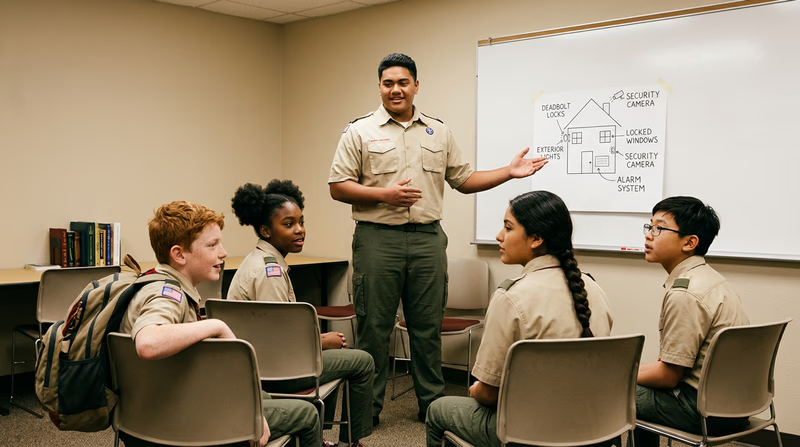
Req 4c — Teaching Crime Prevention
This is where your security survey turns into action. You’ve found the vulnerabilities — now you’ll teach others how to fix them using the EDGE method, a teaching framework that Scouts use across many badges and leadership positions.
The EDGE Method
EDGE stands for Explain, Demonstrate, Guide, Enable. It’s a four-step process for teaching any skill effectively:
| Step | What You Do | Example for Crime Prevention |
|---|---|---|
| Explain | Tell your audience what you’re teaching and why it matters | “Today I’m going to show you how to make our home more secure based on a survey I conducted.” |
| Demonstrate | Show them how to do it | Walk through the house, pointing out a vulnerability and showing the fix (e.g., installing a window lock) |
| Guide | Let them try it while you coach | Have them check the other windows and identify which ones need locks |
| Enable | Step back and let them do it independently | Assign each family member a security task to complete on their own |
Planning Your Lesson
Step 1: Choose Your Audience
Decide whether you’ll present to your family or to Scouts (your patrol or troop). This affects your approach:
- Family: You can use your actual home survey results and make specific recommendations. The lesson is personal and immediately actionable.
- Scouts: Use your survey as a case study and teach general principles they can apply to their own homes. Focus on skills everyone can use.
Step 2: Pick Your Focus
From your security survey, choose 2–3 key findings to build your lesson around. Good topics include:
- Door and window security basics
- The importance of exterior lighting
- How landscaping affects safety (CPTED principles from Req 4a)
- Online and digital security habits
- What to do if you see suspicious activity
- Creating a family safety plan
Step 3: Build Your Lesson Plan
Use this framework to organize your EDGE lesson:
Lesson Plan Template
Fill in for your specific topic
- Topic: What security skill or concept are you teaching?
- Audience: Family or Scouts?
- Time: How long will the lesson take? (Aim for 10–20 minutes)
- Materials: What do you need? (Survey results, props, handouts)
- Explain: What will you tell them? (2–3 key points)
- Demonstrate: What will you show them? (A hands-on example)
- Guide: What will they try with your help? (Practice activity)
- Enable: What will they do on their own? (Take-home action item)
Step 4: Review with Your Counselor
Before you teach, share your plan with your merit badge counselor. They can help you:
- Sharpen your focus
- Suggest improvements to your EDGE approach
- Make sure your content is accurate
- Offer presentation tips
Presenting Effectively
Keep It Real
Use your actual survey findings. “I found three burned-out lights around our house” is more compelling than “Lighting is important.” Real examples from your own survey make the lesson personal and urgent.
Make It Interactive
Don’t just lecture. The best EDGE lessons involve the audience:
- Walk-and-talk: If presenting to family, walk through your home and point out what you found
- Quiz them: “Before I show you, what do you think is the biggest security weakness in our home?”
- Hands-on: Let them check a lock, test a light, or practice calling a non-emergency number
Give Action Items
End with specific, doable tasks. People remember what they’re asked to do, not what they’re told to think about.
Teaching EDGE — Scouting America Scouting America's guide to the EDGE teaching method, with additional tips and examples.