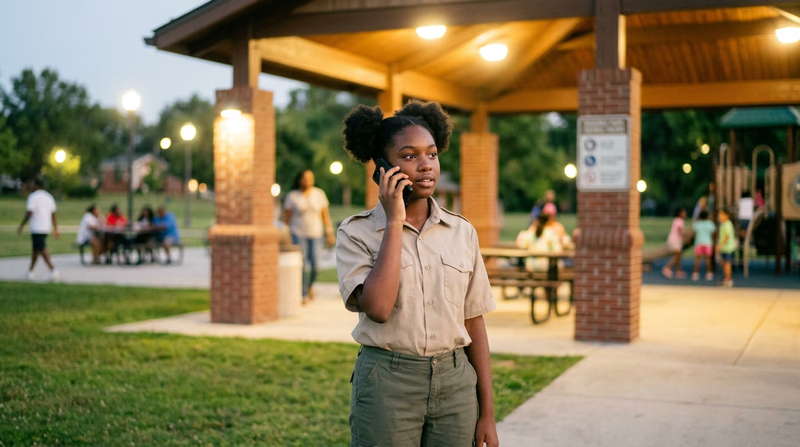
Req 6 — Reporting Crime
This requirement covers four critical topics about reporting crime and protecting yourself and others:
- When and how to report a crime or an impending crime
- Warning signs of child abuse and domestic violence
- The three R’s of personal safety and protection
- How reporting helps law enforcement provide resources for victims
When and How to Report a Crime
One of the most powerful things you can do to prevent crime is simply to report it. Many crimes go unreported — the Bureau of Justice Statistics estimates that more than half of all violent crimes and two-thirds of property crimes in the U.S. are never reported to police. Every unreported crime is a missed opportunity for justice and prevention.
When to Call 911
Call 911 when there is an immediate threat to life or property — a crime is happening right now, or someone is in danger right now:
- You witness a crime in progress (assault, robbery, break-in)
- Someone is injured and needs emergency medical help
- There’s a fire or explosion
- You see a suspicious person trying to enter a home or building
- Someone is threatening violence
When to Call the Non-Emergency Line
Use your local police department’s non-emergency number for situations that are not life-threatening but still need attention:
- You discover your car was broken into overnight
- You notice graffiti or vandalism
- You want to report a suspicious pattern (a car circling the block repeatedly over several days)
- You need to file a report about a past crime
Warning Signs of Child Abuse and Domestic Violence
These are difficult topics, but recognizing the warning signs can save someone’s life. As a Scout, you are trained to help others — and sometimes that means speaking up when you notice that someone is being hurt.
Signs of Child Abuse
Child abuse can be physical, emotional, sexual, or neglect. Warning signs include:
- Unexplained bruises, burns, or injuries — especially in patterns or on parts of the body usually covered by clothing
- Flinching at sudden movements or avoiding physical contact
- Wearing long sleeves or pants in hot weather to cover injuries
- Sudden changes in behavior — becoming withdrawn, aggressive, or fearful
- Frequent absences from school
- Poor hygiene, malnutrition, or appearing consistently tired
- Fear of going home or anxiety about a specific adult
- Age-inappropriate sexual knowledge or behavior
Signs of Domestic Violence
Domestic violence affects families of every background. Signs that someone may be experiencing it include:
- Unexplained injuries with unconvincing explanations (“I walked into a door”)
- A partner or family member who is extremely controlling — monitoring phone calls, controlling finances, isolating the person from friends
- Visible fear of a partner or family member
- Withdrawal from friends, activities, or social situations
- Sudden personality changes — loss of confidence, constant anxiety
How to Report
If you suspect child abuse or domestic violence:
- Tell a trusted adult — a parent, teacher, school counselor, coach, or Scout leader
- Call the Childhelp National Child Abuse Hotline: 1-800-422-4453 (available 24/7)
- Contact the National Domestic Violence Hotline: 1-800-799-7233 (or text START to 88788)
- Report to local child protective services — every state has a reporting system
The Three R’s of Personal Safety
The three R’s provide a simple framework for protecting yourself in any dangerous situation:
Recognize
Learn to identify potentially dangerous situations before they escalate. This means:
- Trusting your instincts — if something feels wrong, it probably is
- Being aware of your surroundings, especially in unfamiliar places
- Knowing the warning signs of predatory behavior (excessive friendliness from strangers, attempts to isolate you, offering gifts or special attention)
- Understanding that danger can come from people you know, not just strangers
Resist
Take action to protect yourself:
- Say “No” firmly and loudly if someone tries to touch you inappropriately or pressure you into something unsafe
- Remove yourself from the situation — leave, walk away, go to a public place
- Use the buddy system — travel with friends, especially at night
- Create distance between yourself and the threat
- Make noise — yell, scream, attract attention if you’re in danger
Report
Tell someone what happened:
- Tell a trusted adult immediately — a parent, teacher, counselor, or Scout leader
- Call 911 if you’re in immediate danger
- Don’t keep secrets about abuse or threats — the person who is hurting or threatening you is the one doing something wrong, not you
- Follow up — if the first adult you tell doesn’t take action, tell another one
How Reporting Helps Victims
When a crime is reported, it does more than start an investigation. It opens the door to support services for victims:
- Victim advocates — Many police departments and prosecutors’ offices have victim advocates who help people navigate the justice system, find safe housing, and access counseling
- Victim compensation funds — Most states have programs that help crime victims pay for medical care, counseling, and lost wages
- Protective orders — Courts can issue orders that keep offenders away from their victims
- Community resources — Reports connect victims to shelters, food assistance, legal aid, and support groups
- Crime data — Every report contributes to data that helps law enforcement allocate resources and identify crime patterns
When crimes go unreported, victims miss out on these resources. And communities miss the data they need to prevent future crimes.
Childhelp National Child Abuse Hotline 24/7 crisis line (1-800-422-4453) offering help for children and adults dealing with child abuse.