Req 7 — Peers and Crime
This requirement covers four topics about the role peers play in crime:
- The role peers play in crime, crime prevention, and experiencing crime
- How to resist peer influence
- Bullying and hazing behaviors and warning signs
- The impact of gangs on communities
The Role Peers Play
Your peers — the people around your age who you interact with at school, in activities, and online — have an enormous influence on your behavior. That influence can push in two very different directions.
Peers and Crime
Research consistently shows that having friends who engage in criminal behavior is one of the strongest predictors that a young person will also break the law. This happens through several mechanisms:
- Normalization — When everyone in your group shoplifts, vandalizes, or experiments with drugs, those behaviors start to seem normal and acceptable
- Pressure — Direct challenges like “I dare you” or “Are you scared?” push people to do things they wouldn’t do alone
- Opportunity — Groups create situations where crime becomes possible (one person acts as a lookout while another steals)
- Diffusion of responsibility — “Everyone was doing it” makes individuals feel less personally accountable
Peers and Crime Prevention
The flip side is equally powerful. Positive peer groups prevent crime by:
- Setting high standards — When your friends value honesty, respect, and achievement, those values become your norm too
- Providing accountability — Friends who call out bad decisions before they escalate
- Offering alternatives — Having fun, meaningful activities with friends means you don’t need risky behavior for excitement
- Supporting each other — Friends who notice when someone is struggling and help them get support
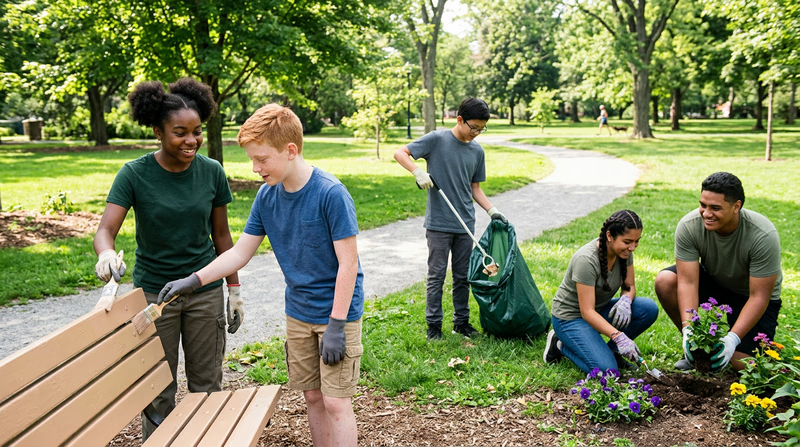
Your Scout troop is a prime example of a positive peer group. The Scout Oath and Scout Law create shared values, and the patrol system means you’re surrounded by peers who encourage your best self.
Peers and Experiencing Crime
Peers also affect how young people experience and respond to crime as victims or witnesses:
- A friend who witnesses bullying and speaks up can stop it
- A peer who notices warning signs in a friend’s home life might be the first person to report abuse
- Unfortunately, peers can also discourage reporting — “don’t be a snitch” culture can keep victims silent
How to Resist Peer Influence
Knowing that peer pressure exists isn’t enough. You need specific strategies to resist it in the moment, when emotions are high and thinking clearly is hard.
The STOP Method
- S — Stop before you act. Take a breath. The urge to go along usually fades if you give yourself even 10 seconds.
- T — Think about the consequences. What happens if this goes wrong? Will this affect your family, your Scout advancement, your future?
- O — Observe the situation. Who’s really pushing this? Are they looking out for you, or using you?
- P — Plan your response. Have a go-to line ready: “Nah, I’m good” or “I’ve gotta get home” or simply walk away.
Practical Exit Strategies
Sometimes you need a concrete way to leave a bad situation:
- The phone excuse: “My mom just texted — I have to go.” (Pre-arrange with a parent that you can use them as an excuse anytime.)
- The buddy system: Agree with a trusted friend that either of you can say “Let’s go” and the other will leave immediately, no questions asked.
- The broken record: Just repeat “No thanks” calmly without explaining or defending yourself. You don’t owe anyone a reason.
- The future self: Ask yourself, “Will I be proud of this decision tomorrow morning?” If not, don’t do it.
Bullying and Hazing
What Is Bullying?
Bullying is repeated aggressive behavior intended to hurt, intimidate, or control another person. It involves a real or perceived power imbalance — the target feels unable to stop it. Bullying takes several forms:
- Physical: Hitting, pushing, tripping, taking or breaking someone’s belongings
- Verbal: Name-calling, insults, threats, taunting
- Social/relational: Spreading rumors, excluding someone from a group, embarrassing someone publicly
- Cyberbullying: Harassment through texts, social media, gaming platforms, or email (covered more in Req 9)
What Is Hazing?
Hazing is forcing someone to do humiliating, degrading, or dangerous things as a condition of joining or being accepted by a group. It’s sometimes disguised as “tradition” or “initiation,” but it’s harmful and often illegal. Examples include:
- Forcing someone to eat or drink disgusting substances
- Physical endurance challenges that risk injury
- Public humiliation or embarrassment
- Sleep deprivation
- Being forced to do illegal acts to “prove loyalty”
Scouting has a zero-tolerance policy for hazing. No tradition, no matter how long-standing, justifies putting someone through a humiliating or dangerous experience.
Warning Signs That a Friend Is Being Bullied
- Sudden reluctance to go to school or participate in activities
- Unexplained injuries or damaged belongings
- Changes in eating or sleeping habits
- Loss of interest in things they used to enjoy
- Withdrawal from friends and social situations
- Declining grades
- Talking about feeling helpless, hopeless, or like nobody cares
The Impact of Gangs on Communities
Gangs are groups that use intimidation, violence, and criminal activity to maintain power over a territory. Their impact on communities extends far beyond the crimes they commit.
How Gangs Harm Communities
- Violence — Gang-related violence puts innocent bystanders at risk and creates an atmosphere of fear
- Drug distribution — Many gangs are involved in selling drugs, which fuels addiction, overdose deaths, and secondary crimes
- Economic damage — Businesses leave, property values drop, and residents who can afford to move often do
- Youth recruitment — Gangs target young people who feel disconnected, offering a sense of belonging and identity that comes with dangerous strings attached
- Strained resources — Law enforcement, hospitals, and social services are stretched thin responding to gang-related incidents
Why Young People Join Gangs
Understanding why helps point the way toward prevention:
- Belonging — Gangs offer family-like bonds to young people who feel isolated
- Protection — In high-crime areas, some youth join gangs because they feel safer inside than outside
- Money — Economic opportunity through illegal activities when legal options seem unavailable
- Identity and respect — Gangs offer status and recognition
- Family tradition — Some young people have relatives in gangs and see it as expected
What Prevents Gang Involvement
The antidotes are the same positive forces you’ve been learning about throughout this badge:
- Strong family connections and involved adults
- After-school programs and structured activities
- Mentoring relationships
- Job training and employment opportunities
- Positive peer groups — like your Scout troop