Req 2a — Scout Law Online
The Scout Law was written long before the internet existed, but every one of its twelve points applies directly to how you behave online. The challenge is that the internet makes it easy to forget them. Screens create a sense of distance — it is harder to see the impact of your words when you cannot see the other person’s face. This requirement asks you to bridge that gap.
The Scout Law, Refreshed for the Digital Age
You need to pick three points for your counselor. Here is how all twelve connect to online behavior, so you can choose the ones that resonate most with you:
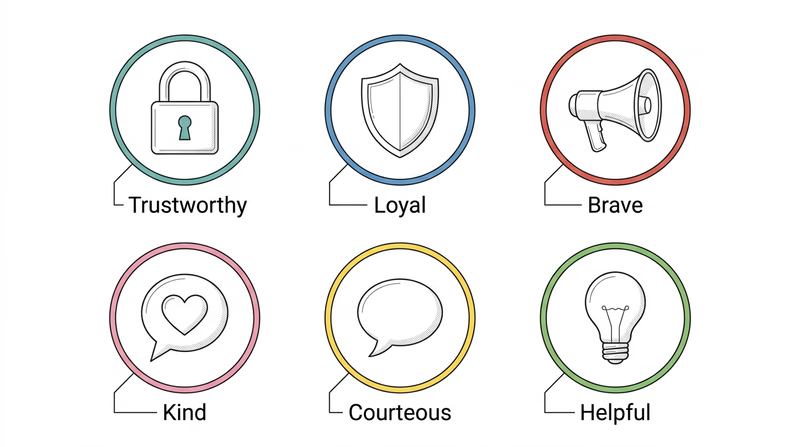
Trustworthy
A Scout is trustworthy — online and offline. This means not creating fake accounts to deceive people, not sharing others’ secrets or private messages, and not pretending to be someone you are not. When you say something online, people should be able to rely on it being true.
Loyal
Loyalty online means standing up for friends when they are being cyberbullied — not just scrolling past. It also means not sharing someone’s personal information or embarrassing moments without their permission, even if “everyone else is doing it.”
Helpful
Being helpful online looks like answering questions in forums, teaching someone a skill through a tutorial, or reporting harmful content so platforms can remove it. It does not mean doing someone’s homework for them or sharing test answers.
Friendly
A friendly Scout treats people online the way they would in person. This means welcoming newcomers to online communities, being patient with people who are learning, and assuming good intentions before jumping to conclusions in text conversations (where tone is hard to read).
Courteous
Courtesy online means using respectful language even during disagreements, not interrupting others in voice chats, and acknowledging other people’s contributions. It also means not spamming, not sending unsolicited content, and respecting people’s time.
Kind
Kindness is the opposite of trolling. It means not posting hurtful comments for laughs, not piling on when someone makes a mistake, and thinking about how your words will affect the person reading them. Behind every screen name is a real person.
Obedient
Being obedient means following the rules — terms of service, school technology policies, and your family’s rules about screen time and online behavior. It also means respecting age restrictions on platforms (you need to be 13 for most social media accounts, for a reason).
Cheerful
A cheerful Scout brings positive energy to online spaces. This does not mean being fake or ignoring problems — it means choosing to contribute constructively instead of complaining, mocking, or tearing others down.
Thrifty
Digital thriftiness includes managing your data usage, not wasting bandwidth on unnecessary downloads, and being mindful of subscription costs. It also means valuing other people’s digital creations — not pirating software, music, or games.
Brave
Being brave online means speaking up when you see cyberbullying, reporting inappropriate content even when it is unpopular, and admitting when you have made a mistake instead of hiding behind anonymity. It takes real courage to do the right thing when no one is watching.
Clean
A clean Scout keeps their digital spaces organized and appropriate. This means keeping your devices free of malware, not visiting or sharing inappropriate content, and maintaining a digital footprint you would be proud to show anyone.
Reverent
Reverence online means respecting others’ beliefs, cultures, and perspectives — even when they differ from your own. It means not mocking, not starting flame wars over differences, and recognizing that the internet connects people from every background imaginable.
Preparing for Your Counselor
Pick the three points of the Scout Law that you find most relevant or challenging to apply online. For each one, think of a specific, real-world example — not just a generic statement. Your counselor will be much more interested in “Last month, someone in my gaming group was getting trolled, and I spoke up to defend them — that’s being Brave” than “Scouts should be brave online.”
Code of Ethics — EC-Council A professional cybersecurity code of ethics that mirrors many Scout Law principles in a technical context.