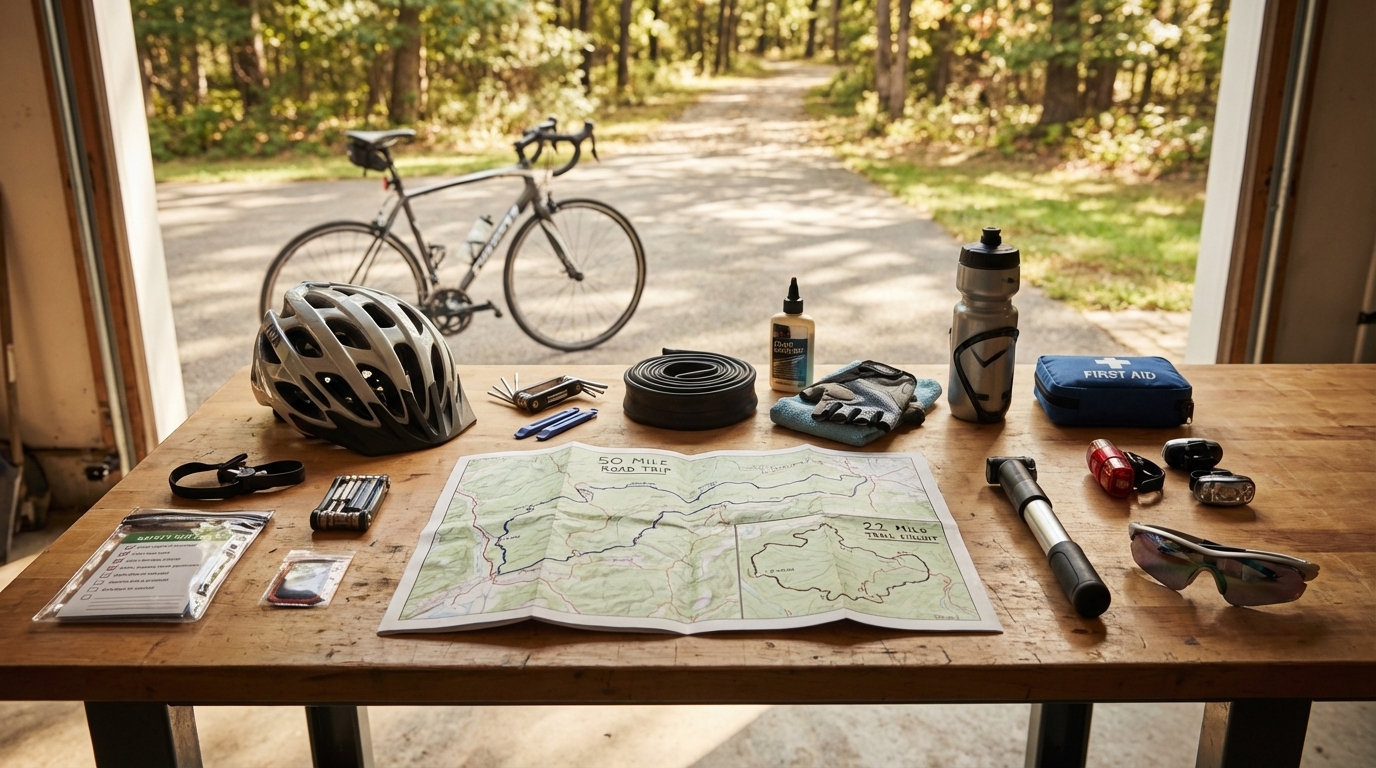
 Getting Started
Introduction & Overview
Few inventions have changed the world quite like the bicycle. With two wheels, a chain, and your own power, you can travel faster, farther, and more freely than on foot — all while having a blast. The Cycling merit badge teaches you how to ride safely, maintain your bike, and push your endurance on road or trail. Whether you are commuting to school, exploring a mountain singletrack, or training for a century ride, this badge will make you a stronger, smarter cyclist.
Cycling is also one of the merit badges that can count toward your Eagle Scout rank, so the skills you build here will serve you well on your entire Scouting journey.
Then and Now
Then — The Bicycle Revolution
The bicycle’s story begins in the early 1800s. The first rideable two-wheeler, called a “draisine” or “running machine,” appeared in Germany in 1817. It had no pedals — riders pushed themselves along with their feet on the ground. By the 1860s, pedals were added to create the “velocipede,” nicknamed the “boneshaker” because of its bone-rattling iron tires on cobblestone streets.
Then came the famous penny-farthing, with its enormous front wheel and tiny rear wheel. It was fast but dangerous — a sudden stop could send you flying headfirst over the handlebars (that’s where the phrase “taking a header” comes from). In the 1880s, the “safety bicycle” arrived with two equal-sized wheels, a chain drive, and pneumatic rubber tires. It looked a lot like the bikes we ride today.
The bicycle changed society in ways nobody expected. It gave ordinary people affordable, independent transportation for the first time. Women in particular embraced the bicycle as a tool of freedom — Susan B. Anthony called it the machine that did “more to emancipate women than anything else in the world.”
- Purpose: Transportation, freedom, sport
- Mindset: A revolutionary machine that put the world within reach
Now — Two Wheels, Endless Possibilities
Today, cycling is a global phenomenon. Over a billion bicycles are in use worldwide — more than double the number of cars. People ride for fitness, fun, competition, commuting, and adventure. Professional road racing draws millions of fans to events like the Tour de France. Mountain biking has become an Olympic sport. Cities around the world are building bike lanes and launching bike-share programs to reduce traffic and pollution.
Modern bikes are engineering marvels. Carbon fiber frames weigh less than a gallon of water. Electronic shifting changes gears with the press of a button. Fat-tire bikes roll across sand and snow. And adaptive cycles make riding accessible to people of all abilities.
- Purpose: Recreation, fitness, competition, transportation, environmental stewardship
- Mindset: Ride your way — on any surface, at any pace, for any reason
Get Ready! Whether you ride a hand-me-down cruiser or a brand-new mountain bike, the Cycling merit badge will help you ride with confidence, skill, and safety. Let’s roll!
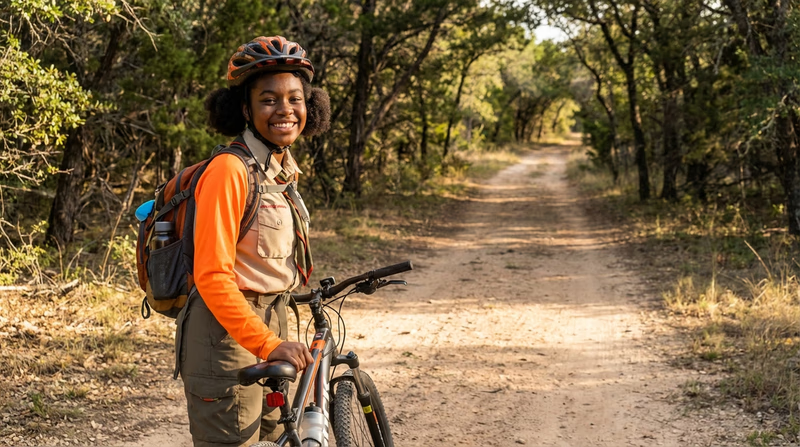
Kinds of Cycling
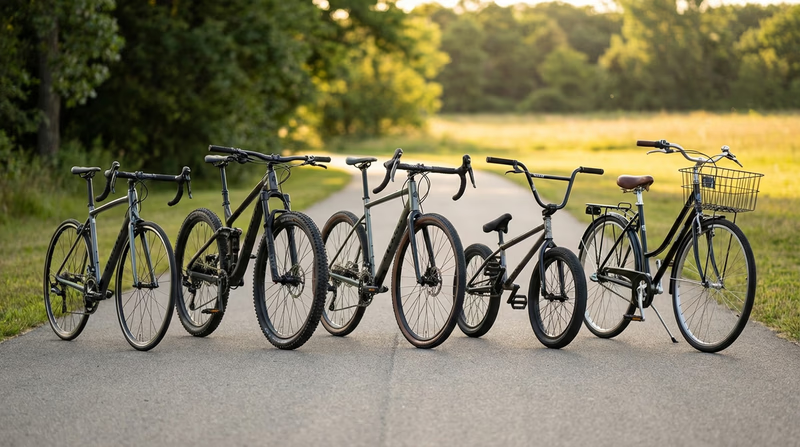
There are many ways to ride a bike. Before you start working on requirements, take a look at the different styles of cycling you might explore.
Road Cycling
Road cycling means riding on paved surfaces — streets, bike lanes, and highways. Road bikes are built for speed and efficiency, with lightweight frames, narrow tires, and drop handlebars that let you tuck into an aerodynamic position. Road cyclists can cover impressive distances, and group rides are a great way to build endurance and make friends.
Mountain Biking
Mountain biking takes you off-road — onto dirt trails, rocky paths, and forest singletrack. Mountain bikes have wide, knobby tires for grip, suspension systems to absorb bumps, and strong brakes for steep descents. It is a thrilling way to explore the outdoors and test your bike-handling skills.
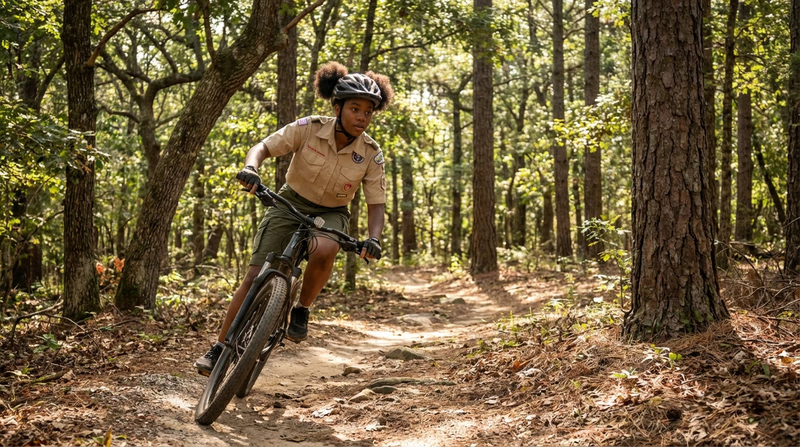
Gravel and Adventure Cycling
Gravel cycling blends road and mountain biking. Gravel bikes have wider tires than road bikes and more relaxed geometry, making them comfortable on dirt roads, crushed limestone paths, and mixed-surface routes. Adventure cycling often means multi-day trips with gear strapped to the bike — a modern twist on bicycle touring.
BMX
BMX (Bicycle Motocross) is all about short, intense bursts of speed, jumps, and tricks. BMX bikes are small, tough, and designed for dirt tracks, skate parks, and freestyle competitions. BMX racing is an Olympic sport, and freestyle BMX is one of the most creative forms of cycling.
Commuter and Urban Cycling
Millions of people ride their bikes to school, work, and errands every day. Commuter bikes are practical and reliable, often equipped with fenders, lights, racks, and baskets. Riding instead of driving saves money, reduces pollution, and keeps you fit — all at the same time.
Touring and Bikepacking
Touring cyclists carry everything they need — tent, sleeping bag, cooking gear, clothes — on their bikes and ride from town to town or campsite to campsite. Bikepacking is a lighter-weight version that uses frame bags instead of traditional panniers. Both styles let you see the world at your own pace, under your own power.
Now let’s dive into the requirements for the Cycling Merit Badge!