Req 2 — Bicycle Laws
Bicycles are not toys in the eyes of the law — in most states, a bicycle is a vehicle. That means when you ride on the road, you have many of the same rights and responsibilities as someone driving a car. Understanding these laws is essential for your safety and for earning this merit badge.
Bicycles as Vehicles
In nearly every state, traffic laws classify bicycles as vehicles. That single fact changes everything about how you should think about riding. You are not just “a kid on a bike” — you are an operator of a vehicle, and other road users are required to treat you that way.
What’s the Same as Driving a Car?
Many traffic laws apply equally to bikes and motor vehicles:
- Obey traffic signals and signs. Stop at red lights and stop signs. Yield at yield signs.
- Ride with the flow of traffic. Always ride in the same direction as cars on your side of the road.
- Use hand signals. Signal your turns and stops so other road users know what you plan to do.
- Yield to pedestrians. Pedestrians in crosswalks always have the right-of-way.
- No riding under the influence. Operating a bicycle while impaired is illegal in many states.
What’s Different from Driving a Car?
There are some rules that apply specifically to cyclists:
- Riding position. In most states, you must ride as far to the right as is safe and practicable — but you are allowed to “take the lane” when it is too narrow to share, when you are turning left, or when there are hazards near the right edge.
- Helmet laws. Many states and cities require helmets for riders under a certain age (often 16 or 18). Even where helmets are not legally required, Scouting America requires all Scouts to wear a properly fitted helmet.
- Sidewalk riding. Some cities allow bicycles on sidewalks; others prohibit it. Always check your local rules.
- Lighting requirements. Most states require a white front light and a red rear light or reflector when riding at night.
- Earbuds and headphones. Some states restrict or ban wearing headphones while cycling because they block your ability to hear traffic.
Lane Position
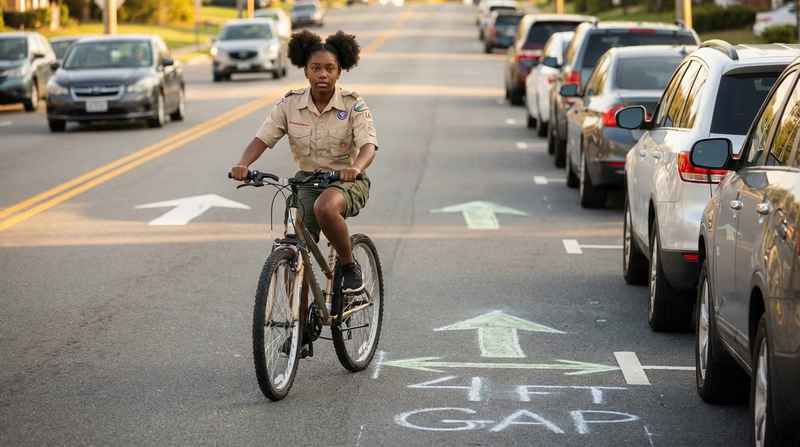
Where you ride within the lane matters. There are three basic lane positions:
- Right third of the lane — Your default position on wide roads with no hazards on the right edge. This gives cars room to pass while keeping you visible.
- Center of the lane (taking the lane) — Use this when the lane is too narrow for a car to pass you safely, when you are approaching an intersection, or when there are hazards on the right (parked cars, debris, drain grates).
- Left third of the lane — Used only when you are preparing for a left turn and have moved into the left-turn lane or the left side of your lane.
Changing Lanes
Changing lanes on a bicycle follows the same basic steps as in a car:
- Look behind you — Turn your head and glance over your shoulder (called a “shoulder check” or “scan”). Practice this skill so you can do it without swerving.
- Signal your intention — Extend your left arm straight out for a left lane change or your right arm straight out for a right lane change.
- Check again — Make sure the gap is clear.
- Move smoothly — Merge into the new lane gradually. No sudden swerves.
Making Turns
Left Turns
Left turns are the most complex maneuver for a cyclist. There are two methods:
Vehicular left turn (standard): Scan, signal, move into the left-turn lane or the left side of your lane, and turn with traffic. This is the same technique a car would use and works well on streets with light to moderate traffic.
Pedestrian-style (box) left turn: For heavy traffic or multi-lane roads, ride straight through the intersection, stop on the far-right corner, reposition your bike to face the new direction, and cross with the next green light. This keeps you out of fast-moving traffic.
Right Turns
Right turns are simpler. Signal with your right arm, check for pedestrians in the crosswalk, and turn from the right side of the lane. Watch for vehicles passing you on the left that may also be turning right — they might not see you.
Riding Through Intersections
Intersections are where most car-bicycle collisions happen. Approach every intersection with caution:
Intersection Safety
Steps for safe crossing
- Scan in all directions as you approach — don’t just look ahead.
- Make eye contact with drivers who might turn across your path.
- Cover your brakes so you can stop quickly if needed.
- Do not pass vehicles on the right at an intersection — you may be in their blind spot.
- If you are in a bike lane that goes through an intersection, watch for right-turning vehicles crossing your path (the “right hook”).

Hand Signals
Hand signals are your turn signals. Make them clearly and hold them long enough for drivers to see:
- Left turn: Left arm extended straight out to the side.
- Right turn: Right arm extended straight out to the side (or left arm bent upward at the elbow — both are legal, but the straight right arm is easier for drivers to understand).
- Stopping or slowing: Left arm extended downward with palm facing behind you.