Req 5 — Basic Bike Handling
This requirement is all about demonstrating that you can control your bike confidently and safely. Your counselor will watch you perform each of these skills, so practice them until they feel natural.
Mounting Your Bicycle
It sounds simple, but there is a right way to get on a bike — one that keeps you balanced and in control from the start.
- Stand on the left side of the bike (the side away from the chain and gears).
- Squeeze both brakes to keep the bike from rolling.
- Swing your right leg over the saddle.
- Place one foot on a pedal at the 2 o’clock position (slightly forward and up). This gives you power to push off.
- Release the brakes, push down on the pedal, and lift yourself onto the saddle as the bike begins to move.
Starting and Stopping
Normal Starts
Use the power pedal technique described above. Push off, get both feet on the pedals, and begin pedaling smoothly. Avoid wobbling — start in a low gear so you can accelerate without straining.
Normal Stops
- Stop pedaling and coast briefly.
- Apply both brakes gradually and evenly. Use slightly more pressure on the rear brake than the front to avoid pitching forward.
- As the bike slows, shift your weight slightly back.
- Just before you stop, lean the bike slightly to one side and place that foot on the ground.
Emergency Stops
An emergency stop is a maximum-effort stop — you need to go from full speed to zero in the shortest distance possible. This skill could save your life.
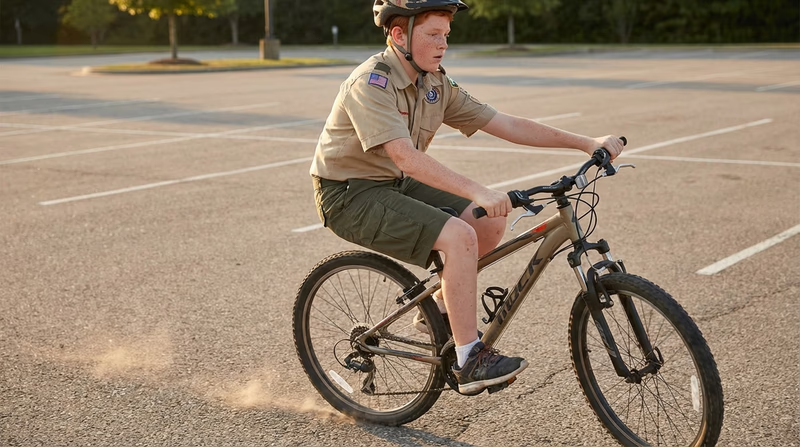
Riding in a Straight Line
Riding in a straight line sounds easy, but it takes practice — especially at low speeds. A cyclist who weaves is unpredictable and unsafe, especially in traffic.
Tips for straight-line riding:
- Look ahead, not down at your front wheel. Your bike follows your eyes.
- Keep a relaxed but firm grip on the handlebars. Tight, white-knuckle grips cause wobbling.
- Use your core muscles (abs and back) to stabilize your body, not your arms.
- Practice riding along a painted line in a parking lot. Try to keep your front wheel on the line for 50 feet, then 100 feet.
Turning
Turning a bicycle is different from turning a car. Your body, not just the handlebars, controls the direction.
Slow-Speed Turns
At low speeds, you steer by turning the handlebars in the direction you want to go and leaning your body slightly. Keep pedaling through the turn to maintain balance.
High-Speed Turns
At higher speeds, you lean the bike into the turn. The faster you go, the more you lean. Your inside pedal should be up (at 12 o’clock) to avoid scraping the ground, and your outside pedal should be down (at 6 o’clock) with your weight pressing into it.
Shifting Gears
Modern bikes have many gears — anywhere from 7 to 30 or more. Knowing when and how to shift keeps you pedaling efficiently and prevents mechanical problems.
When to Shift
- Shift before you need to. If you see a hill coming, shift to an easier gear before you start climbing — not halfway up when you are straining.
- Shift to maintain cadence. Cadence is your pedaling speed, measured in revolutions per minute (RPM). A comfortable cadence for most riders is 70–90 RPM. If your legs are spinning too fast, shift to a harder gear. If you are grinding slowly, shift to an easier gear.
How to Shift
- Ease up on the pedals slightly while shifting. The chain needs a moment of reduced tension to move smoothly between gears.
- Shift one gear at a time. Avoid shifting multiple gears at once — it can cause the chain to skip or drop.
- Never shift under heavy load (like standing and mashing up a steep hill). This puts enormous stress on the chain and derailleur and can cause damage.
Scanning
Scanning means looking behind you while riding in a straight line. This is one of the hardest skills for new cyclists because turning your head tends to pull the handlebars and cause you to swerve.
Scanning Technique
Look behind without swerving
- Keep a firm grip on the handlebars with your right hand and a light grip with your left.
- Drop your left hand to your side (or onto your left thigh).
- Turn your head and look over your left shoulder.
- Bring your head back and return your hand to the handlebar.
- Practice this in a parking lot along a painted line — you should be able to scan without drifting off the line.
Signaling
Hand signals communicate your intentions to drivers and other cyclists. You learned the specific signals in Requirement 2 — now you need to demonstrate them while riding.
The key is timing: signal early enough for others to react (at least 100 feet before your turn), then return your hand to the handlebar before you make the maneuver. You need both hands on the handlebars to control the bike during a turn or stop.
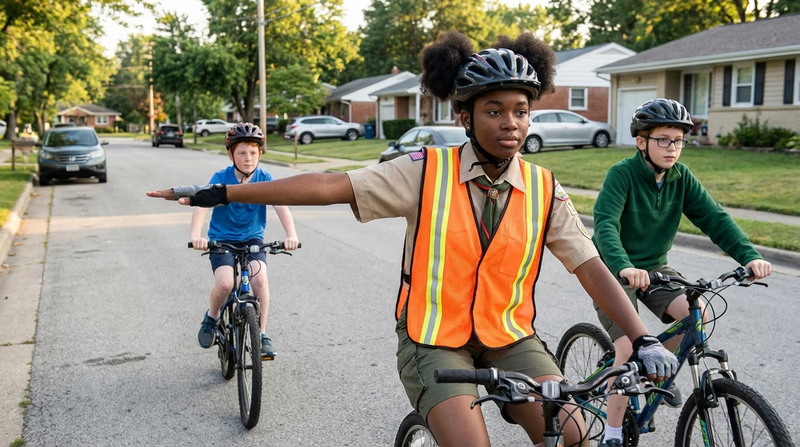
Putting It All Together
When your counselor evaluates you, they are looking for smooth, confident execution of all these skills. The best way to prepare is to practice each skill individually and then combine them into a continuous ride:
- Mount the bike using the power pedal start.
- Ride in a straight line for 50–100 feet.
- Shift through several gears smoothly.
- Scan over your left shoulder without swerving.
- Signal a left turn and execute it.
- Signal a right turn and execute it.
- Come to a normal, controlled stop.
- Ride again and perform an emergency stop.