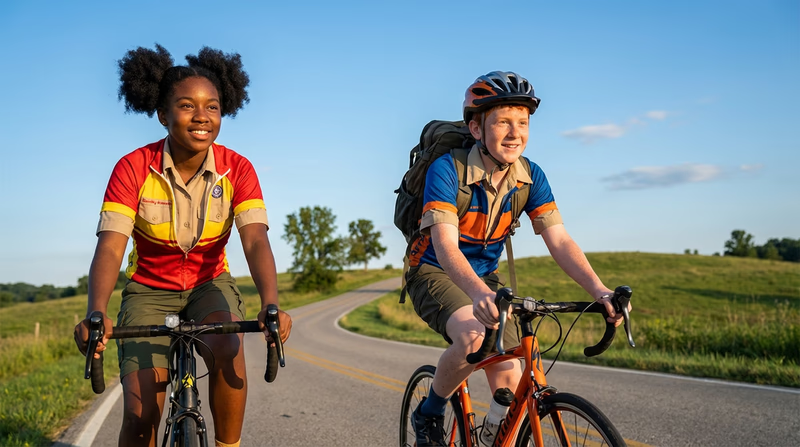
Req 6a — Road Biking Option
This page covers Option A — Road Biking. If you prefer trail or mixed-surface riding, see Req 6b — Trail Biking Option. You only need to complete one of the two options.
Requirement 6a.1 — Road Safety Test
Your counselor will ride with you (or observe you) on public streets to evaluate your road-riding skills. This is a practical test — you will need to demonstrate each skill listed below in real traffic conditions.
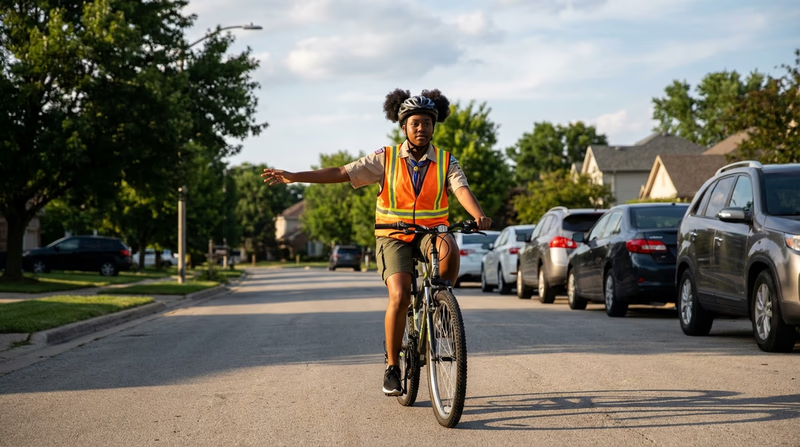
6a.1.a — Left Turns
Standard vehicular left turn:
- Scan behind you for traffic.
- Signal left with your left arm extended.
- When safe, merge to the center of the lane (or into the left-turn lane if one exists).
- Yield to oncoming traffic.
- Complete the turn into the proper lane.
Box turn (pedestrian-style left turn) for heavy traffic:
- Ride straight through the intersection in the right lane.
- Stop on the far-right corner, staying out of the crosswalk.
- Reposition your bike to face the new direction of travel.
- Wait for the green signal, then proceed across the intersection.
6a.1.b — Right Turns
- Scan behind you.
- Signal right with your right arm.
- Check for pedestrians in the crosswalk.
- Make the turn from the right side of the lane, staying in control.
6a.1.c — Right-Turn-Only Lanes
When a right-turn-only lane appears and you need to go straight:
- Before the lane splits, merge left out of the right-turn-only lane.
- Signal your intention early.
- Position yourself in the through-traffic lane.
- Proceed straight through the intersection.
6a.1.d — Curbside and Road-Edge Riding
- Ride at least 4 feet from parked cars to stay outside the “door zone.”
- Maintain a straight, predictable line — don’t weave in and out of gaps between parked cars.
- Scan for signs that a car door may open: brake lights, people sitting inside, or movement in side mirrors.
6a.1.e — Railroad Tracks
- Approach railroad tracks at a right angle (perpendicular). If the tracks cross the road diagonally, adjust your line so you cross them straight-on.
- Rise slightly off the saddle to absorb the bump.
- Do not brake on the tracks — metal rails are slippery, especially when wet.
Requirement 6a.2 — Building Your Miles
This is where the real adventure begins. Six rides totaling 100 miles will build your endurance, confidence, and love of cycling. The rides get progressively longer, giving your body time to adapt.
Ride LogPlanning Your Rides
Ride Planning
Set yourself up for success
- Map your route in advance using a cycling app or a paper map. Stay on secondary roads, bike lanes, and multi-use paths — avoid main highways.
- Share your route and estimated return time with an adult.
- Ride with your buddy — it’s required, and it makes the ride safer and more fun.
- Check the weather and plan accordingly.
- Carry water, snacks, a repair kit, your phone, and your first-aid kit.
Pacing Yourself
| Ride Distance | Estimated Time (10–12 mph) | Tips |
|---|---|---|
| 10 miles | 50–60 minutes | A great training ride. Focus on smooth pedaling and consistent speed. |
| 15 miles | 75–90 minutes | Bring a snack and extra water. Practice fueling while riding. |
| 25 miles | 2–2.5 hours | Plan a rest stop at the halfway point. Eat and drink before you feel hungry or thirsty. |
Ride Reports
Your report for each ride should include:
- Date of the ride
- Route taken (description or map)
- Total distance and approximate time
- Weather conditions
- Interesting things you saw or experienced
- Any challenges or lessons learned
Requirement 6a.3 — The Capstone Ride
This is the final challenge of the road biking option. Choose one of these two sub-options:
Option 6a.3.a — Plan and Ride a 50-Mile Route
A 50-mile ride (often called a “half-century”) is a major accomplishment. Planning is everything.
50-Mile Ride Planning
Prepare for the big ride
- Plan your route on a road map. Mark rest stops every 15–20 miles where you can refuel and use a restroom.
- Carry enough food and water — or plan stops where you can buy supplies.
- Start early. At 12 mph average speed, a 50-mile ride takes about 4 hours of riding time plus stops.
- Break the ride into mental segments: “Just 10 more miles to the next rest stop.”
- Bring your map and follow your planned route. Navigation is part of the skill.
Option 6a.3.b — Organized Bike Tour
Organized rides provide rest stops, route markings, and safety support, making them an excellent way to complete your first 50-mile ride. After the ride, you will use the event’s cue sheet (turn-by-turn directions) to create a map showing the route you followed.