 Getting Started
Introduction & Overview
You use them every single day — to bite into an apple, to speak clearly, to smile at a friend — but how much do you actually know about your teeth? The Dentistry merit badge pulls back the curtain on what is happening inside your mouth and why it matters far beyond just having a nice smile.
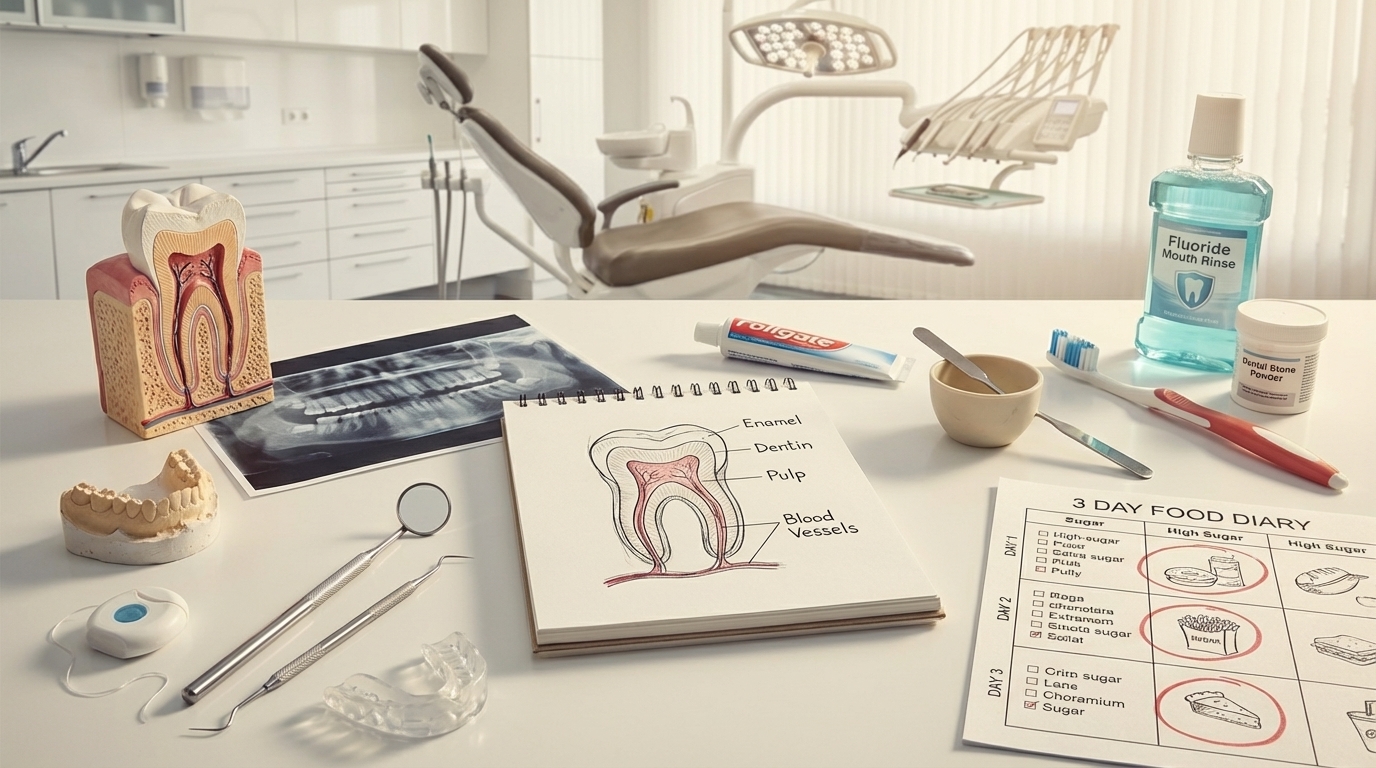
This badge will teach you how teeth are built, what destroys them, how dental professionals protect them, and what you can do every day to keep your mouth healthy for life. You will read X-rays, draw tooth anatomy, visit a real dental office, and even teach others what you have learned.
Then and Now
Then — When Toothaches Could Kill
Dental problems are as old as humanity itself. Ancient Egyptians suffered from tooth decay more than 4,000 years ago, and their “dentists” used a mixture of honey, crushed stone, and herbs as toothpaste. Around 2,700 BCE, a Chinese text described “tooth worms” as the cause of decay — an idea that persisted for thousands of years.
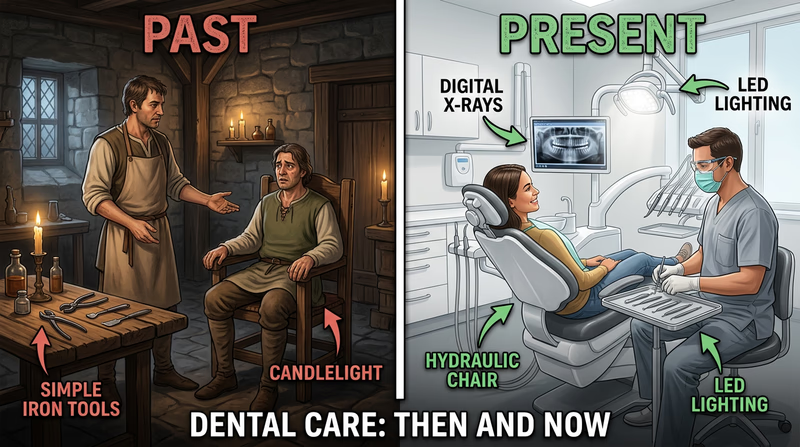
In medieval Europe, barber-surgeons were the closest thing to dentists. The same person who cut your hair might yank a rotten tooth with iron pliers — no anesthesia, no sterilization, no X-rays. If the tooth got infected, the infection could spread to the jaw and even the bloodstream, sometimes with fatal results.
The turning point came in 1728, when French surgeon Pierre Fauchard published Le Chirurgien Dentiste (“The Surgeon Dentist”), the first comprehensive textbook on dental science. He described fillings, tooth braces, and even dental prosthetics — earning him the title “Father of Modern Dentistry.”
- Tools: Iron pliers, hand drills, herbal pastes
- Approach: Wait until it hurts, then pull it out
- Legacy: Fauchard’s scientific approach laid the foundation for everything that followed
Now — Precision, Prevention, and Technology
Walk into a dental office today and you will find digital X-rays that expose you to 80% less radiation than film, 3D scanners that map your entire mouth in minutes, and lasers that can treat gum disease without a single cut. Dentists can print custom crowns with a 3D printer while you wait in the chair.
But the biggest revolution is not about technology — it is about prevention. Fluoridated water, modern toothpaste, sealants, and regular checkups mean that most people today can keep their natural teeth for their entire lives. That was almost unheard of just a century ago.
- Tools: Digital X-rays, intraoral cameras, 3D printers, lasers
- Approach: Prevent problems before they start
- Impact: The average American today has far fewer cavities than their grandparents did at the same age
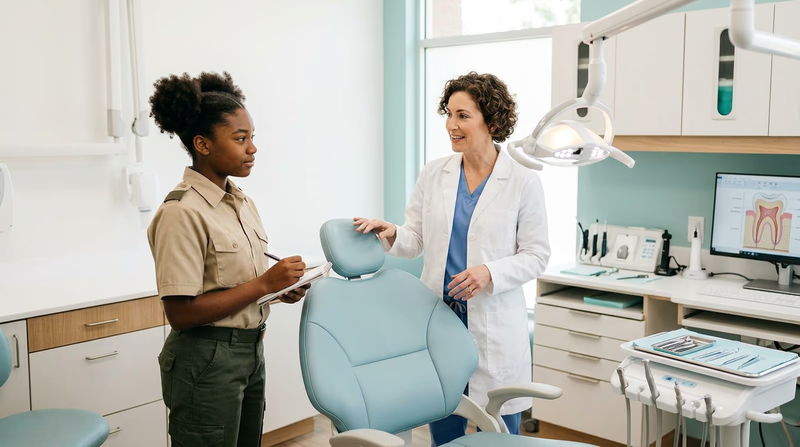
Get Ready! You are about to explore the science behind your smile — from the microscopic structure of enamel to the career paths that keep millions of mouths healthy. Get your pencil ready for some drawing, prepare some good questions for your dental visit, and let’s get started.
Kinds of Dentistry
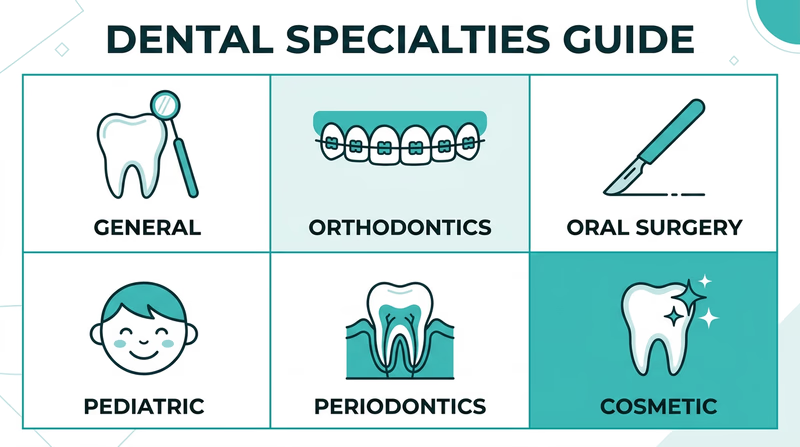
Dentistry is not just one profession — it is a whole family of specialties. Here is a look at the major branches.
General Dentistry
This is the dentist you probably visit twice a year. General dentists handle checkups, cleanings, fillings, crowns, and routine care. They are the primary care doctors of the dental world — your first stop for any mouth-related concern. Most dental problems are caught and treated right here.
Orthodontics
Orthodontists specialize in straightening teeth and correcting bite problems. Braces, retainers, and clear aligners are their tools. Treatment usually takes one to three years, but the result is teeth that fit together properly — which is important not just for appearance but for chewing and jaw health.
Oral and Maxillofacial Surgery
Oral surgeons handle procedures that go beyond routine fillings: extracting impacted wisdom teeth, repairing jaw fractures, removing tumors, and performing corrective jaw surgery. They work closely with hospitals and often use general anesthesia.
Pediatric Dentistry
Pediatric dentists focus on children from infancy through the teen years. They are trained in child development and behavior management, and their offices are designed to make younger patients feel comfortable. If you have ever visited a dentist whose waiting room had video games and a treasure chest — that was probably a pediatric dentist.
Periodontics
Periodontists specialize in the gums and the bone that supports your teeth. Gum disease is one of the leading causes of tooth loss in adults, and periodontists treat everything from mild gingivitis to advanced periodontitis that threatens the jawbone itself.
Cosmetic Dentistry
Cosmetic dentists focus on the appearance of teeth — whitening, veneers, bonding, and smile makeovers. While some of this work is purely aesthetic, it can also restore function and confidence after injury or disease.
Ready to look inside a tooth and learn what makes it tick? Grab a pencil — you are going to need it for some detailed drawing.