Req 2c — Saving a Knocked-Out Tooth
A permanent tooth gets knocked out during a basketball game. What happens in the next 30 minutes determines whether that tooth survives or is lost forever. This is one of the few first-aid situations where your knowledge can literally save a body part.
Why Speed Matters
When a tooth is knocked out (the dental term is avulsion), the cells on the root surface begin to die within minutes. These cells — the periodontal ligament fibers — are what allow the tooth to reattach to the bone. If the tooth is reimplanted within 30 minutes, there is a strong chance it will survive. After two hours, the odds drop sharply.
The Step-by-Step Procedure
What NOT to Do
These common mistakes can destroy a knocked-out tooth’s chances of survival:
- Do not scrub the root. Even gentle scrubbing destroys the periodontal ligament cells.
- Do not let the tooth dry out. A dry tooth is a dead tooth. Keep it moist at all times.
- Do not store it in tap water for a long time. Water causes root cells to swell and burst (osmotic damage). A few seconds of rinsing is fine, but do not soak the tooth in water.
- Do not wrap it in tissue or cloth. The tooth will dry out and fibers will stick to the root surface.
- Do not try to reimplant a baby tooth. If the injured person is a young child, check whether the tooth is a primary (baby) tooth first. Baby teeth are smaller and whiter than permanent teeth.
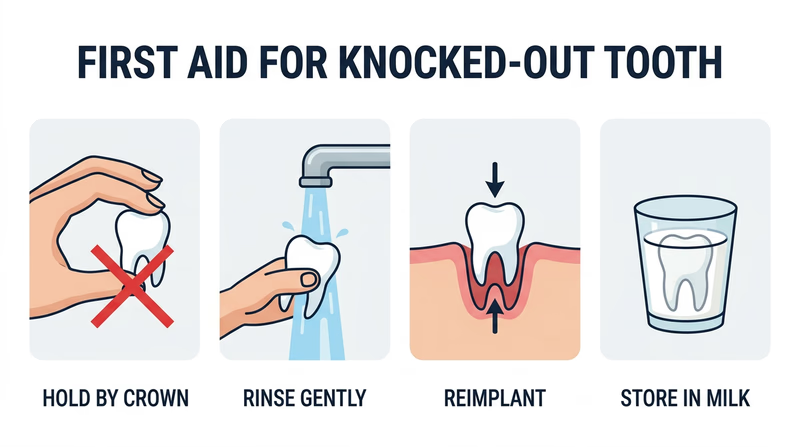
- Do not handle the root. Always pick up the tooth by the crown.
Knocked-Out Tooth Response
Quick reference for the field
- Find the tooth and pick it up by the crown only
- Confirm it is a permanent tooth (not a baby tooth)
- Rinse gently under water if dirty (no scrubbing)
- Reimplant in the socket if possible; bite on gauze to hold
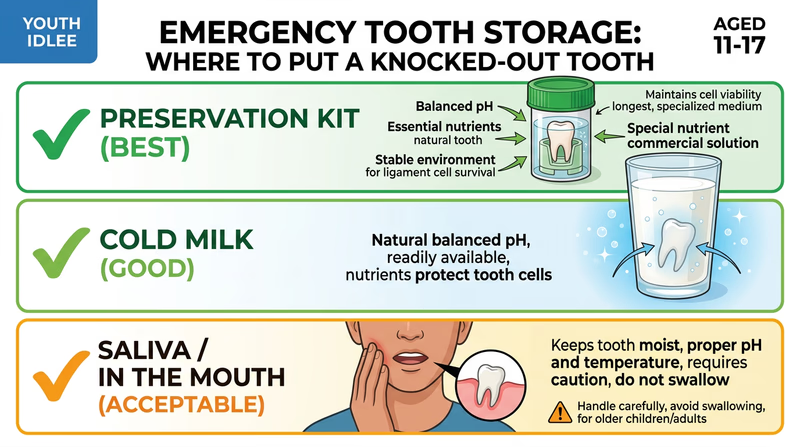
- If reimplantation is not possible, store in milk, saliva, or saline
- Control bleeding with gauze or clean cloth
- Check for other injuries (concussion, jaw fracture)
- Get to a dentist or ER within 30 minutes
What If You Earned First Aid?
If you have already worked on the First Aid merit badge, you know about scene assessment and calling for help. Those same skills apply here — check the scene, check the person, call for help, and then focus on the tooth. The principles of Check, Call, Care work for dental emergencies just like any other.
ADA — Knocked-Out Tooth The American Dental Association's step-by-step guide for handling an avulsed (knocked-out) tooth.