Req 3 — Visiting the Dentist
This is one of the most hands-on requirements in the badge — you are going to see a real dental professional at work and learn by watching. A little preparation will make this visit far more valuable than a routine cleaning appointment.
Before Your Visit
Setting It Up
Contact a dental office and explain that you are working on the Dentistry merit badge. Ask if your visit can include:
- A dental examination — a full checkup, not just a cleaning
- A plaque-control demonstration — where the dentist or hygienist shows you how plaque forms, how to detect it, and how to remove it effectively
Most dental offices are happy to accommodate Scouts. Your own dentist’s office is a great place to start, but any dental professional will work. Your merit badge counselor may also have a connection to a dental office willing to host you.
Prepare Your Questions
Going in with questions prepared shows respect for the dentist’s time and ensures you get the information you need. Here are some strong questions to consider — pick the ones that interest you most:
About the examination:
- What are you looking for when you examine my teeth and gums?
- How do you decide if a tooth needs a filling versus just watching it?
- What do the different things on my X-ray mean?
About plaque control:
- How can I tell where plaque is building up on my teeth?
- What is the most common brushing mistake you see?
- How important is flossing compared to brushing?
- Are electric toothbrushes really better than manual ones?
About the profession:
- What made you decide to become a dentist?
- What is the most interesting case you have worked on?
- How has dentistry changed since you started practicing?
- What do you wish more patients knew about their oral health?
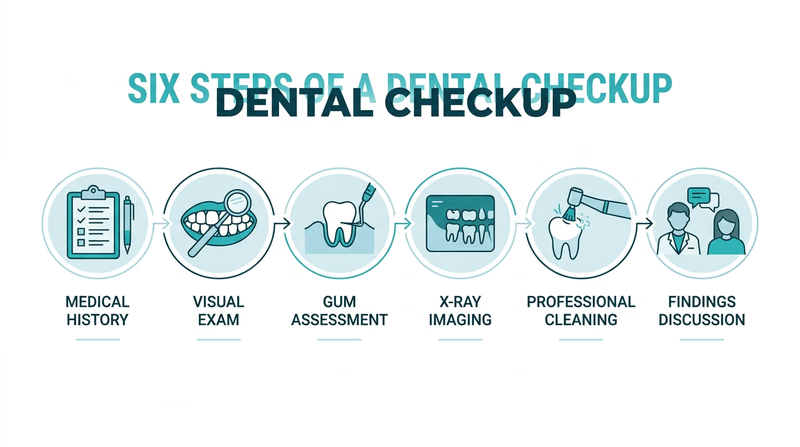
What Happens During a Checkup
When you tell your counselor about the visit, you should be able to describe each step of a typical dental examination. Here is what to watch for:
1. Medical History Review
The dentist or hygienist starts by reviewing your medical history. They need to know about medications, allergies, and health conditions that could affect your dental care. This happens because your mouth is connected to the rest of your body — a concept you will explore more in Req 5b.
2. Visual Examination
The dentist uses a small mirror and an explorer (a thin, pointed instrument) to inspect every tooth surface. They are looking for:
- Signs of decay (soft spots, discoloration, visible holes)
- Cracked, chipped, or worn teeth
- The condition of existing fillings, crowns, or other dental work
- Sores, lesions, or abnormalities in the soft tissues (tongue, cheeks, gums, palate)
3. Periodontal Assessment
The dentist or hygienist measures the depth of the gum pockets around each tooth using a thin instrument called a periodontal probe. Healthy pockets are 1–3 millimeters deep. Pockets deeper than 4 mm suggest gum disease — the same condition you studied in Req 2a.
4. X-Rays (Radiographs)
If X-rays are taken during your visit, watch how the digital sensor or film is positioned. X-rays reveal problems invisible to the naked eye:
- Decay between teeth
- Bone loss around roots
- Infections at the root tips
- Impacted teeth (like wisdom teeth that have not erupted)
You already learned to read X-rays in Req 1, so you should recognize some of what appears on the screen.
5. Professional Cleaning
A dental hygienist typically performs the cleaning, which includes:
- Scaling — removing tartar (hardened plaque) from tooth surfaces and below the gumline using hand instruments or an ultrasonic scaler
- Polishing — using a rotating rubber cup and gritty paste to smooth the tooth surfaces and remove stains
- Flossing — cleaning between every tooth to remove any remaining debris
6. Plaque-Control Demonstration
This is the part you specifically requested. The hygienist or dentist may use disclosing tablets — chewable tablets that stain plaque a bright color (usually pink or purple) so you can see exactly where plaque is hiding on your teeth. This makes it obvious which areas you are missing when you brush.
They will then demonstrate proper brushing and flossing techniques, pointing out the areas where you need to improve.
7. Findings and Recommendations
At the end of the exam, the dentist reviews their findings with you. They will discuss:
- Any problems found (cavities, gum disease, wear patterns)
- Treatment recommendations
- How soon to schedule your next visit
- Areas to focus on in your daily oral care
Visit Preparation Checklist
Before your dental office visit
- Call to schedule, mentioning the Dentistry merit badge
- Request a dental examination and plaque-control demonstration
- Prepare at least five questions to ask
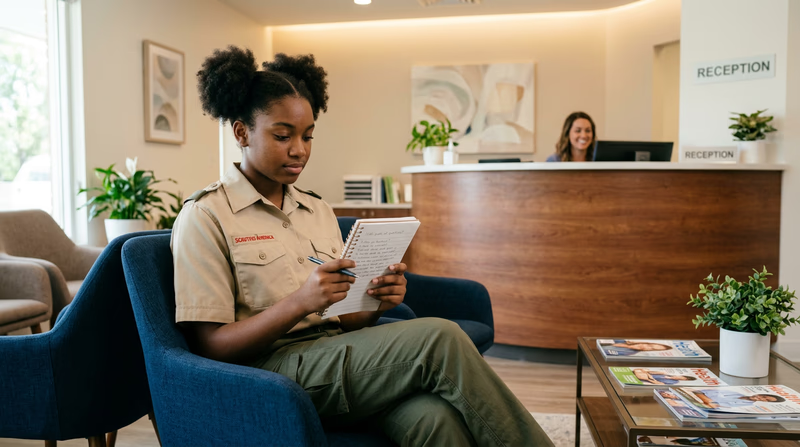
- Bring a small notebook and pen to take notes during and after
- Arrive a few minutes early
- Pay attention to every step of the exam so you can describe it to your counselor