Req 4 — Dental Tools & Hands-On Skills
This requirement offers three options — pick the two that interest you most:
- Option a: Name dental instruments and equipment
- Option b: Prepare a dental stone cast
- Option c: Track your sugar intake for three days
Each option gives you a different hands-on perspective on dentistry. Read through all three before deciding.
Option a — Dental Instruments & Equipment
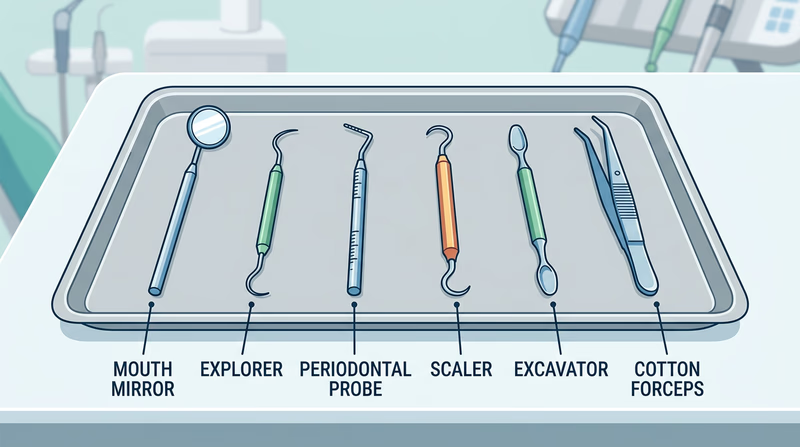
If you visited a dental office for Req 3, you probably saw many of these in action. There is an important distinction: instruments are handheld tools the dentist uses directly on your teeth, while equipment refers to the larger devices and machines in the office.
Dental Instruments
| Instrument | What It Does |
|---|---|
| Mouth mirror | A small, angled mirror on a handle. Lets the dentist see the back and sides of teeth, reflects light into dark areas, and retracts the cheek or tongue. |
| Explorer (dental probe) | A thin, curved instrument with a sharp tip. Used to feel for soft spots, rough areas, or edges of cavities on tooth surfaces. |
| Periodontal probe | A blunt-tipped instrument with millimeter markings. Measures the depth of gum pockets to check for periodontal disease. |
| Scaler (hand) | A sharp, hook-shaped instrument used to scrape tartar from tooth surfaces above and below the gumline. |
| Curette | Similar to a scaler but with a rounded tip. Used for scraping tartar and diseased tissue from below the gumline without damaging healthy gum tissue. |
| Excavator | A spoon-shaped instrument used to remove soft, decayed tooth material from a cavity before placing a filling. |
| Cotton forceps | Tweezers with locking handles, used to place and remove small cotton rolls, gauze, and other materials inside the mouth. |
| Dental syringe | Used to deliver local anesthesia (numbing shots). The cartridge-style design allows precise dosing. |
Dental Equipment
| Equipment | What It Does |
|---|---|
| Dental chair | A hydraulic chair that adjusts height, recline, and headrest position so the dentist can access the patient’s mouth comfortably. |
| Overhead light | A high-intensity, adjustable lamp that illuminates the inside of the mouth during procedures. |
| High-speed handpiece (dental drill) | A small, air-driven turbine that rotates a tiny bur at up to 400,000 RPM. Used to remove decay and shape teeth for fillings and crowns. |
| Suction/evacuation system | The tube the dental assistant holds to vacuum saliva, water, and debris from your mouth during procedures. |
| Ultrasonic scaler | Uses high-frequency vibrations and a water spray to break up tartar deposits. Faster and often more comfortable than hand scaling. |
| Digital X-ray system | Includes a sensor (placed inside the mouth), a radiation source, and computer software to capture and display radiographic images instantly. |
| Curing light | A blue LED light used to harden (cure) composite resin fillings. The light activates a chemical reaction that sets the filling material in seconds. |
| Autoclave | A sterilization machine that uses pressurized steam at 250°F (121°C) to kill all bacteria, viruses, and spores on dental instruments between patients. |
Option b — Making a Dental Stone Cast
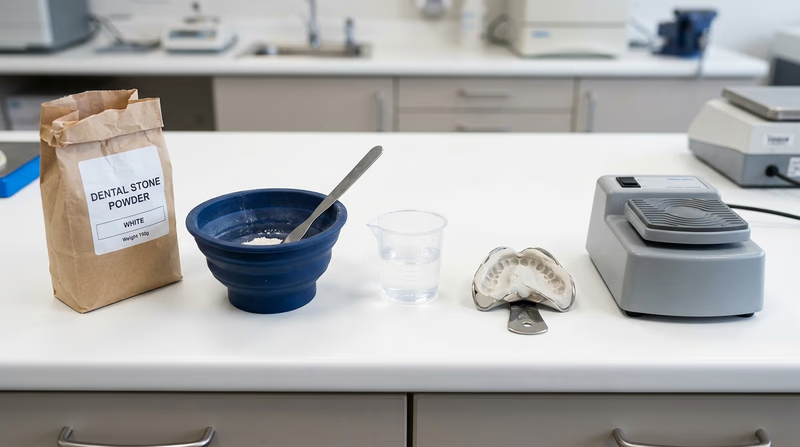
A dental stone cast is a hard, precise replica of a patient’s teeth and gums. Dentists use these models to study a patient’s bite, plan treatments, and create custom appliances like retainers, mouth guards, and crowns. Making one is a real hands-on lab skill.
How It Works
Take an impression. The dentist fills a horseshoe-shaped tray with a soft impression material (usually alginate, which feels like thick pudding). You bite into the tray, and the material sets around your teeth in about two minutes. When removed, the tray holds a detailed negative mold of your teeth.
Mix the dental stone. Using the plastic measure, scoop the correct amount of dental stone powder into the mixing bowl. Add the measured amount of water. Stir with the spatula until the mixture is smooth and creamy — about 30 seconds of vigorous mixing.
Vibrate the mix. Place the mixing bowl on the dental vibrator. The vibration shakes air bubbles to the surface, preventing voids in the finished cast. Bubbles trapped in the stone would create bumps on the model and ruin the detail.
Pour the cast. Slowly pour small amounts of the stone mixture into the impression tray, starting at one end. Tilt the tray so the stone flows along the teeth impressions. Place the tray on the vibrator as you pour to help the stone settle into every detail.
Let it set. The stone hardens in about 30–45 minutes. Once fully set, carefully separate the cast from the impression tray.
Trim and finish. The dentist may trim the base of the cast on a model trimmer to create a flat, professional-looking base.
Option c — Three-Day Food Diary
This option connects directly to what you learned in Req 2a about how sugars fuel bacterial acid production. Tracking your own diet for three days will show you exactly how much sugar your teeth are exposed to.
What to Track
For three full days (try to include both weekdays and a weekend day), write down everything you eat and drink, including:
- Meals (breakfast, lunch, dinner)
- Snacks (everything between meals)
- Drinks (including flavored water, juice, soda, sports drinks, and coffee/tea with sugar)
- Condiments and toppings (ketchup, salad dressing, jam — these often contain hidden sugars)
What to Circle
Go through your list and circle any item that provides sugars bacteria can use to make acid. This includes:
- Obvious sugars: Candy, cookies, cake, ice cream, chocolate, soda, juice, sweetened tea
- Hidden sugars: Flavored yogurt, granola bars, breakfast cereals, dried fruit, ketchup, barbecue sauce, sports drinks, flavored milk
- Starches that break down into sugars: White bread, crackers, chips, pretzels, pasta — enzymes in your saliva convert these starches into sugars
Snacks to Avoid
Based on your diary and your understanding of the decay process, list snacks that are worst for your teeth:
- Sticky candy (caramels, taffy, gummy bears) — clings to teeth for extended acid attacks
- Hard candy and lollipops — dissolve slowly, bathing teeth in sugar for a long time
- Soda and sports drinks — deliver sugar and acid together, and sipping extends the exposure
- Dried fruit — naturally high in sugar and sticks to tooth surfaces
- Starchy chips and crackers — pack into the grooves of molars where bacteria thrive
Tooth-Friendly Alternatives
| Instead of… | Try… |
|---|---|
| Soda or juice | Water or unsweetened sparkling water |
| Candy | Fresh fruit (the water and fiber help) |
| Chips | Raw vegetables (carrots, celery, bell peppers) |
| Granola bars | Cheese and whole-grain crackers |
| Dried fruit | Fresh fruit or nuts |