Req 7 — Careers in Dentistry
Dentistry is not just one job — it is an entire ecosystem of careers. Some require a decade of education. Others can launch in two years or less. All of them help people keep their mouths healthy.
Career Options in Dentistry
Here are more than three career paths to consider. Pick the ones that interest you, then choose one for your deep-dive research.
Dentist (DDS or DMD)
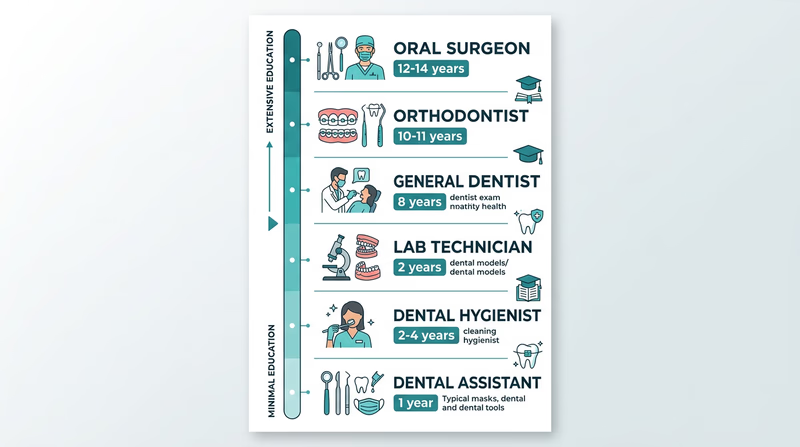
General dentists are the primary care providers of oral health. They examine, diagnose, and treat a wide range of dental problems. Most dentists own or co-own their practice, which means they are also small business owners.
- Education: 4 years of college + 4 years of dental school
- Degree: Doctor of Dental Surgery (DDS) or Doctor of Dental Medicine (DMD) — these are equivalent degrees
- Licensure: Pass the National Board Dental Examination and a state or regional clinical exam
- Salary range: Approximately $160,000–$210,000 per year (median around $170,000)
Dental Hygienist
Hygienists are licensed professionals who specialize in preventive oral care. They perform cleanings, take X-rays, apply fluoride and sealants, and educate patients about oral hygiene. If you had your teeth cleaned at the dental office for Req 3, a hygienist likely did that work.
- Education: 2–4 years (associate or bachelor’s degree in dental hygiene)
- Licensure: Pass the National Board Dental Hygiene Examination and a state clinical exam
- Salary range: Approximately $65,000–$90,000 per year (median around $81,000)
Dental Assistant
Dental assistants work alongside dentists during procedures, prepare treatment rooms, sterilize instruments, take X-rays, and help with patient comfort. This is one of the fastest entry points into the dental field.
- Education: Certificate or diploma program (9–12 months), or on-the-job training in some states
- Certification: Certified Dental Assistant (CDA) credential is available through the Dental Assisting National Board (DANB) — optional in some states, required in others
- Salary range: Approximately $38,000–$50,000 per year (median around $44,000)
Orthodontist
Orthodontists specialize in aligning teeth and correcting bite problems using braces, aligners, and other appliances. This is a specialty that requires additional training beyond dental school.
- Education: 4 years of college + 4 years of dental school + 2–3 years of orthodontic residency
- Licensure: Same as dentist, plus specialty board certification
- Salary range: Approximately $200,000–$350,000+ per year
Oral Surgeon
Oral and maxillofacial surgeons perform complex procedures including wisdom tooth extractions, jaw surgery, dental implant placement, and facial trauma repair.
- Education: 4 years of college + 4 years of dental school + 4–6 years of surgical residency
- Licensure: Same as dentist, plus specialty board certification
- Salary range: Approximately $250,000–$400,000+ per year
Dental Laboratory Technician
Lab technicians create the crowns, bridges, dentures, and orthodontic appliances that dentists design. This is a craft-based career that combines science with artistry. If you made a dental stone cast in Req 4b, you got a small taste of lab work.
- Education: 2-year associate degree or certificate program, or apprenticeship
- Certification: Certified Dental Technician (CDT) credential is available — voluntary but valued
- Salary range: Approximately $38,000–$58,000 per year (median around $46,000)
Dental Public Health Professional
These professionals work at the population level — designing community programs, conducting research, and developing policy to improve oral health for entire communities. They might work for government agencies, nonprofits, or universities.
- Education: Dental degree + master’s degree in public health (MPH) or related field
- Focus areas: Water fluoridation policy, school-based sealant programs, access to care for underserved communities
Researching Your Chosen Career
For the career you choose to research in depth, gather information on these topics:
Career Research Guide
Information to discuss with your counselor
- Training and education required (degrees, years of schooling)
- Certification or licensure requirements
- Estimated cost of education (tuition, books, equipment)
- Typical entry-level experience required
- Employment outlook (is demand growing, stable, or declining?)
- Starting salary and mid-career salary
- Advancement opportunities (specialization, management, teaching, private practice)
- Day-to-day work environment (office, hospital, lab, community settings)
- What you personally find interesting or challenging about this career
Where to Research
Bureau of Labor Statistics — Dentists The BLS Occupational Outlook Handbook provides detailed data on education, pay, job outlook, and working conditions for dental careers. ADA — Careers in Dentistry The American Dental Association's career exploration resources, including information on dental school, specialties, and related careers.