Req 7b — Software Sharing Ethics
Your friend offers you a copy of a game that costs $60. “I already bought it — just copy it from my USB drive.” It seems harmless. But is it legal? The answer depends entirely on the license that came with the software.
Software Licenses: The Rules of the Game
When you buy or download software, you are not actually buying the program itself — you are buying a license to use it. The license is a legal agreement that spells out exactly what you can and cannot do with the software. This is true for everything from big-budget video games to simple mobile apps.
Different licenses allow different things:
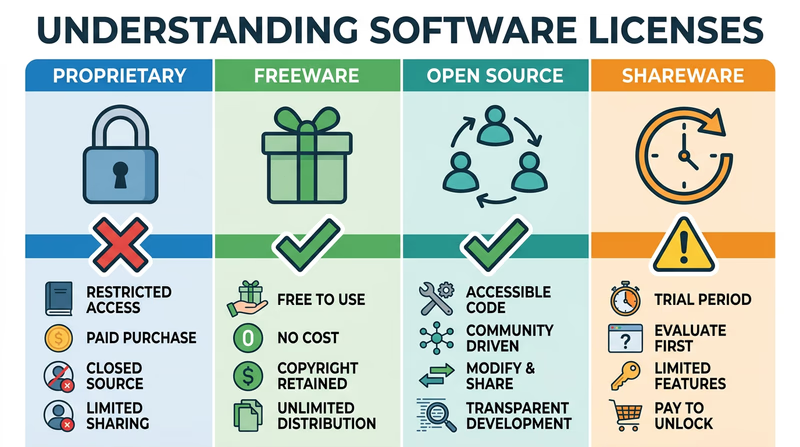
Commercial Software (Proprietary License)
Most paid software — Microsoft Office, Adobe Photoshop, major video games — comes with a proprietary license that restricts copying and sharing.
Typical rules:
- You may install the software on a limited number of devices (often just one)
- You may not copy the software for friends
- You may not redistribute it
- You purchased a license for your personal use only
Accepting a copy of proprietary software from a friend is software piracy — a violation of copyright law, even if neither of you profits from it. It does not matter that your friend bought a legitimate copy. Their license covers them, not you.
Freeware
Freeware is software the creator distributes for free. You can download, use, and often share freeware without paying anything.
Examples: VLC Media Player, 7-Zip, Audacity (basic version), many mobile apps
If your friend offers you a copy of freeware, that is perfectly fine — the license explicitly allows free distribution.
Open-Source Software
Open-source software is released under licenses that allow anyone to use, study, modify, and distribute the software — often including the actual source code (the human-readable programming instructions).
Examples: Linux, Firefox, LibreOffice, GIMP, Python, Blender
Accepting a copy of open-source software from a friend is completely permissible. In fact, sharing is encouraged — it is a fundamental principle of the open-source movement.
Shareware and Freemium
Shareware lets you try the software for free with limitations (time-limited trial, reduced features). You are expected to pay if you continue using it.
Freemium software is free for basic use but charges for premium features.
Sharing the free version is usually fine. Sharing a cracked or unlocked premium version is not.
The Simple Test
When a friend offers you a copy of a program, ask yourself:
Can I Accept This Copy?
Run through this decision checklist
- Is the software free (freeware or open source)? If yes, accepting is fine.
- Is it a free trial or demo? If yes, accepting the trial version is fine.
- Is it paid/commercial software? If yes, accepting a copy is likely piracy unless the license specifically allows multiple installations or sharing.
- Does the license specifically allow the friend to share their copy? Read the license terms — some family plans or multi-device licenses allow sharing.
- Is your friend offering you their legitimate account credentials to use paid software? This is usually against the terms of service and not permissible.
Why It Matters
Software piracy might seem victimless, but it has real consequences:
- Developers lose income, which can mean fewer updates, fewer new features, or the company going out of business
- Independent developers and small studios are hit hardest — a game from a three-person studio depends on every sale
- You could face legal consequences — copyright infringement can result in fines or lawsuits
- Pirated software often contains malware — cracked programs are a common way cybercriminals distribute viruses and trojans (as you learned in Req 4c)
You understand the ethics of software sharing. Now let’s explore a real-world example of intellectual property law in action.