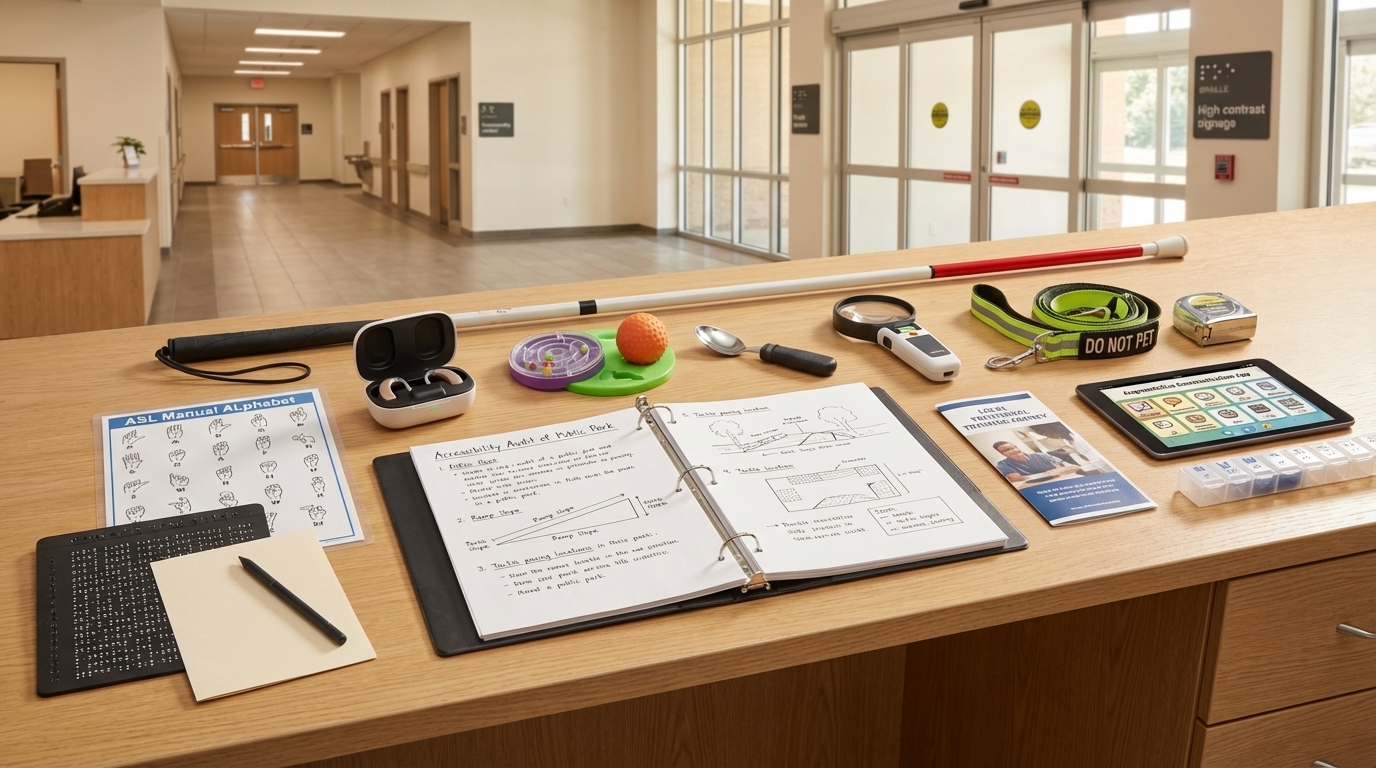
Disabilities Awareness Merit Badge — Complete Digital Resource Guide
https://merit-badge.university/merit-badges/disabilities-awareness/guide/
Introduction & Overview
One in four adults in the United States lives with some form of disability. That means in a troop of twenty Scouts, statistically five of them — or their parents, siblings, or close friends — are directly affected. Disabilities are not rare, they are not always visible, and they are not something that only happens to “other people.” They are part of everyday life.
The Disabilities Awareness merit badge asks you to look at the world through a wider lens. You will learn the language people use to talk about disability, practice the etiquette that shows genuine respect, meet people who navigate the world differently than you do, and evaluate how well your school, place of worship, and community actually serve everyone. By the end, you will not just be aware — you will be an advocate.
Then and Now
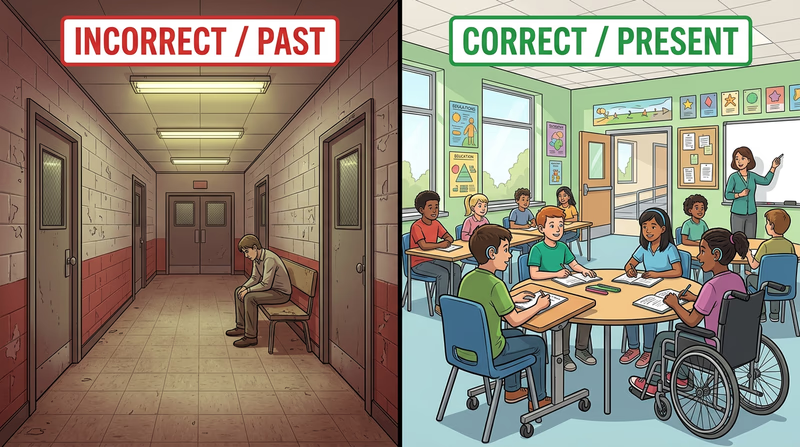
Then — The Institutional Era
For most of history, people with disabilities were hidden. Families kept disabled children at home, and governments built large institutions — often in remote locations — where people with physical, intellectual, and mental health disabilities lived in isolation, separated from their communities. The prevailing view was the medical model of disability: disability was a defect in the person, something to be “fixed” or, if it could not be fixed, hidden away.
In the United States, conditions in many state institutions were shockingly poor. Overcrowding, neglect, and abuse were common. It was not until journalist Geraldo Rivera exposed conditions at the Willowbrook State School in New York in 1972 that the public began demanding change.
- Mindset: Disability as a personal deficiency
- Approach: Institutionalization and segregation
- Result: Millions of people denied education, employment, and community life
Now — The Rights Era
The modern disability rights movement changed everything. Activists — many of them people with disabilities — fought for laws that guarantee equal access and opportunity. The landmark Americans with Disabilities Act (ADA), signed in 1990, banned discrimination based on disability in employment, public services, and commercial facilities. Section 504 of the Rehabilitation Act (1973) had already required federally funded programs to be accessible, and the Individuals with Disabilities Education Act (IDEA) guaranteed children with disabilities the right to a free public education alongside their peers.
Today, the dominant framework is the social model of disability: the idea that people are not disabled by their conditions, but by barriers in the environment and attitudes in society. A wheelchair user is not disabled by paralysis — they are disabled by a building with no ramp.
- Mindset: Disability as a social and environmental issue
- Approach: Inclusion, accommodation, and universal design
- Impact: Millions of people living, working, and learning in their communities
Get Ready! This badge will challenge you to think differently about ability, access, and inclusion. You will meet people, visit places, and have conversations that open your eyes. The world needs more people who understand disability — and you are about to become one of them.
Kinds of Disabilities
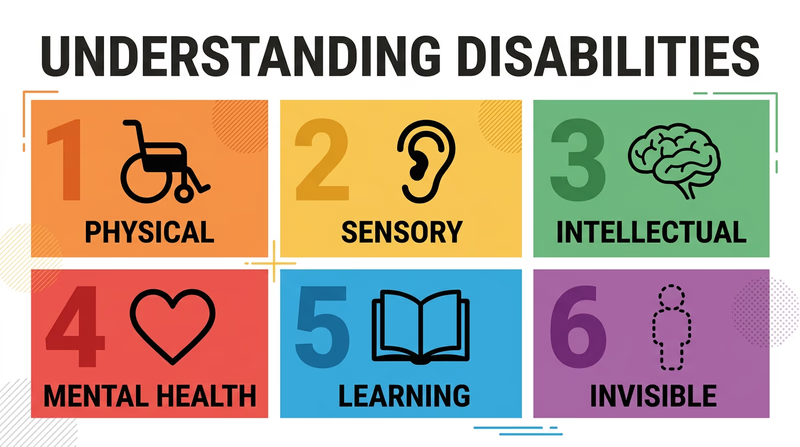
Disabilities come in many forms. Some are visible — you can see them right away. Others are invisible — a person might look perfectly healthy while dealing with significant challenges. Understanding the major categories will give you a foundation for everything else in this badge.
Physical Disabilities
Physical disabilities affect a person’s ability to move, use their hands, or control their body. They include conditions like cerebral palsy, spinal cord injuries, muscular dystrophy, and limb differences. Some people use wheelchairs, crutches, prosthetic limbs, or other mobility devices. Others may walk independently but have limited range of motion or strength.
Sensory Disabilities
Sensory disabilities affect the senses — primarily vision and hearing. A person who is deaf or hard of hearing may communicate using American Sign Language (ASL), lip reading, hearing aids, or cochlear implants. A person who is blind or has low vision may use a white cane, a guide dog, screen readers, or braille.
Intellectual and Developmental Disabilities
These include conditions like Down syndrome, autism spectrum disorder, and intellectual disabilities that affect learning, reasoning, or social interaction. People with these disabilities may process information differently, communicate in nontraditional ways, or need more time to learn new tasks — but they have talents, interests, and goals just like anyone else.
Mental Health Disabilities
Conditions like depression, anxiety disorders, bipolar disorder, PTSD, and schizophrenia are mental health disabilities. They affect mood, thinking, and behavior. These are among the most common — and most misunderstood — disabilities. Many people manage mental health conditions with therapy, medication, and support, and live full, productive lives.
Learning Disabilities
Dyslexia, dyscalculia, ADHD, and other learning disabilities affect how the brain processes information. A person with dyslexia might be highly intelligent and creative but struggle with reading. These disabilities do not reflect a person’s effort or intelligence — they reflect differences in how the brain is wired.
Invisible Disabilities
Invisible disabilities deserve special attention because they are so often overlooked. Chronic pain, autoimmune diseases (like lupus or Crohn’s disease), epilepsy, diabetes, anxiety disorders, and many other conditions have no outward signs. A person who “looks fine” may be dealing with exhaustion, pain, or cognitive challenges that you cannot see.
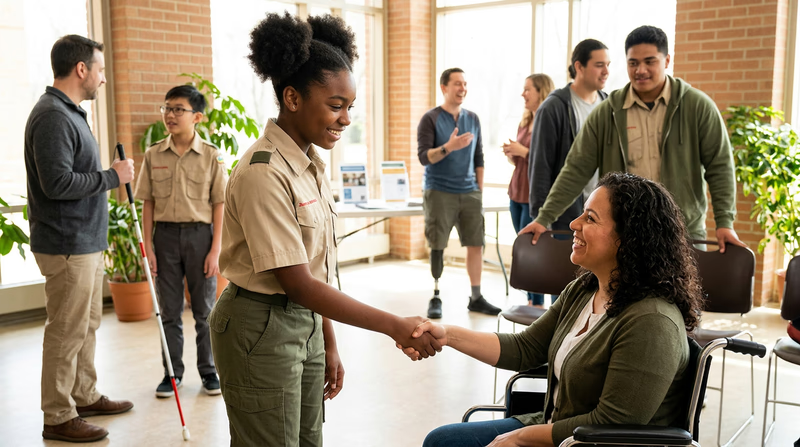
Ready to learn the key terms that form the foundation of disabilities awareness? Let’s start with the vocabulary that matters.
Req 1a — Key Terminology
Words shape how we think about people. The wrong word can reduce a person to their condition — “the blind kid,” “a cripple,” “the autistic one.” The right word sees the person first and the disability second. This requirement asks you to learn six foundational terms and understand why each one matters.
Disability
A disability is a physical, mental, intellectual, or sensory condition that limits a person’s ability to perform certain activities or interact with the world around them in the way most people do. The key word in that definition is “limits” — not “prevents.” Most people with disabilities find ways to do the things they want to do; they just do them differently.
Under the ADA, a disability is defined as a physical or mental impairment that substantially limits one or more major life activities. That legal definition covers a wide range of conditions — from paralysis to depression to dyslexia.
Accessibility
Accessibility means designing environments, products, services, and information so that people with disabilities can use them. A building with a wheelchair ramp is accessible. A website that works with a screen reader is accessible. A movie with closed captions is accessible.
Accessibility is not just about ramps and elevators. It includes:
- Physical accessibility — Ramps, elevators, accessible restrooms, wide doorways, lowered counters
- Digital accessibility — Screen reader compatibility, keyboard navigation, alt text on images, captioned videos
- Communication accessibility — Sign language interpreters, braille materials, plain-language documents
- Sensory accessibility — Good lighting, reduced background noise, tactile maps and guides
Adaptation
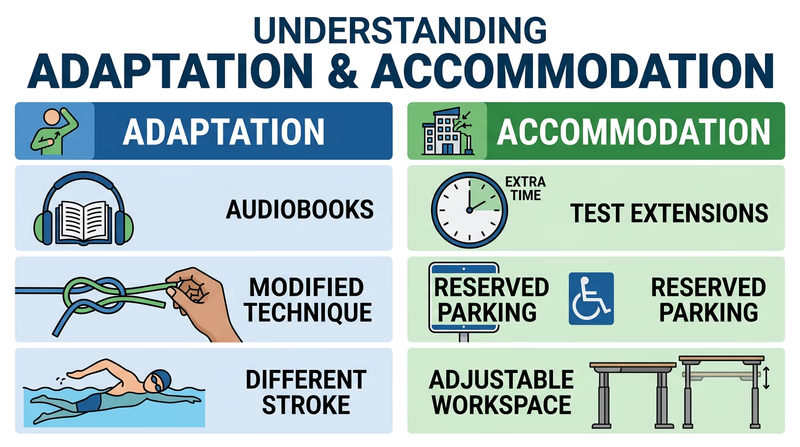
An adaptation is a change to how a task is performed so that a person with a disability can complete it. Adaptations focus on the task, not the environment. For example:
- A student with dyslexia uses audiobooks instead of printed textbooks
- A Scout with one arm learns to tie knots using one hand and their teeth
- A swimmer with a leg amputation uses a modified stroke technique
Adaptations are personal — what works for one person may not work for another with the same disability. The key is creativity and willingness to try different approaches.
Accommodation
An accommodation is a modification to a rule, policy, practice, or environment that gives a person with a disability equal access to an opportunity. Unlike adaptations (which change how a person performs a task), accommodations change what the organization provides.
Common accommodations include:
- Extra time on tests for students with learning disabilities
- A reserved parking space close to a building entrance
- A flexible work schedule for someone managing a chronic illness
- A sign language interpreter at a meeting
- An adjustable-height desk
Invisible Disability
An invisible disability (also called a hidden disability) is a condition that significantly affects a person’s daily life but has no outward signs. You cannot tell the person has a disability by looking at them.
Examples include:
- Chronic pain conditions (fibromyalgia, back injuries)
- Autoimmune diseases (lupus, Crohn’s disease, multiple sclerosis)
- Mental health conditions (anxiety, depression, PTSD)
- Neurological conditions (epilepsy, migraines)
- Learning differences (ADHD, dyslexia)
- Chronic fatigue syndrome
- Diabetes
People with invisible disabilities often face a unique challenge: because they “look normal,” others may doubt that their disability is real. Comments like “but you don’t look sick” or “you seem fine to me” can be hurtful and dismissive.
Person-First Language
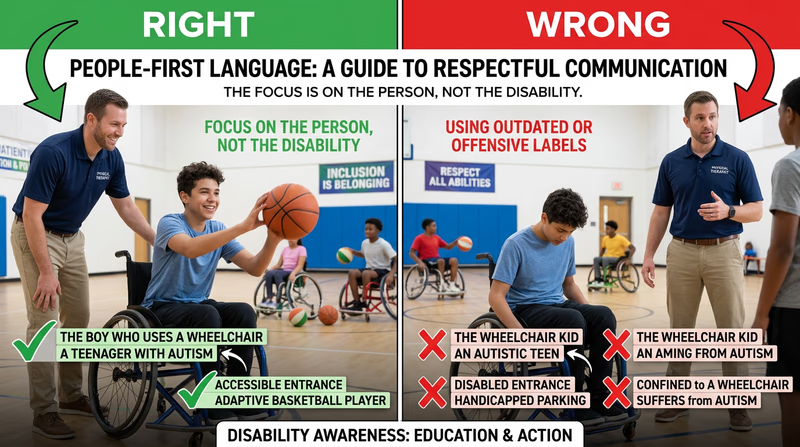
Person-first language puts the person before the disability. Instead of defining someone by their condition, you describe them as a person who happens to have a condition.
| Person-First (Preferred) | Identity-First (Avoid Unless Requested) |
|---|---|
| A person with a disability | A disabled person |
| A student with autism | An autistic student |
| A person who uses a wheelchair | A wheelchair-bound person |
| A person with epilepsy | An epileptic |
| A person with a visual impairment | A blind person |
| A child with Down syndrome | A Down syndrome child |
There is one important exception: some communities prefer identity-first language. Many people in the Deaf community prefer “Deaf person” because they view deafness as a cultural identity, not a medical condition. Some autistic adults prefer “autistic person” because they see autism as an integral part of who they are, not something they “have.” When in doubt, ask the person how they prefer to be described — and then use their preference.
Now that you know the key terms, let’s explore how to put that knowledge into action with proper disability etiquette.
Req 1b — Disability Etiquette
Imagine you are at a crosswalk, and a person with a white cane is waiting beside you. The light changes. Do you grab their arm and guide them across? It feels like the right thing to do — but it is actually one of the worst things you could do. You have just taken control of someone’s body without their permission. You have assumed they need help when they may cross this street every day without assistance. And you may have startled them, throwing off the mental map they use to navigate.
Good disability etiquette is not about being “politically correct.” It is about treating people with disabilities the same way you would want to be treated: with dignity, respect, and the assumption that they are capable until they tell you otherwise.
Why Etiquette Matters
People with disabilities deal with awkward, unwanted, and sometimes offensive interactions every day. Well-meaning strangers grab their wheelchairs, talk to their companions instead of to them, pet their service dogs, or ask invasive questions about their medical conditions. These interactions — even when they come from a kind place — send a message: I see your disability before I see you.
Proper etiquette flips that script. It says: I see you as a person. I respect your autonomy. And I will follow your lead on how to interact.
Universal Principles
These core principles apply regardless of the specific disability:
Universal Etiquette Principles
Start here — these apply in every situation- Ask before helping: Never assume someone needs assistance. A simple “Can I help with anything?” gives the person the choice.
- Speak directly to the person: Even if the person has a companion, interpreter, or aide, look at and talk to the person with the disability — not their helper.
- Respect personal space and equipment: A wheelchair, cane, or walker is part of a person’s personal space. Do not lean on, move, or touch mobility equipment without permission.
- Do not pet or distract service animals: A service dog wearing a harness is working. Petting, calling, or feeding the dog can distract it from keeping its handler safe.
- Avoid making assumptions: Do not decide what a person can or cannot do based on their disability. Let them tell you.
- Use person-first language: As you learned in Req 1a, lead with the person, not the condition — unless they prefer otherwise.
Etiquette by Disability Type
What counts as respectful behavior changes depending on the specific disability. Here are the major categories and what to keep in mind for each.
Physical and Mobility Disabilities
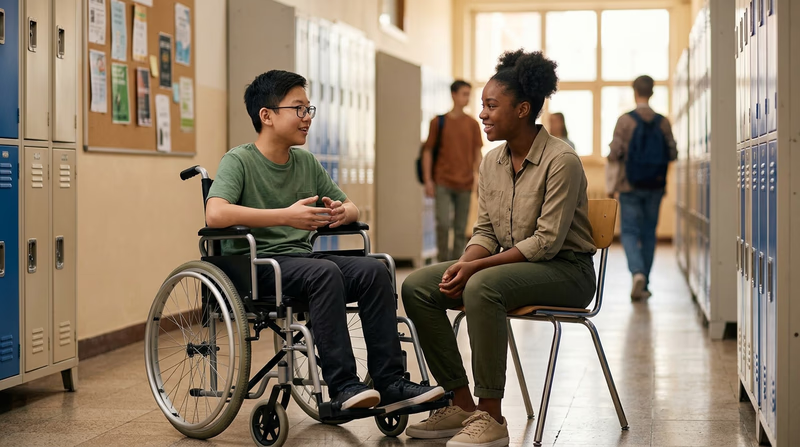
When talking with a person in a wheelchair, sit down or step back so you are at eye level — do not tower over them. Never push a wheelchair without being asked. If someone is using crutches or a walker, be patient and walk at their pace. Hold doors open if it is helpful, but do not make a production of it.
Hearing Disabilities
Get the person’s attention before speaking — a light wave, a gentle tap on the shoulder, or moving into their line of sight. Face them directly when talking (many people who are deaf or hard of hearing read lips). Speak clearly at a normal pace — do not shout or exaggerate your mouth movements. If a sign language interpreter is present, look at the person, not the interpreter. And remember that not all people who are deaf use ASL — some prefer written communication, speech, or other methods.
Visual Disabilities
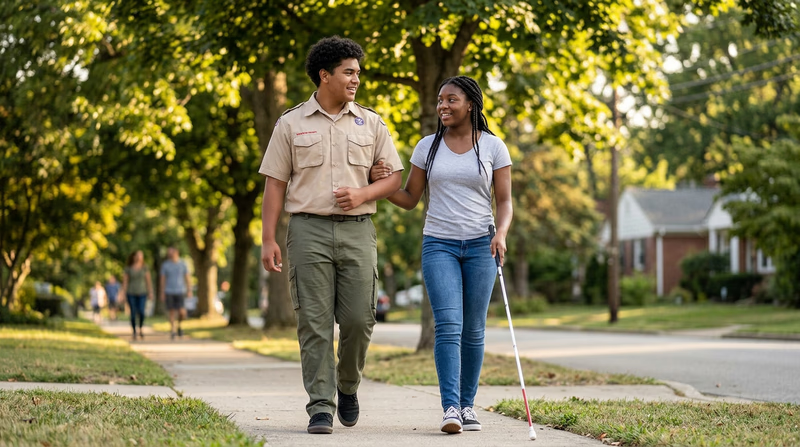
Identify yourself when you approach — do not assume they recognize your voice. If you are guiding someone, offer your arm (do not grab theirs) and let them grip your elbow. Describe the environment: “There are three steps going down,” or “The door is about five feet to your left.” Use specific language — “The water bottle is on the table to your right” is useful; “It’s over there” is not.
Intellectual and Developmental Disabilities
Speak in clear, simple sentences. Be patient — some people need extra time to process information or form a response. Do not finish their sentences. Treat adults as adults, not children. If you do not understand what someone is saying, it is okay to ask them to repeat it — it is more respectful than pretending you understood.
Invisible Disabilities
The most important etiquette here is simply believing people. If someone says they need to sit down, take a break, avoid certain foods, or leave a loud environment — take them at their word. Do not say “but you look fine” or “you don’t seem sick.” Their disability is real whether or not you can see it.
Words to Avoid
Some words and phrases are outdated, offensive, or just unhelpful. Here are a few to retire from your vocabulary:
| Avoid | Why | Use Instead |
|---|---|---|
| “Handicapped” | Considered outdated by most advocates | “Person with a disability” |
| “Confined to a wheelchair” | A wheelchair provides freedom, not confinement | “Uses a wheelchair” |
| “Suffers from…” | Assumes misery; many people with disabilities live great lives | “Has…” or “Lives with…” |
| “Special needs” | Vague and patronizing | “Disability” or specific accommodation needed |
| “Normal” (as opposite of disabled) | Implies people with disabilities are abnormal | “Nondisabled” or “typical” |
| “Inspirational” (about ordinary activities) | Doing groceries in a wheelchair is not heroic — it is Tuesday | Treat everyday activities as everyday |
With a strong foundation in terminology and etiquette, you are ready to step into the community and learn from the organizations that serve people with disabilities every day.
Req 2 — Visiting an Agency
Reading about disabilities in a book is one thing. Walking through the doors of an organization that serves people with disabilities every day is something else entirely. This requirement gets you out of the classroom and into the real world — where you will see how communities support people with disabilities through programs, services, and advocacy.
Finding the Right Agency
You have more options than you might think. Here are the types of agencies to look for in your community:
Government Agencies
- State Vocational Rehabilitation (VR) offices — Help people with disabilities find and keep jobs through training, assistive technology, and job placement services
- State or county Developmental Disabilities offices — Coordinate services for people with intellectual and developmental disabilities
- Veterans Affairs (VA) medical centers — Serve veterans with service-connected disabilities
Nonprofit Organizations
- The Arc — The largest nonprofit for people with intellectual and developmental disabilities, with local chapters nationwide
- Goodwill Industries — Provides job training and employment services for people with disabilities and other barriers
- Easterseals — Offers therapy, training, education, and community programs for people with disabilities
- Local independent living centers — Help people with all types of disabilities live independently in their communities
- Special Olympics chapters — Provide athletic training and competition for people with intellectual disabilities
Schools and Training Programs
- Special education programs in public schools
- Transition programs that help young adults with disabilities move from school to work or college
- Sheltered workshops or social enterprises that provide employment in a supportive environment
Preparing for Your Visit
A successful visit starts with preparation. Before you go, take time to plan what you want to learn and how you will record what you find.
Pre-Visit Checklist
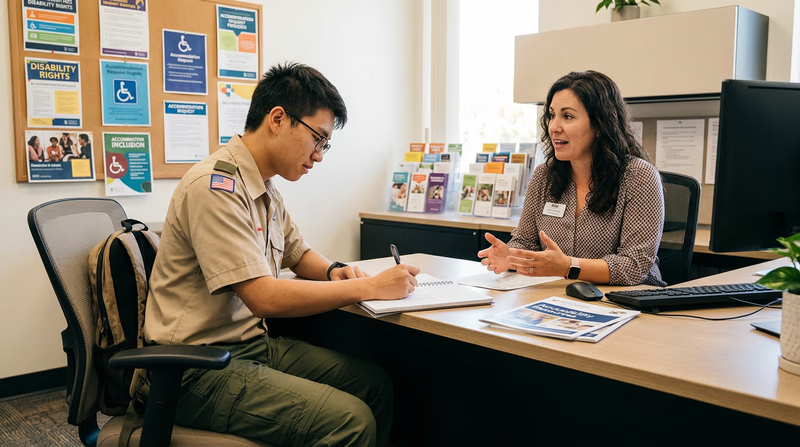
Steps to take before your agency visit- Contact the agency in advance: Call or email to schedule your visit. Explain that you are a Scout working on the Disabilities Awareness merit badge and would like to learn about their programs.
- Prepare questions: Write down at least five questions before you go (see suggestions below).
- Bring a notebook: You will want to take notes on what you see and hear.
- Collect printed materials: Ask for brochures, program guides, or annual reports — many agencies are happy to share.
- Dress appropriately: Wear your Scout uniform to show you are representing Scouting.
- Bring a parent or guardian: Some agencies may require an adult to accompany you.
Questions to Ask
The requirement specifically asks about training, employment, and education opportunities. Here are questions that will help you gather that information:
About the Agency
- What is your agency’s mission?
- What types of disabilities do you serve?
- How many people does your agency serve each year?
- How is the agency funded — government grants, donations, fees, or a combination?
About Training and Employment
- What job training programs do you offer?
- How do you help people with disabilities find employment?
- What kinds of jobs do your members or clients hold?
- Do employers come to you looking for workers, or do you go to them?
- What is the biggest challenge people with disabilities face in finding work?
About Education
- Do you offer any educational programs or classes?
- How do you help young people with disabilities transition from school to the workplace?
- Do you provide tutoring, GED preparation, or college readiness programs?
About Daily Life
- What other services do you provide (housing, transportation, recreation)?
- How has technology changed the way you serve people?
- What is the one thing you wish the general public understood about disabilities?
After Your Visit
When you return, organize your notes and prepare to discuss three key things with your counselor:
- What the agency does — Its mission, the population it serves, and the programs it runs
- Training and employment opportunities — How the agency helps people build skills and find work
- Your personal takeaways — What surprised you, what impressed you, and what you would like to learn more about
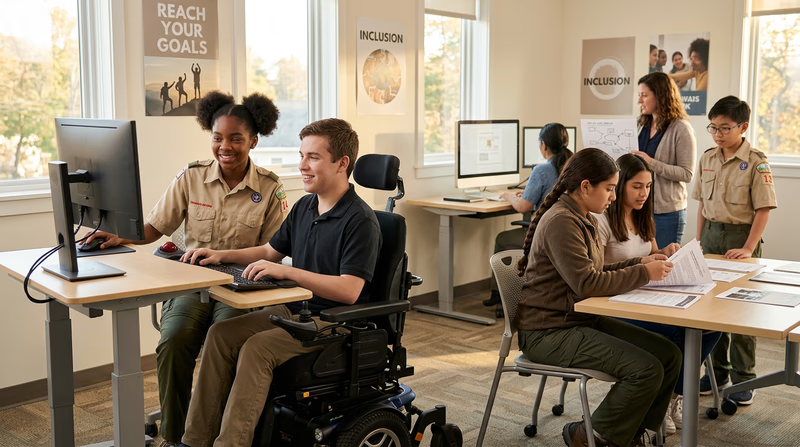
You have seen how agencies serve people with disabilities in your community. Now it is time to hear directly from individuals who live with disabilities — their experiences, their perspectives, and what they want you to know.
Req 3 — Personal Experiences
This requirement gives you five options for learning directly from people with disabilities or experiencing what they experience. You will choose two of them. Each option teaches something different — some involve one-on-one conversations, others involve research or hands-on activities.
Read through all five options below, then pick the two that interest you most and that you can realistically complete in your community.
Option 3a — Talk with a Scout Who Has a Disability
What to do: Find a Scout (in your troop, district, or council) who has a disability and have a conversation about their experience in Scouting. What merit badges have they earned? What activities do they enjoy most? What challenges have they faced, and how did they overcome them?
How to prepare: Ask your Scoutmaster or council office to help you connect with a Scout who is willing to share their experience. Have questions ready, but let the conversation flow naturally. This is not an interview — it is a chance to listen and learn.
Key question to explore: How has Scouting adapted to include this Scout? Were any accommodations made, and did they work well?
Option 3b — Talk with a Person Who Has a Disability
What to do: Have a conversation with someone who has a disability — a family member, neighbor, teacher, coach, or someone you met through the agency visit in Req 2. Learn about their daily life, their interests, and the activities they enjoy.
How to prepare: Approach this conversation with genuine curiosity and the etiquette you learned in Req 1b. Ask about their life — not just their disability. People with disabilities are whole people with hobbies, careers, families, and dreams.
Suggested conversation starters:
- “What do you enjoy doing in your free time?”
- “What is something most people do not understand about living with your disability?”
- “What accommodations make the biggest difference in your daily life?”
- “What would you want people my age to know?”
Option 3c — Learn About Adaptive Sports
What to do: Research how people with disabilities participate in a specific adaptive sport or recreational activity. Learn about the rules, the equipment modifications, and the organizations that support it.
People with disabilities compete at the highest levels of athletic performance. Adaptive sports are not watered-down versions of “real” sports — they are fierce, demanding, and inspiring.
Adaptive Sports to Explore
| Sport | Adaptation | Organization |
|---|---|---|
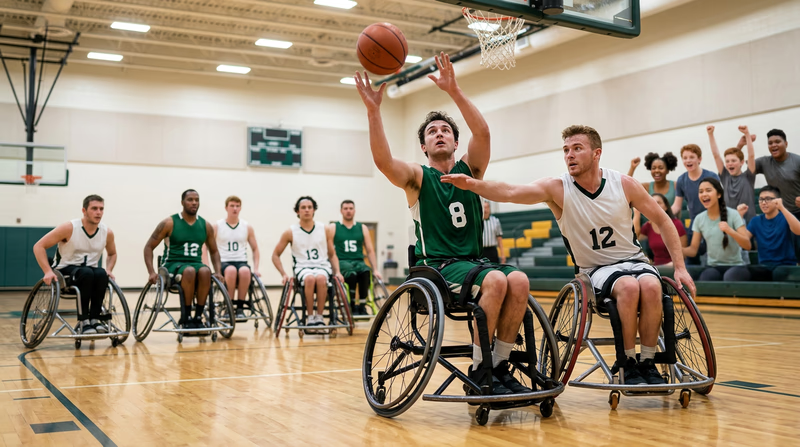
| Wheelchair basketball | Played in sport wheelchairs; same court, same hoop height | National Wheelchair Basketball Association |
| Sled hockey | Players sit on sleds with two short sticks instead of one | USA Hockey Sled Program |
| Goalball | Designed for athletes with visual impairments; players wear blackout goggles and track a ball by sound | USA Goalball |
| Adaptive rock climbing | Modified harnesses, prosthetic grips, route setting for various disabilities | Paradox Sports |
| Sit-skiing | Athletes sit in a mono-ski or bi-ski frame attached to a single ski or pair of skis | Move United |
| Wheelchair rugby | Also called “murderball” — full contact in reinforced chairs | USA Wheelchair Rugby |
Option 3d — Learn About Independent Living Aids
What to do: Research assistive technologies and independent living aids that help people with disabilities navigate daily life. Learn how these tools work and how they promote independence.
Categories of Assistive Technology
Mobility aids:
- Manual and power wheelchairs
- Walkers, canes, and crutches
- Prosthetic limbs — from basic models to microprocessor-controlled knees and bionic hands
Communication aids:
- Augmentative and alternative communication (AAC) devices — from simple picture boards to sophisticated speech-generating computers
- Captioned telephones and video relay services for people who are deaf
- Text-to-speech and speech-to-text software
Service animals:
- Guide dogs for people who are blind
- Hearing dogs that alert their handlers to sounds like doorbells, alarms, and approaching vehicles
- Psychiatric service dogs trained to recognize and respond to anxiety attacks, PTSD episodes, or seizures
- Service miniature horses (yes, really — the ADA recognizes them as service animals)
Daily living aids:
- Braille displays and refreshable braille keyboards
- Screen readers that convert text to speech
- One-handed kitchen tools, button hooks, and adaptive utensils
- Smart home technology — voice-controlled lights, locks, and appliances
Option 3e — Plan or Participate in an Awareness Activity
What to do: Plan or take part in an activity that helps other people understand what it is like to live with a disability. This could be a simulation, a presentation, a community event, or something you design yourself.
Activity Ideas
Simulation experiences (use with caution — see safety note below):
- Navigate your school or Scout meeting place in a wheelchair and note every barrier you encounter
- Wear earplugs during a meeting and try to follow the conversation
- Wear simulation goggles that mimic visual impairments while trying to read or pour a glass of water
Educational presentations:
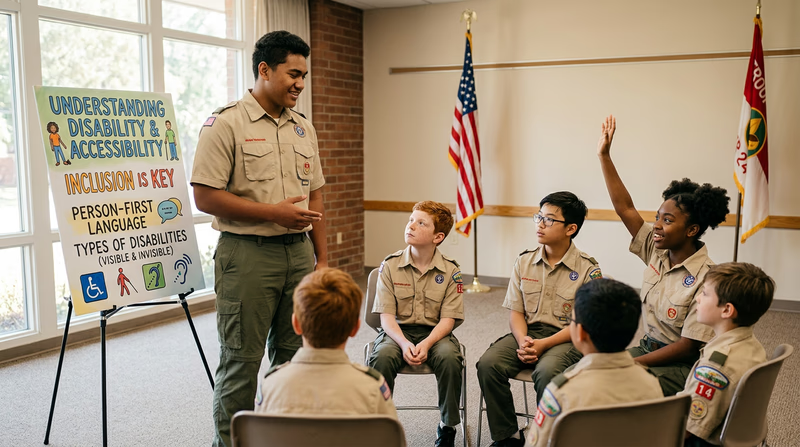
- Create a presentation for your troop about person-first language
- Lead a discussion about invisible disabilities using the myths and facts you will research in Req 5
- Invite a speaker with a disability to share their story with your troop or pack
Remember: you need to complete two of these five options. Choose the two that you find most interesting and that you can access in your community. Discuss what you learned from each with your counselor.
Req 4 — Accessibility Observations
This requirement asks you to become a detective. You will visit two locations you already know — your school, your place of worship, a Scouting event, or a public attraction — and look at them with fresh eyes. Instead of just walking through the door, you will evaluate how well these places serve people with disabilities.
You have two options to choose from:
Option A — Visible Accessibility: Focus on physical accessibility for people with visible disabilities (mobility, vision, hearing). Look for ramps, elevators, accessible restrooms, signage, and other features.
Option B — Invisible Disability Accommodations: Focus on accommodations for people with invisible disabilities (chronic pain, anxiety, sensory processing, learning differences). Look for quiet spaces, sensory accommodations, flexible seating, and staff training.
Both options ask you to visit two of the same four types of locations:
- Your school
- Your place of worship
- A Scouting event or campsite
- A public exhibit or attraction (theater, museum, or park)
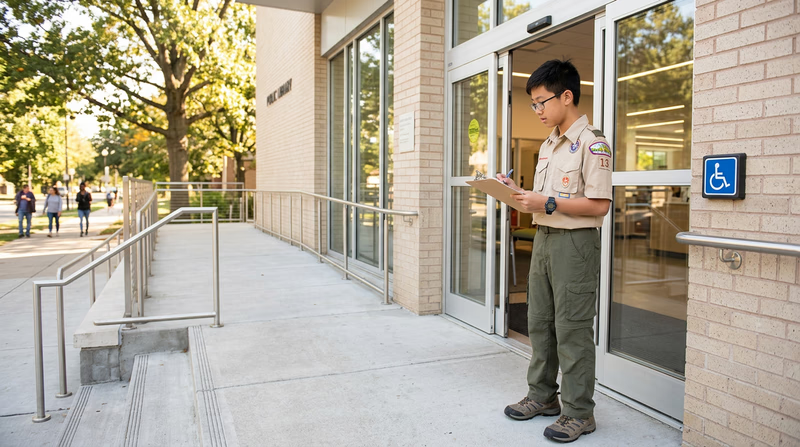
For both options, you will need to note five things that could be improved and five things that are already done well at each location. That means looking carefully at both the positives and the negatives — most places get some things right and other things wrong.
Choose your option and dive in:
Req 4 Option A — Visible Accessibility
You choose two locations from this list:
- Your school
- Your place of worship
- A Scouting event or campsite
- A public exhibit or attraction (such as a theater, museum, or park)
At each location, you are looking for physical accessibility — features that help or hinder people with mobility, vision, and hearing disabilities. Think of yourself as an accessibility auditor. Your job is to notice things most people walk right past.
What to Look For
Use the categories below as your audit checklist. At each location, work through these areas systematically and take detailed notes.
Entrances and Exits
- Is there a ramp or level entrance? Is it in a convenient location, or do wheelchair users have to go around to a back entrance?
- Are doors wide enough for a wheelchair (at least 32 inches of clear width)?
- Can doors be opened easily, or do they require twisting, pulling, or heavy force? Are there automatic door openers?
- Are emergency exits accessible? Could a person in a wheelchair evacuate independently?
Interior Navigation
- Are hallways and aisles wide enough for a wheelchair?
- Is the flooring smooth and even, or are there thresholds, thick carpet, or uneven surfaces that could trip someone or block a wheelchair?
- Are elevators available where there are stairs? Are elevator buttons at wheelchair height?
- Is signage clear, large enough to read from a distance, and placed at a consistent height?
Restrooms
- Is there an accessible restroom stall with grab bars, adequate space, and a door that swings outward?
- Are sinks, soap dispensers, and paper towel or hand dryer units reachable from a wheelchair?
- Are restroom signs in braille or raised letters?
Seating and Participation
- Are there wheelchair-accessible seating areas (not just at the back)?
- Can a person in a wheelchair see the stage, screen, altar, or presenter from their seat?
- Are hearing loops or assistive listening devices available?
- Is there captioning or a sign language interpreter for events?
Parking and Outdoor Areas
- Are accessible parking spots available, close to the entrance, and properly marked?
- Are outdoor paths paved, level, and wide enough for a wheelchair?
- Are there curb cuts connecting the parking lot to the sidewalk?
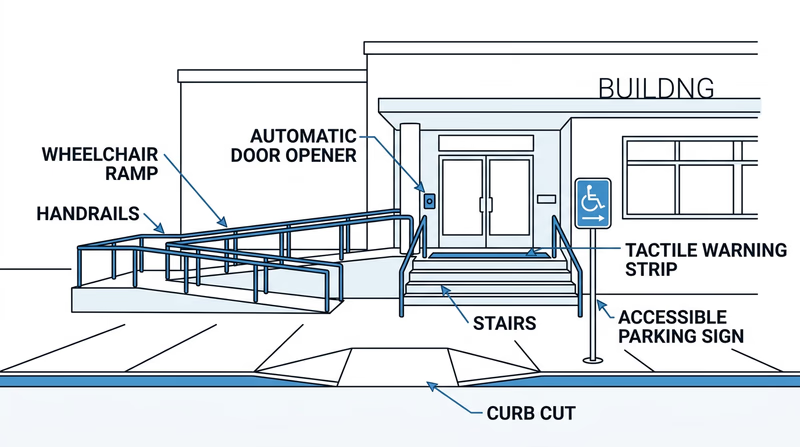
Audit Note-Taking Template
Record five positives and five areas for improvement at each location- Location name and date of visit: Write down where you went and when.
- Entrance accessibility: Rate the entrances and note specifics.
- Interior navigation: Evaluate hallways, doors, and floor surfaces.
- Restroom accessibility: Check for grab bars, space, and reachable fixtures.
- Seating and participation: Note whether wheelchair users have good sightlines and options.
- Parking and outdoor paths: Evaluate the journey from car to front door.
- Signage and wayfinding: Look for braille, large print, and clear directional signs.
- Communication access: Note hearing loops, captioning, or interpreter availability.
- Overall impression: Write a sentence or two about the overall experience.
Common Problems to Watch For
Some accessibility issues are obvious — no ramp, no elevator, no accessible restroom. Others are subtler:
- A ramp that is too steep (ADA requires no more than a 1:12 slope — one inch of rise for every 12 inches of run)
- An “accessible” restroom that is used as a storage closet
- Heavy doors that technically have a push button, but the button is broken or hard to reach
- Accessible seating that is in a corner with a blocked view
- A building that is technically accessible but forces wheelchair users to use a different entrance than everyone else — a “separate but equal” problem
Preparing for Your Discussion
When you meet with your counselor, be ready to share:
- Which two locations you visited
- Five things each location does well for accessibility
- Five things each location could improve
- Your overall assessment — which location was more accessible, and why?
- Specific suggestions — if you could change one thing at each location, what would it be?
If Option A is not the right fit for you, take a look at Option B — which focuses on the often-overlooked accommodations for people with invisible disabilities.
Req 4 Option B — Invisible Disability Accommodations
You choose two locations from this list:
- Your school
- Your place of worship
- A Scouting event or campsite
- A public exhibit or attraction (such as a theater, museum, or park)
Option B is harder than Option A — and more rewarding. Ramps and elevators are easy to spot. Accommodations for invisible disabilities are, by definition, harder to see. You will need to look carefully, ask questions, and think about the needs of people whose challenges are not obvious to the casual observer.
Understanding Invisible Disability Accommodations
As you learned in Req 1a, invisible disabilities include conditions like chronic pain, anxiety, PTSD, autism, ADHD, epilepsy, migraines, Crohn’s disease, and many others. These conditions affect millions of people, but the accommodations that serve them are often built into policies and procedures rather than into physical structures.
What to Look For
Sensory Environment
Many people with invisible disabilities are sensitive to sensory input — bright lights, loud sounds, strong smells, or crowded spaces can trigger pain, anxiety, or sensory overload.
- Lighting: Is the lighting harsh fluorescent or softer alternatives? Can it be adjusted?
- Noise levels: Are there quiet areas available? Is background music kept at a reasonable volume?
- Sensory-friendly events: Some theaters, museums, and attractions offer “sensory-friendly” performances or hours with reduced lighting, lower volume, and relaxed rules about moving around. Does this location offer anything similar?
Quiet and Recovery Spaces
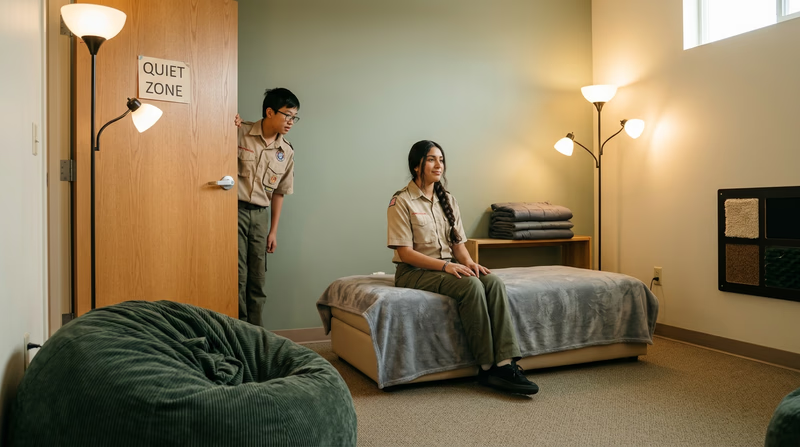
- Is there a designated quiet room, calm space, or prayer/meditation room where someone who is overwhelmed can decompress?
- Are there areas with reduced stimulation away from crowds?
- At a Scouting event, is there a place a Scout can go if they need a break from activity?
Flexible Policies
- Are there flexible seating options (not just fixed pews or auditorium seats)?
- Can people leave and re-enter without penalty — important for people who need to take breaks, use the restroom frequently, or manage medication?
- Are food and drink allowed, or can exceptions be made for people with diabetes or other conditions that require regular eating?
- Is there a fragrance-free or scent-reduced policy?
Communication and Information
- Are instructions and information available in multiple formats (written, verbal, visual)?
- Is plain language used in signage and printed materials?
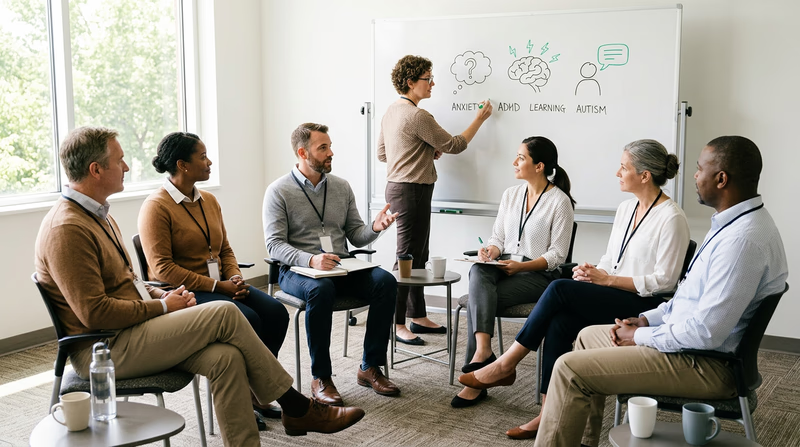
- Are staff trained to recognize and respond to less obvious needs?
- Is there a process for requesting accommodations — and is it well-publicized?
Talking with Staff
This option specifically asks you to talk with staff members. Here are ways to start that conversation:
Things That Are Easy to Miss
Here are accommodations that many locations have but do not advertise:
- Priority seating for people who cannot stand for long periods
- Wheelchair or bench availability along long walking paths
- Adjustable lighting in meeting rooms
- Advance materials (agendas, event schedules) sent ahead of time so people with anxiety can prepare
- Flexibility on dress codes for people with sensory sensitivities to certain fabrics
- Staff who carry emergency medication information cards for visitors who disclose conditions
And here are gaps that many locations have:
- No process for requesting accommodations
- No quiet space for decompression
- No awareness training for staff
- Harsh, unchangeable lighting
- Rules that inadvertently exclude (no food, no breaks, no re-entry)
- No mention of invisible disabilities in accessibility statements or on websites
Preparing for Your Discussion
When you meet with your counselor, be ready to share:
- Which two locations you visited
- What accommodations you found for invisible disabilities
- What staff told you about their awareness and training
- What is missing — specific improvements you would recommend
- How this compares to the visible accessibility you have learned about — which type of accommodation seems more developed in your community?
You have evaluated the places around you through the lens of disability. Now it is time to take what you have learned and use it — through advocacy.
Req 5 — Advocacy
This requirement has two parts: first, you need to understand what advocacy means. Then you choose one of three action options to put advocacy into practice.
- Option 5a: Present a disabilities awareness program to a Cub Scout pack or other group
- Option 5b: Volunteer with a disability education or advocacy program for eight hours
- Option 5c: Research and present 10 myths and misconceptions about people with disabilities
What Is Advocacy?
Advocacy means speaking up for the rights and needs of others — especially people who may not have the power or platform to speak for themselves. A disability advocate works to remove barriers, change attitudes, and ensure that people with disabilities have the same opportunities as everyone else.
Advocacy takes many forms:
- Personal advocacy: Standing up for a friend or classmate who is being excluded or treated unfairly
- Community advocacy: Working to make local buildings, events, or programs more accessible
- Legislative advocacy: Contacting elected officials to support laws that protect disability rights
- Educational advocacy: Teaching others about disability — which is exactly what this requirement asks you to do
The disability rights motto captures it perfectly: “Nothing about us without us.” The best advocacy amplifies the voices of people with disabilities rather than speaking over them.
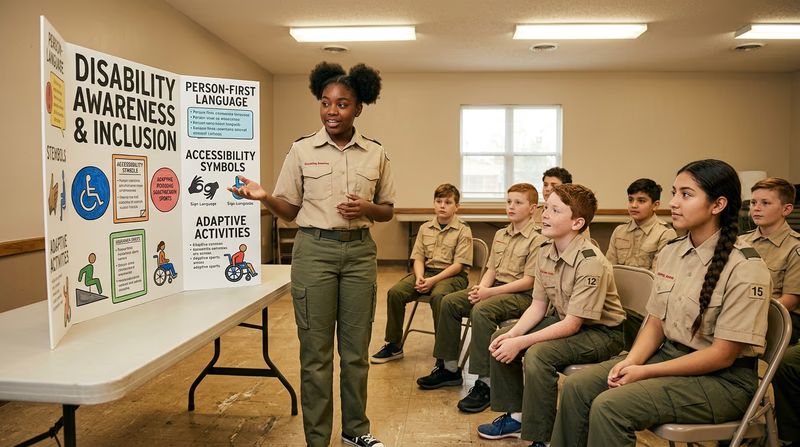
Option 5a — Present a Disabilities Awareness Program
What to do: Create and deliver a presentation about disabilities awareness to a Cub Scout pack, your troop, a school group, or another audience. Your presentation must explain and use person-first language.
Planning Your Presentation
Presentation Planning
Steps to build an effective awareness program- Get counselor approval: Share your plan with your counselor before you present. They need to approve your content.
- Know your audience: Cub Scouts (ages 5–10) need simpler language and more interactive elements than older Scouts or adults.
- Choose 3–4 key topics: Do not try to cover everything. Focus on person-first language, a few disability types, and practical etiquette.
- Use person-first language throughout: This is specifically required. Practice it so it sounds natural, not rehearsed.
- Include an interactive element: A short activity, a demonstration, or a Q&A session keeps the audience engaged.
- Prepare visuals: Posters, slides, or props help younger audiences stay focused.
- Practice: Run through your presentation at least twice before the real thing.
Presentation Ideas
- Language activity: Show two versions of the same sentence (one with person-first language, one without) and ask the audience which sounds better and why
- Empathy station: Set up stations where participants try writing with their non-dominant hand, navigating with a blindfold, or reading with simulation goggles — then discuss how adaptations help
- Meet the technology: Bring examples of assistive technology (a screen reader demo on a laptop, a braille card, a hearing aid) and explain how they work
- Story sharing: If someone with a disability is willing to co-present, their personal story will have more impact than any slide deck
Option 5b — Volunteer with a Disability Advocacy Program
What to do: Find a disability awareness education program at your school or through a disability advocacy agency, and volunteer for eight hours.
Where to Find Volunteer Opportunities
- Your school’s special education department — Ask if they need volunteers for peer buddy programs, unified sports events, or inclusion activities
- Special Olympics — Always needs volunteers for events, training sessions, and athlete support
- Best Buddies — A program that pairs volunteers with people who have intellectual and developmental disabilities for friendship and activities
- Local independent living centers — Often run community education programs that need volunteer support
- The Arc — Local chapters host social events, advocacy campaigns, and education programs
Making the Most of Your Hours
Eight hours might feel like a lot, but it goes fast when you are engaged. Track your hours and keep notes about:
- What you did each day
- Who you worked with
- What you learned
- How your understanding of disability changed
Option 5c — Research Myths and Misconceptions
What to do: Research myths and misconceptions about people with disabilities. List 10 myths, learn the facts about each, share your list with your counselor, and then present it to a Cub Scout pack or other group.
Common Myths About Disability
Here are some myths to get your research started — but do your own digging too. Use sources like disability advocacy organizations, government reports, and news articles to build your list.
| Myth | Reality |
|---|---|
| People with disabilities are “inspirational” just for living their lives | Doing ordinary tasks is not heroic — it is everyday life. This attitude (called “inspiration porn”) reduces people to their disabilities. |
| Wheelchair users cannot walk at all | Many wheelchair users can walk short distances. A wheelchair is a tool for managing energy and distance, not a sign of total paralysis. |
| Disability is always visible | As you learned in this badge, invisible disabilities affect millions of people. You cannot tell if someone has a disability by looking at them. |
| People with intellectual disabilities cannot work | People with intellectual disabilities hold jobs in every industry — from retail to technology to the arts. With the right support, most can work successfully. |
| Mental illness means a person is dangerous | People with mental health conditions are far more likely to be victims of violence than perpetrators. This myth causes tremendous harm and isolation. |
Building Your Presentation
For this option, you need to present your list to a group — not just hand it to your counselor. Structure your presentation like this:
- State the myth clearly
- Explain why people believe it (media portrayals, lack of exposure, historical attitudes)
- Present the facts from your research
- Share what this means in daily life for people with disabilities
You have taken action as an advocate. Now comes the most personal part of this badge — reflecting on how your awareness has changed and making a commitment to carry it forward.
Req 6 — Personal Commitment
This is where everything comes together. You have learned terminology, practiced etiquette, visited an agency, heard from people with disabilities, evaluated accessibility in your community, and taken action as an advocate. Now your counselor is asking two things: What has changed inside you? And what will you do about it going forward?
Reflecting on Your Journey
Before you draft your commitment, take some time to think honestly about how your awareness has shifted. Here are questions to sit with:
What did you believe about disability before this badge that you no longer believe? Maybe you thought of disability as something tragic, or you assumed all disabilities are visible, or you had never questioned whether your school is truly accessible.
What surprised you most? Was it a conversation you had? Something you learned about adaptive sports? The gap between what the ADA requires and what actually exists?
What made you uncomfortable? Discomfort is a sign of growth. Maybe you realized you have used disrespectful language without knowing it, or that you have avoided interacting with people who have disabilities because you did not know what to say.
Who taught you the most? Think about the person — at the agency, in your troop, in a conversation — whose perspective changed how you see the world.
Crafting Your Commitment
A meaningful commitment is specific, actionable, and sustainable. “I will be nicer to people with disabilities” is vague. A strong commitment identifies a concrete behavior you will adopt and how you will encourage others to do the same.
Commitment Ideas
Here are examples of specific, actionable commitments. Use these as inspiration, but write your own based on what you have actually learned and what matters to you.
Personal behavior commitments:
- “I will always use person-first language and gently correct others when I hear disrespectful language.”
- “I will never assume someone does not need an accessible parking spot or accommodation just because they look healthy.”
- “When I see someone with a disability, I will see the person first — and I will say hello instead of looking away.”
Active inclusion commitments:
- “I will advocate for accessibility improvements at my school by writing a letter to the principal with specific suggestions from my Req 4 audit.”
- “I will invite a friend with a disability to a troop campout and work with the Scoutmaster to ensure the event is accessible.”
- “I will continue volunteering with the organization from Req 5 at least once a month.”
Educating others:
- “I will share what I learned about invisible disabilities with my patrol and encourage them to be more understanding.”
- “When I hear a myth about disability, I will share the facts I learned in this badge.”
- “I will be the person in my friend group who speaks up when someone uses the word ‘retarded’ or makes jokes about disability.”

The Bigger Picture
Disability awareness is not a merit badge you earn and forget. The Scout Law says a Scout is kind, helpful, and friendly — and those values apply to every person you meet, including people whose abilities are different from yours. The world is full of barriers, and some of them are physical — stairs, narrow doorways, missing captions. But the biggest barriers are in people’s attitudes. Your commitment today is a step toward tearing those down.
You have made a meaningful commitment to carry your awareness forward. One more requirement to go — and it focuses on the professionals who dedicate their careers to serving people with disabilities.
Req 7 — Professions
Millions of professionals dedicate their careers to helping people with disabilities live fuller, more independent lives. Some work one-on-one with individuals. Others design the technology, build the policies, or create the programs that make inclusion possible. This requirement asks you to explore five of these professions and dig deeper into one that catches your interest.
Professions That Serve People with Disabilities
Here are well over five professions to consider. Choose the five that interest you most to discuss with your counselor, then pick one for your in-depth research.
Occupational Therapist (OT)
Occupational therapists help people perform everyday activities — getting dressed, cooking, writing, using a computer — when a disability makes those tasks challenging. They assess a person’s abilities, recommend adaptations and assistive devices, and teach new techniques for accomplishing daily tasks. OTs work in hospitals, schools, rehabilitation centers, and homes.
Education: Master’s degree in occupational therapy (typically 2–3 years after college), plus licensure
Physical Therapist (PT)
Physical therapists help people improve movement, manage pain, and recover from injuries. They design exercise programs, use therapeutic techniques, and help people regain strength and mobility. PTs work with people of all ages and all types of physical disabilities.
Education: Doctor of Physical Therapy (DPT) degree (3 years after college), plus licensure
Speech-Language Pathologist (SLP)
Speech-language pathologists (often called speech therapists) help people who have difficulty speaking, understanding language, or swallowing. They work with children who have speech delays, adults recovering from strokes, and people who use augmentative communication devices. Many SLPs work in schools.
Education: Master’s degree in speech-language pathology (2 years after college), plus licensure and certification
Special Education Teacher
Special education teachers work with students who have learning disabilities, intellectual disabilities, autism, emotional disorders, and physical disabilities. They develop individualized education programs (IEPs), adapt curriculum, and teach in classrooms designed to meet each student’s unique needs.
Education: Bachelor’s degree in special education (4 years), plus state teaching certification
Rehabilitation Counselor
Rehabilitation counselors help people with disabilities develop plans for employment, education, and independent living. They connect clients with services, assist with job searches, and advocate for workplace accommodations. They often work for state vocational rehabilitation agencies.
Education: Master’s degree in rehabilitation counseling (2 years after college), plus certification
Audiologist
Audiologists diagnose and treat hearing disorders. They fit hearing aids, program cochlear implants, and design hearing protection programs. They work in hospitals, clinics, schools, and private practices.
Education: Doctor of Audiology (Au.D.) degree (4 years after college), plus licensure
Prosthetist / Orthotist
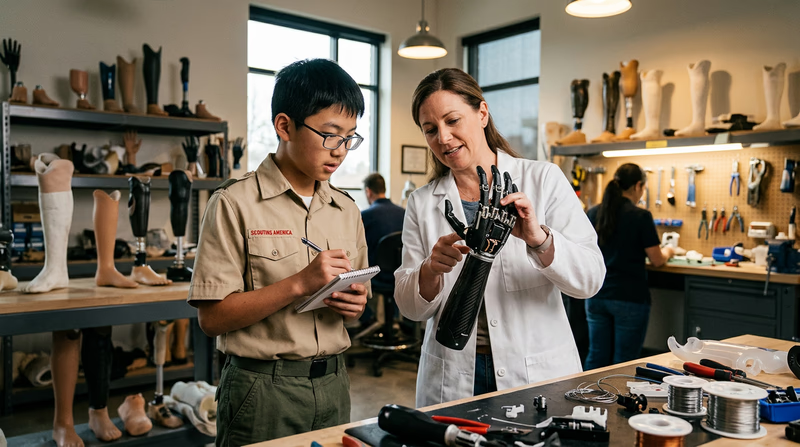
Prosthetists design and fit artificial limbs (prostheses). Orthotists design and fit braces and other supportive devices (orthoses). These professionals combine engineering, anatomy, and patient care to create devices that restore function and mobility.
Education: Master’s degree in prosthetics or orthotics (2 years after college), plus certification and residency
Assistive Technology Specialist
These professionals evaluate, recommend, and train people to use assistive technology — everything from screen readers and communication devices to adapted vehicles and smart home systems. They work in hospitals, schools, independent living centers, and technology companies.
Education: Bachelor’s degree (often in rehabilitation, engineering, or a related field), plus assistive technology professional (ATP) certification
Other Professions to Consider
- Sign language interpreter — Facilitates communication between deaf and hearing people
- Disability rights attorney — Advocates for legal protections and fights discrimination
- Accessible design architect — Designs buildings and spaces that are universally accessible
- Recreational therapist — Uses recreation and leisure activities as therapeutic tools
- Social worker — Coordinates services and support systems for people with disabilities and their families
Researching Your Chosen Profession
Once you pick the profession that interests you most, dig into the details. Here is what to find out:
Career Research Guide
Questions to answer about your chosen profession- Education required: What degree do you need? How many years of school after high school?
- Licensure or certification: Is a license required? What certifications are available?
- Typical work settings: Where do people in this profession work (hospitals, schools, private practice, government)?
- Day-to-day responsibilities: What does a typical day look like?
- Salary range: What can you expect to earn at the beginning and middle of your career?
- Job outlook: Is demand for this profession growing?
- Personal qualities: What traits make someone successful in this role?
- Why it interests you: What drew you to this profession? Connect it to something you experienced during this badge.
You have explored the professions that make disability services possible and found one that sparks your interest. Congratulations — you have completed all seven requirements for the Disabilities Awareness merit badge. Head to Extended Learning for deeper dives and resources to continue your journey.
Extended Learning
A. You Made a Difference
You have earned the Disabilities Awareness merit badge — and in the process, you have done something that most people never do. You stopped, looked around, and asked: “Does this world work for everyone?” The answer, as you discovered, is not yet. But people like you are changing that.
The pages ahead will take you deeper into topics that go beyond the requirements — universal design, disability in media, and the global disability rights movement.
B. Universal Design — Building a World That Works for Everyone
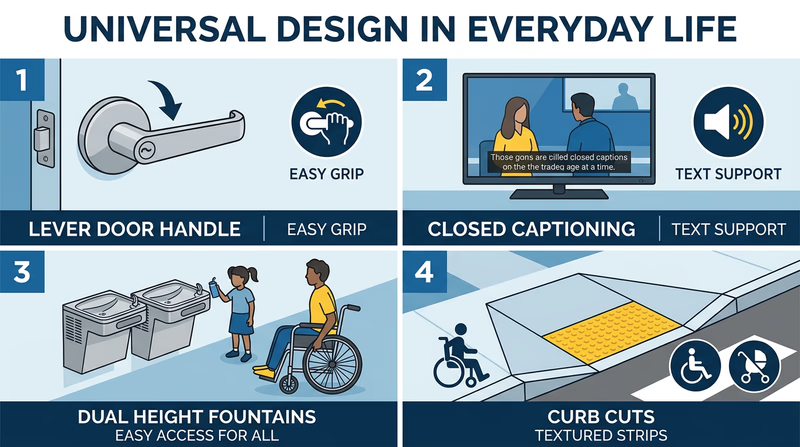
You learned about accessibility and accommodation in this badge. Universal design takes that thinking a step further: instead of making special modifications for people with disabilities after a building, product, or program is created, design it to work for everyone from the start.
The Seven Principles
Architect Ronald Mace coined the term “universal design” in 1997. His team at North Carolina State University developed seven principles that still guide designers, engineers, and architects today:
Equitable use — The design is useful to people with diverse abilities. A power door opener benefits a person in a wheelchair, a parent carrying a child, and a delivery driver with full arms.
Flexibility in use — The design accommodates a wide range of preferences and abilities. A pair of scissors with a spring-loaded handle works for right-handed users, left-handed users, and people with limited grip strength.
Simple and intuitive — The design is easy to understand regardless of experience, knowledge, language, or cognitive ability. A crosswalk button with a clear tactile arrow and audible signal communicates its function without words.
Perceptible information — The design communicates necessary information effectively, regardless of ambient conditions or the user’s sensory abilities. A smoke alarm that flashes a strobe light and sounds an alarm reaches people who are deaf, people who are blind, and everyone in between.
Tolerance for error — The design minimizes hazards and the consequences of accidental or unintended actions. A medication bottle with a child-proof cap that is also easy for adults with arthritis to open reduces both accidental ingestion and frustration.
Low physical effort — The design can be used efficiently and comfortably with minimum fatigue. A lever-style door handle requires less strength and precision than a round doorknob — useful for people with arthritis, people carrying groceries, or anyone with wet hands.
Size and space for approach and use — Appropriate size and space is provided for approach, reach, manipulation, and use. A checkout counter with a lowered section serves wheelchair users, children, and shorter adults.
Universal Design in Action
The beauty of universal design is that it helps everyone, not just people with disabilities. Consider:
- Closed captions were created for people who are deaf — but they are used by gym-goers watching TV without sound, language learners, people in noisy airports, and anyone trying to watch a video without waking a sleeping baby.
- Voice assistants (Siri, Alexa) were a breakthrough for people with mobility and vision disabilities — but millions of nondisabled people use them daily.
- Textured sidewalk edges (called truncated domes) alert people who are blind to street crossings — but they also warn distracted pedestrians looking at their phones.
C. Disability in Media — Representation Matters
How people with disabilities are portrayed in movies, TV shows, books, and news coverage shapes how the public thinks about disability. And for decades, that portrayal has been deeply flawed.
Common Media Tropes
The tragic figure — Disability is presented as a tragedy, and the character exists to make the audience feel grateful for their own abilities. Their life is defined by suffering and struggle.
The inspiration — A person with a disability does something ordinary (going to school, getting a job, making a friend) and it is presented as extraordinary. This is sometimes called “inspiration porn” — it uses disability to make nondisabled people feel good.
The villain — From Captain Hook to countless Bond villains, characters with visible disabilities or disfigurements are disproportionately cast as the bad guy. The message: physical difference equals moral failing.
The cure narrative — The story ends when the character is “cured” or “fixed,” implying that disability is a problem to be solved rather than a way of being.
The supercrip — A person with a disability is portrayed as having superhuman abilities to “compensate” for their condition (like the blind character who can hear a whisper from a mile away). This sets unrealistic expectations and ignores the real, everyday experiences of disability.
What Good Representation Looks Like
Good representation includes characters with disabilities who are:
- Complex — They have personality traits, goals, flaws, and storylines that are not entirely about their disability
- Played by actors with disabilities — Increasingly, casting directors are hiring actors who actually have the disabilities their characters have
- Written with input from the disability community — The best shows and movies consult people with disabilities during development
- Present in ordinary roles — Not every character with a disability needs to be the “disability character.” Sometimes a character just happens to use a wheelchair, and the story is about something else entirely
D. The Global Disability Rights Movement
The ADA was a watershed moment for disability rights in the United States, but the fight for disability rights is a global movement — and it is far from over.
Key Milestones
1981 — International Year of Disabled Persons: The United Nations declared 1981 the International Year of Disabled Persons, raising global awareness and launching programs to improve the lives of people with disabilities worldwide.
2006 — Convention on the Rights of Persons with Disabilities (CRPD): The UN adopted the CRPD, the first international treaty to address the rights of people with disabilities. It has been ratified by over 180 countries. (The United States signed the treaty in 2009 but has not yet ratified it.)
Present day: Despite progress, roughly 80% of people with disabilities live in developing countries, where access to healthcare, education, and employment is severely limited. The World Health Organization estimates that 1 billion people worldwide — about 15% of the global population — live with some form of disability.
What Scouts Can Do
The global movement needs local action. As a Scout, you can:
- Support organizations working on disability rights in developing countries
- Advocate for your school, troop, or community to adopt universal design principles
- Learn about the CRPD and discuss it with others
- Stay informed about disability legislation in your state and country
E. Real-World Experiences
Experiences to Seek Out
Continue your disabilities awareness journey- Attend a disability pride event: Many cities hold Disability Pride Month events in July. Attend a parade, fair, or speaker series to celebrate disability culture and identity.
- Try an adaptive sport: Many parks and recreation departments offer adaptive sports programs open to all participants. Try wheelchair basketball, sled hockey, or adaptive climbing to experience the athleticism and strategy involved.
- Visit a disability history exhibit: The Smithsonian’s online exhibit “EveryBody: An Artifact History of Disability in America” explores how Americans with disabilities have shaped the nation. Many local museums also host disability history exhibits.
- Volunteer for Special Olympics: Help organize, officiate, or support athletes at a local Special Olympics event. It is one of the most rewarding volunteer experiences you can have.
- Shadow a professional: Spend a day with an occupational therapist, speech-language pathologist, or other professional you researched in Req 7 to see what their work looks like up close.