Req 1b — Disability Etiquette
Imagine you are at a crosswalk, and a person with a white cane is waiting beside you. The light changes. Do you grab their arm and guide them across? It feels like the right thing to do — but it is actually one of the worst things you could do. You have just taken control of someone’s body without their permission. You have assumed they need help when they may cross this street every day without assistance. And you may have startled them, throwing off the mental map they use to navigate.
Good disability etiquette is not about being “politically correct.” It is about treating people with disabilities the same way you would want to be treated: with dignity, respect, and the assumption that they are capable until they tell you otherwise.
Why Etiquette Matters
People with disabilities deal with awkward, unwanted, and sometimes offensive interactions every day. Well-meaning strangers grab their wheelchairs, talk to their companions instead of to them, pet their service dogs, or ask invasive questions about their medical conditions. These interactions — even when they come from a kind place — send a message: I see your disability before I see you.
Proper etiquette flips that script. It says: I see you as a person. I respect your autonomy. And I will follow your lead on how to interact.
Universal Principles
These core principles apply regardless of the specific disability:
Universal Etiquette Principles
Start here — these apply in every situation
- Ask before helping: Never assume someone needs assistance. A simple “Can I help with anything?” gives the person the choice.
- Speak directly to the person: Even if the person has a companion, interpreter, or aide, look at and talk to the person with the disability — not their helper.
- Respect personal space and equipment: A wheelchair, cane, or walker is part of a person’s personal space. Do not lean on, move, or touch mobility equipment without permission.
- Do not pet or distract service animals: A service dog wearing a harness is working. Petting, calling, or feeding the dog can distract it from keeping its handler safe.
- Avoid making assumptions: Do not decide what a person can or cannot do based on their disability. Let them tell you.
- Use person-first language: As you learned in Req 1a, lead with the person, not the condition — unless they prefer otherwise.
Etiquette by Disability Type
What counts as respectful behavior changes depending on the specific disability. Here are the major categories and what to keep in mind for each.
Physical and Mobility Disabilities
When talking with a person in a wheelchair, sit down or step back so you are at eye level — do not tower over them. Never push a wheelchair without being asked. If someone is using crutches or a walker, be patient and walk at their pace. Hold doors open if it is helpful, but do not make a production of it.
Hearing Disabilities
Get the person’s attention before speaking — a light wave, a gentle tap on the shoulder, or moving into their line of sight. Face them directly when talking (many people who are deaf or hard of hearing read lips). Speak clearly at a normal pace — do not shout or exaggerate your mouth movements. If a sign language interpreter is present, look at the person, not the interpreter. And remember that not all people who are deaf use ASL — some prefer written communication, speech, or other methods.
Visual Disabilities
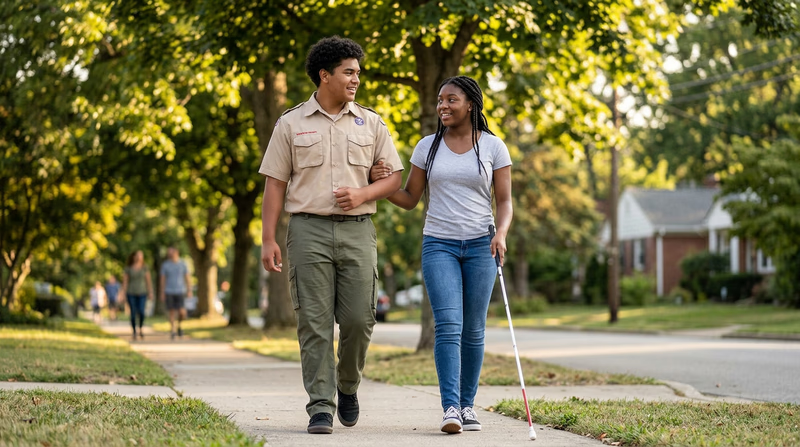
Identify yourself when you approach — do not assume they recognize your voice. If you are guiding someone, offer your arm (do not grab theirs) and let them grip your elbow. Describe the environment: “There are three steps going down,” or “The door is about five feet to your left.” Use specific language — “The water bottle is on the table to your right” is useful; “It’s over there” is not.
Intellectual and Developmental Disabilities
Speak in clear, simple sentences. Be patient — some people need extra time to process information or form a response. Do not finish their sentences. Treat adults as adults, not children. If you do not understand what someone is saying, it is okay to ask them to repeat it — it is more respectful than pretending you understood.
Invisible Disabilities
The most important etiquette here is simply believing people. If someone says they need to sit down, take a break, avoid certain foods, or leave a loud environment — take them at their word. Do not say “but you look fine” or “you don’t seem sick.” Their disability is real whether or not you can see it.
Words to Avoid
Some words and phrases are outdated, offensive, or just unhelpful. Here are a few to retire from your vocabulary:
| Avoid | Why | Use Instead |
|---|---|---|
| “Handicapped” | Considered outdated by most advocates | “Person with a disability” |
| “Confined to a wheelchair” | A wheelchair provides freedom, not confinement | “Uses a wheelchair” |
| “Suffers from…” | Assumes misery; many people with disabilities live great lives | “Has…” or “Lives with…” |
| “Special needs” | Vague and patronizing | “Disability” or specific accommodation needed |
| “Normal” (as opposite of disabled) | Implies people with disabilities are abnormal | “Nondisabled” or “typical” |
| “Inspirational” (about ordinary activities) | Doing groceries in a wheelchair is not heroic — it is Tuesday | Treat everyday activities as everyday |

With a strong foundation in terminology and etiquette, you are ready to step into the community and learn from the organizations that serve people with disabilities every day.