Req 2 — Visiting an Agency
Reading about disabilities in a book is one thing. Walking through the doors of an organization that serves people with disabilities every day is something else entirely. This requirement gets you out of the classroom and into the real world — where you will see how communities support people with disabilities through programs, services, and advocacy.
Finding the Right Agency
You have more options than you might think. Here are the types of agencies to look for in your community:
Government Agencies
- State Vocational Rehabilitation (VR) offices — Help people with disabilities find and keep jobs through training, assistive technology, and job placement services
- State or county Developmental Disabilities offices — Coordinate services for people with intellectual and developmental disabilities
- Veterans Affairs (VA) medical centers — Serve veterans with service-connected disabilities
Nonprofit Organizations
- The Arc — The largest nonprofit for people with intellectual and developmental disabilities, with local chapters nationwide
- Goodwill Industries — Provides job training and employment services for people with disabilities and other barriers
- Easterseals — Offers therapy, training, education, and community programs for people with disabilities
- Local independent living centers — Help people with all types of disabilities live independently in their communities
- Special Olympics chapters — Provide athletic training and competition for people with intellectual disabilities
Schools and Training Programs
- Special education programs in public schools
- Transition programs that help young adults with disabilities move from school to work or college
- Sheltered workshops or social enterprises that provide employment in a supportive environment
Preparing for Your Visit
A successful visit starts with preparation. Before you go, take time to plan what you want to learn and how you will record what you find.
Pre-Visit Checklist
Steps to take before your agency visit
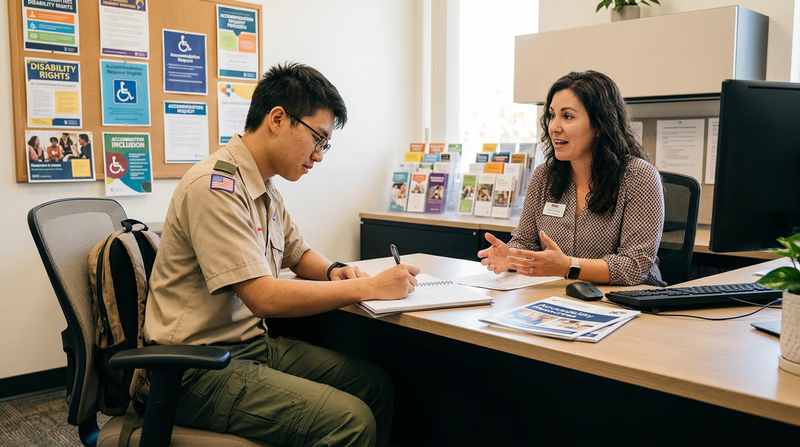
- Contact the agency in advance: Call or email to schedule your visit. Explain that you are a Scout working on the Disabilities Awareness merit badge and would like to learn about their programs.
- Prepare questions: Write down at least five questions before you go (see suggestions below).
- Bring a notebook: You will want to take notes on what you see and hear.
- Collect printed materials: Ask for brochures, program guides, or annual reports — many agencies are happy to share.
- Dress appropriately: Wear your Scout uniform to show you are representing Scouting.
- Bring a parent or guardian: Some agencies may require an adult to accompany you.
Questions to Ask
The requirement specifically asks about training, employment, and education opportunities. Here are questions that will help you gather that information:
About the Agency
- What is your agency’s mission?
- What types of disabilities do you serve?
- How many people does your agency serve each year?
- How is the agency funded — government grants, donations, fees, or a combination?
About Training and Employment
- What job training programs do you offer?
- How do you help people with disabilities find employment?
- What kinds of jobs do your members or clients hold?
- Do employers come to you looking for workers, or do you go to them?
- What is the biggest challenge people with disabilities face in finding work?
About Education
- Do you offer any educational programs or classes?
- How do you help young people with disabilities transition from school to the workplace?
- Do you provide tutoring, GED preparation, or college readiness programs?
About Daily Life
- What other services do you provide (housing, transportation, recreation)?
- How has technology changed the way you serve people?
- What is the one thing you wish the general public understood about disabilities?
After Your Visit
When you return, organize your notes and prepare to discuss three key things with your counselor:
- What the agency does — Its mission, the population it serves, and the programs it runs
- Training and employment opportunities — How the agency helps people build skills and find work
- Your personal takeaways — What surprised you, what impressed you, and what you would like to learn more about
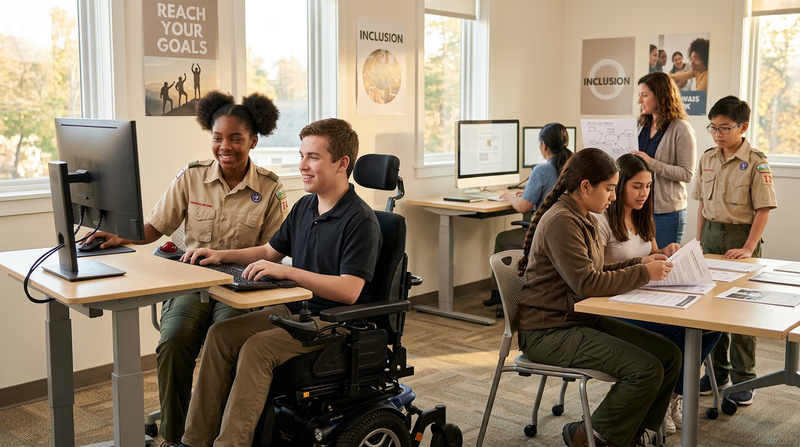
You have seen how agencies serve people with disabilities in your community. Now it is time to hear directly from individuals who live with disabilities — their experiences, their perspectives, and what they want you to know.