Req 4 Option A — Visible Accessibility
4.
Option A. Visit TWO of the following locations and take notes about the accessibility to people with disabilities. In your notes, give examples of five things that could be done to improve upon the site and five things about the site that make it friendly to people with disabilities. Discuss your observations with your counselor.
Option A
You choose two locations from this list:
- Your school
- Your place of worship
- A Scouting event or campsite
- A public exhibit or attraction (such as a theater, museum, or park)
At each location, you are looking for physical accessibility — features that help or hinder people with mobility, vision, and hearing disabilities. Think of yourself as an accessibility auditor. Your job is to notice things most people walk right past.
What to Look For
Use the categories below as your audit checklist. At each location, work through these areas systematically and take detailed notes.
Entrances and Exits
- Is there a ramp or level entrance? Is it in a convenient location, or do wheelchair users have to go around to a back entrance?
- Are doors wide enough for a wheelchair (at least 32 inches of clear width)?
- Can doors be opened easily, or do they require twisting, pulling, or heavy force? Are there automatic door openers?
- Are emergency exits accessible? Could a person in a wheelchair evacuate independently?
Interior Navigation
- Are hallways and aisles wide enough for a wheelchair?
- Is the flooring smooth and even, or are there thresholds, thick carpet, or uneven surfaces that could trip someone or block a wheelchair?
- Are elevators available where there are stairs? Are elevator buttons at wheelchair height?
- Is signage clear, large enough to read from a distance, and placed at a consistent height?
Restrooms
- Is there an accessible restroom stall with grab bars, adequate space, and a door that swings outward?
- Are sinks, soap dispensers, and paper towel or hand dryer units reachable from a wheelchair?
- Are restroom signs in braille or raised letters?
Seating and Participation
- Are there wheelchair-accessible seating areas (not just at the back)?
- Can a person in a wheelchair see the stage, screen, altar, or presenter from their seat?
- Are hearing loops or assistive listening devices available?
- Is there captioning or a sign language interpreter for events?
Parking and Outdoor Areas
- Are accessible parking spots available, close to the entrance, and properly marked?
- Are outdoor paths paved, level, and wide enough for a wheelchair?
- Are there curb cuts connecting the parking lot to the sidewalk?
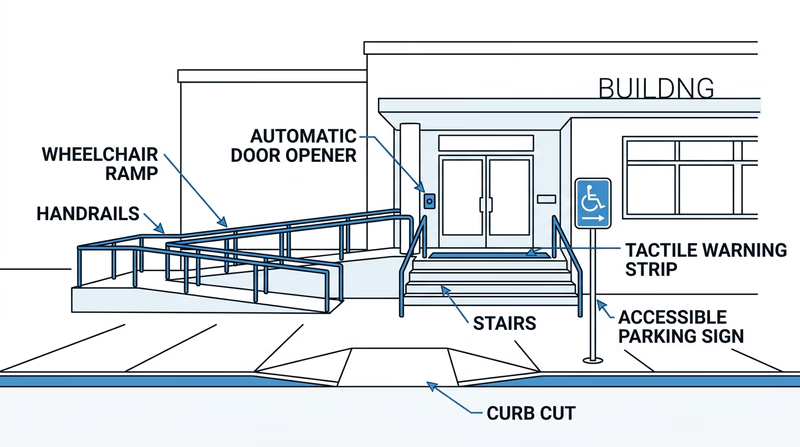
Audit Note-Taking Template
Record five positives and five areas for improvement at each location
- Location name and date of visit: Write down where you went and when.
- Entrance accessibility: Rate the entrances and note specifics.
- Interior navigation: Evaluate hallways, doors, and floor surfaces.
- Restroom accessibility: Check for grab bars, space, and reachable fixtures.
- Seating and participation: Note whether wheelchair users have good sightlines and options.
- Parking and outdoor paths: Evaluate the journey from car to front door.
- Signage and wayfinding: Look for braille, large print, and clear directional signs.
- Communication access: Note hearing loops, captioning, or interpreter availability.
- Overall impression: Write a sentence or two about the overall experience.
Common Problems to Watch For
Some accessibility issues are obvious — no ramp, no elevator, no accessible restroom. Others are subtler:
- A ramp that is too steep (ADA requires no more than a 1:12 slope — one inch of rise for every 12 inches of run)
- An “accessible” restroom that is used as a storage closet
- Heavy doors that technically have a push button, but the button is broken or hard to reach
- Accessible seating that is in a corner with a blocked view
- A building that is technically accessible but forces wheelchair users to use a different entrance than everyone else — a “separate but equal” problem
Preparing for Your Discussion
When you meet with your counselor, be ready to share:
- Which two locations you visited
- Five things each location does well for accessibility
- Five things each location could improve
- Your overall assessment — which location was more accessible, and why?
- Specific suggestions — if you could change one thing at each location, what would it be?
If Option A is not the right fit for you, take a look at Option B — which focuses on the often-overlooked accommodations for people with invisible disabilities.