Req 4 Option B — Invisible Disability Accommodations
You choose two locations from this list:
- Your school
- Your place of worship
- A Scouting event or campsite
- A public exhibit or attraction (such as a theater, museum, or park)
Option B is harder than Option A — and more rewarding. Ramps and elevators are easy to spot. Accommodations for invisible disabilities are, by definition, harder to see. You will need to look carefully, ask questions, and think about the needs of people whose challenges are not obvious to the casual observer.
Understanding Invisible Disability Accommodations
As you learned in Req 1a, invisible disabilities include conditions like chronic pain, anxiety, PTSD, autism, ADHD, epilepsy, migraines, Crohn’s disease, and many others. These conditions affect millions of people, but the accommodations that serve them are often built into policies and procedures rather than into physical structures.
What to Look For
Sensory Environment
Many people with invisible disabilities are sensitive to sensory input — bright lights, loud sounds, strong smells, or crowded spaces can trigger pain, anxiety, or sensory overload.
- Lighting: Is the lighting harsh fluorescent or softer alternatives? Can it be adjusted?
- Noise levels: Are there quiet areas available? Is background music kept at a reasonable volume?
- Sensory-friendly events: Some theaters, museums, and attractions offer “sensory-friendly” performances or hours with reduced lighting, lower volume, and relaxed rules about moving around. Does this location offer anything similar?
Quiet and Recovery Spaces
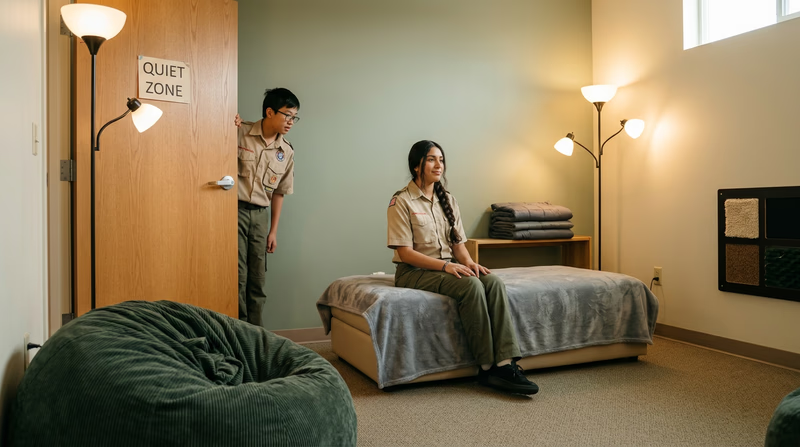
- Is there a designated quiet room, calm space, or prayer/meditation room where someone who is overwhelmed can decompress?
- Are there areas with reduced stimulation away from crowds?
- At a Scouting event, is there a place a Scout can go if they need a break from activity?
Flexible Policies
- Are there flexible seating options (not just fixed pews or auditorium seats)?
- Can people leave and re-enter without penalty — important for people who need to take breaks, use the restroom frequently, or manage medication?
- Are food and drink allowed, or can exceptions be made for people with diabetes or other conditions that require regular eating?
- Is there a fragrance-free or scent-reduced policy?
Communication and Information
- Are instructions and information available in multiple formats (written, verbal, visual)?
- Is plain language used in signage and printed materials?
- Are staff trained to recognize and respond to less obvious needs?
- Is there a process for requesting accommodations — and is it well-publicized?
Talking with Staff
This option specifically asks you to talk with staff members. Here are ways to start that conversation:
Things That Are Easy to Miss
Here are accommodations that many locations have but do not advertise:
- Priority seating for people who cannot stand for long periods
- Wheelchair or bench availability along long walking paths
- Adjustable lighting in meeting rooms
- Advance materials (agendas, event schedules) sent ahead of time so people with anxiety can prepare
- Flexibility on dress codes for people with sensory sensitivities to certain fabrics
- Staff who carry emergency medication information cards for visitors who disclose conditions
And here are gaps that many locations have:
- No process for requesting accommodations
- No quiet space for decompression
- No awareness training for staff
- Harsh, unchangeable lighting
- Rules that inadvertently exclude (no food, no breaks, no re-entry)
- No mention of invisible disabilities in accessibility statements or on websites

Preparing for Your Discussion
When you meet with your counselor, be ready to share:
- Which two locations you visited
- What accommodations you found for invisible disabilities
- What staff told you about their awareness and training
- What is missing — specific improvements you would recommend
- How this compares to the visible accessibility you have learned about — which type of accommodation seems more developed in your community?
You have evaluated the places around you through the lens of disability. Now it is time to take what you have learned and use it — through advocacy.