Req 5 — Advocacy
This requirement has two parts: first, you need to understand what advocacy means. Then you choose one of three action options to put advocacy into practice.
- Option 5a: Present a disabilities awareness program to a Cub Scout pack or other group
- Option 5b: Volunteer with a disability education or advocacy program for eight hours
- Option 5c: Research and present 10 myths and misconceptions about people with disabilities
What Is Advocacy?
Advocacy means speaking up for the rights and needs of others — especially people who may not have the power or platform to speak for themselves. A disability advocate works to remove barriers, change attitudes, and ensure that people with disabilities have the same opportunities as everyone else.
Advocacy takes many forms:
- Personal advocacy: Standing up for a friend or classmate who is being excluded or treated unfairly
- Community advocacy: Working to make local buildings, events, or programs more accessible
- Legislative advocacy: Contacting elected officials to support laws that protect disability rights
- Educational advocacy: Teaching others about disability — which is exactly what this requirement asks you to do
The disability rights motto captures it perfectly: “Nothing about us without us.” The best advocacy amplifies the voices of people with disabilities rather than speaking over them.
Option 5a — Present a Disabilities Awareness Program
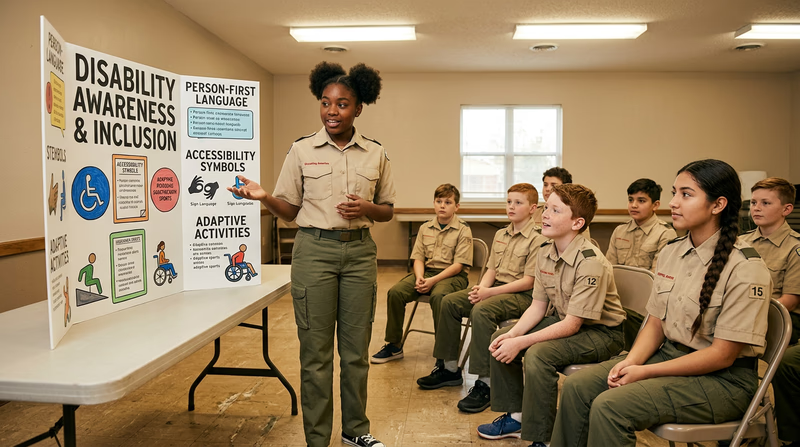
What to do: Create and deliver a presentation about disabilities awareness to a Cub Scout pack, your troop, a school group, or another audience. Your presentation must explain and use person-first language.
Planning Your Presentation
Presentation Planning
Steps to build an effective awareness program
- Get counselor approval: Share your plan with your counselor before you present. They need to approve your content.
- Know your audience: Cub Scouts (ages 5–10) need simpler language and more interactive elements than older Scouts or adults.
- Choose 3–4 key topics: Do not try to cover everything. Focus on person-first language, a few disability types, and practical etiquette.
- Use person-first language throughout: This is specifically required. Practice it so it sounds natural, not rehearsed.
- Include an interactive element: A short activity, a demonstration, or a Q&A session keeps the audience engaged.
- Prepare visuals: Posters, slides, or props help younger audiences stay focused.
- Practice: Run through your presentation at least twice before the real thing.
Presentation Ideas
- Language activity: Show two versions of the same sentence (one with person-first language, one without) and ask the audience which sounds better and why
- Empathy station: Set up stations where participants try writing with their non-dominant hand, navigating with a blindfold, or reading with simulation goggles — then discuss how adaptations help
- Meet the technology: Bring examples of assistive technology (a screen reader demo on a laptop, a braille card, a hearing aid) and explain how they work
- Story sharing: If someone with a disability is willing to co-present, their personal story will have more impact than any slide deck
Option 5b — Volunteer with a Disability Advocacy Program
What to do: Find a disability awareness education program at your school or through a disability advocacy agency, and volunteer for eight hours.
Where to Find Volunteer Opportunities
- Your school’s special education department — Ask if they need volunteers for peer buddy programs, unified sports events, or inclusion activities
- Special Olympics — Always needs volunteers for events, training sessions, and athlete support
- Best Buddies — A program that pairs volunteers with people who have intellectual and developmental disabilities for friendship and activities
- Local independent living centers — Often run community education programs that need volunteer support
- The Arc — Local chapters host social events, advocacy campaigns, and education programs
Making the Most of Your Hours
Eight hours might feel like a lot, but it goes fast when you are engaged. Track your hours and keep notes about:
- What you did each day
- Who you worked with
- What you learned
- How your understanding of disability changed
Option 5c — Research Myths and Misconceptions
What to do: Research myths and misconceptions about people with disabilities. List 10 myths, learn the facts about each, share your list with your counselor, and then present it to a Cub Scout pack or other group.
Common Myths About Disability
Here are some myths to get your research started — but do your own digging too. Use sources like disability advocacy organizations, government reports, and news articles to build your list.
| Myth | Reality |
|---|---|
| People with disabilities are “inspirational” just for living their lives | Doing ordinary tasks is not heroic — it is everyday life. This attitude (called “inspiration porn”) reduces people to their disabilities. |
| Wheelchair users cannot walk at all | Many wheelchair users can walk short distances. A wheelchair is a tool for managing energy and distance, not a sign of total paralysis. |
| Disability is always visible | As you learned in this badge, invisible disabilities affect millions of people. You cannot tell if someone has a disability by looking at them. |
| People with intellectual disabilities cannot work | People with intellectual disabilities hold jobs in every industry — from retail to technology to the arts. With the right support, most can work successfully. |
| Mental illness means a person is dangerous | People with mental health conditions are far more likely to be victims of violence than perpetrators. This myth causes tremendous harm and isolation. |
Building Your Presentation
For this option, you need to present your list to a group — not just hand it to your counselor. Structure your presentation like this:
- State the myth clearly
- Explain why people believe it (media portrayals, lack of exposure, historical attitudes)
- Present the facts from your research
- Share what this means in daily life for people with disabilities
You have taken action as an advocate. Now comes the most personal part of this badge — reflecting on how your awareness has changed and making a commitment to carry it forward.