Req 7 — Professions
Millions of professionals dedicate their careers to helping people with disabilities live fuller, more independent lives. Some work one-on-one with individuals. Others design the technology, build the policies, or create the programs that make inclusion possible. This requirement asks you to explore five of these professions and dig deeper into one that catches your interest.
Professions That Serve People with Disabilities
Here are well over five professions to consider. Choose the five that interest you most to discuss with your counselor, then pick one for your in-depth research.
Occupational Therapist (OT)
Occupational therapists help people perform everyday activities — getting dressed, cooking, writing, using a computer — when a disability makes those tasks challenging. They assess a person’s abilities, recommend adaptations and assistive devices, and teach new techniques for accomplishing daily tasks. OTs work in hospitals, schools, rehabilitation centers, and homes.
Education: Master’s degree in occupational therapy (typically 2–3 years after college), plus licensure
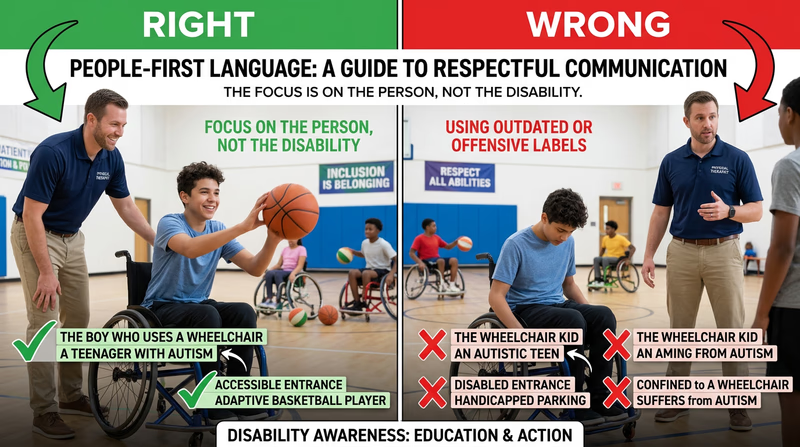
Physical Therapist (PT)
Physical therapists help people improve movement, manage pain, and recover from injuries. They design exercise programs, use therapeutic techniques, and help people regain strength and mobility. PTs work with people of all ages and all types of physical disabilities.
Education: Doctor of Physical Therapy (DPT) degree (3 years after college), plus licensure
Speech-Language Pathologist (SLP)
Speech-language pathologists (often called speech therapists) help people who have difficulty speaking, understanding language, or swallowing. They work with children who have speech delays, adults recovering from strokes, and people who use augmentative communication devices. Many SLPs work in schools.
Education: Master’s degree in speech-language pathology (2 years after college), plus licensure and certification
Special Education Teacher
Special education teachers work with students who have learning disabilities, intellectual disabilities, autism, emotional disorders, and physical disabilities. They develop individualized education programs (IEPs), adapt curriculum, and teach in classrooms designed to meet each student’s unique needs.
Education: Bachelor’s degree in special education (4 years), plus state teaching certification
Rehabilitation Counselor
Rehabilitation counselors help people with disabilities develop plans for employment, education, and independent living. They connect clients with services, assist with job searches, and advocate for workplace accommodations. They often work for state vocational rehabilitation agencies.
Education: Master’s degree in rehabilitation counseling (2 years after college), plus certification
Audiologist
Audiologists diagnose and treat hearing disorders. They fit hearing aids, program cochlear implants, and design hearing protection programs. They work in hospitals, clinics, schools, and private practices.
Education: Doctor of Audiology (Au.D.) degree (4 years after college), plus licensure
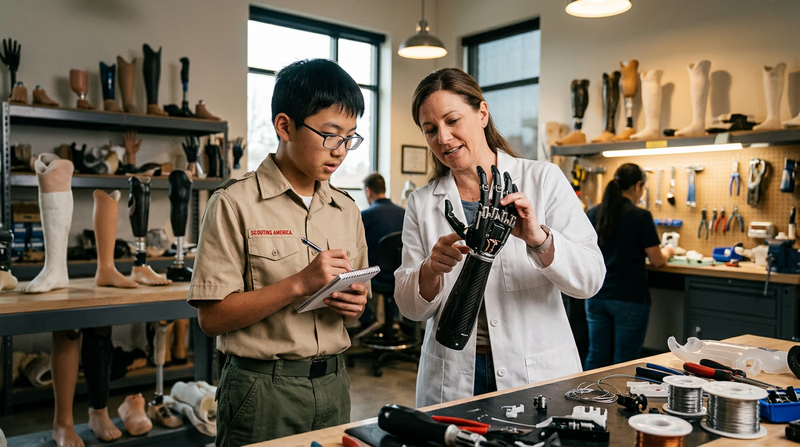
Prosthetist / Orthotist
Prosthetists design and fit artificial limbs (prostheses). Orthotists design and fit braces and other supportive devices (orthoses). These professionals combine engineering, anatomy, and patient care to create devices that restore function and mobility.
Education: Master’s degree in prosthetics or orthotics (2 years after college), plus certification and residency
Assistive Technology Specialist
These professionals evaluate, recommend, and train people to use assistive technology — everything from screen readers and communication devices to adapted vehicles and smart home systems. They work in hospitals, schools, independent living centers, and technology companies.
Education: Bachelor’s degree (often in rehabilitation, engineering, or a related field), plus assistive technology professional (ATP) certification
Other Professions to Consider
- Sign language interpreter — Facilitates communication between deaf and hearing people
- Disability rights attorney — Advocates for legal protections and fights discrimination
- Accessible design architect — Designs buildings and spaces that are universally accessible
- Recreational therapist — Uses recreation and leisure activities as therapeutic tools
- Social worker — Coordinates services and support systems for people with disabilities and their families
Researching Your Chosen Profession
Once you pick the profession that interests you most, dig into the details. Here is what to find out:
Career Research Guide
Questions to answer about your chosen profession
- Education required: What degree do you need? How many years of school after high school?
- Licensure or certification: Is a license required? What certifications are available?
- Typical work settings: Where do people in this profession work (hospitals, schools, private practice, government)?
- Day-to-day responsibilities: What does a typical day look like?
- Salary range: What can you expect to earn at the beginning and middle of your career?
- Job outlook: Is demand for this profession growing?
- Personal qualities: What traits make someone successful in this role?
- Why it interests you: What drew you to this profession? Connect it to something you experienced during this badge.
You have explored the professions that make disability services possible and found one that sparks your interest. Congratulations — you have completed all seven requirements for the Disabilities Awareness merit badge. Head to Extended Learning for deeper dives and resources to continue your journey.