Req 2 — Dog Body Parts
When a veterinarian, groomer, trainer, or dog owner talks about a dog’s body, they need clear words. If you can point to the hock, muzzle, withers, or pastern and use the right term, you can describe health problems, grooming needs, and movement much more accurately. This requirement is really about learning the language of dog care.
Start With the Big Areas
It helps to learn the body in sections rather than as one giant list. Most Scouts find it easiest to study the dog from front to back.
Head
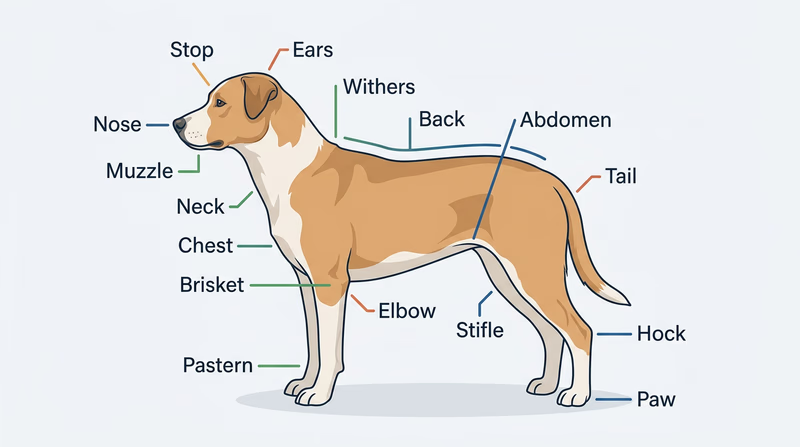
Key parts include the muzzle, nose, stop (the point where the muzzle meets the forehead), skull, ears, and eyes. These parts matter in health and communication. Ear shape affects airflow and cleaning needs. Eye position can affect how the dog sees. Muzzle shape can affect breathing.
Neck and Front
The neck, shoulders, chest, brisket, and withers are all important. The withers are the highest point of the shoulders and are often used to describe a dog’s height. The brisket is the lower chest area between the front legs.
Body
The back, loin, ribs, abdomen, and croup make up the main body. These terms help when describing posture, movement, and body condition. A dog’s waist and rib area also help you judge whether it is at a healthy weight.
Legs and Feet
In the front legs, you may hear terms like elbow, forearm, pastern, and paw. In the rear legs, common terms include the stifle (similar to a knee), hock (similar to an ankle area), thigh, and paw.
Tail End
The tail, tail set, and hindquarters are also common terms. Tail carriage can tell you something about mood, breed type, or movement.
Ten Good Parts to Learn First
If you need a solid starter list for your counselor, these ten parts are excellent choices:
- Nose
- Muzzle
- Ears
- Neck
- Chest
- Withers
- Back
- Tail
- Hock
- Paw
You can absolutely learn more than ten, and that is often helpful.
How to Practice Dog Anatomy
Make the body terms stick
- Use a real dog if it is safe and calm: Point gently and say each term out loud.
- Use a sketch if needed: Draw or print a side view and label it.
- Group related parts together: Head terms, body terms, and leg terms are easier to remember in sections.
- Connect each part to care: Ask yourself why that part matters for grooming, health, or movement.
The official anatomy video on this page is a useful refresher before you practice naming parts on your own sketch or dog.
Why Anatomy Matters in Real Life
Knowing body parts is not just for dog shows or science class. It helps you explain where a dog is sore, where a bandage belongs, where to brush carefully, or where a tick is attached. Later in this guide, especially in the first-aid section, those terms will make your explanations much clearer.
For example, saying “my dog hurt its leg” is vague. Saying “my dog is limping on the right rear leg near the hock” is much more useful. In the same way, knowing where the ribs, abdomen, and chest are helps you talk about breathing problems, injuries, or body condition.
A Smart Counselor Strategy
Be ready to do more than point. If your counselor asks follow-up questions, try adding one quick detail, such as what that body part does or why it matters. That shows you understand the dog as a living animal, not just a diagram.
After learning the parts of the dog, the next step is learning how good training shapes behavior and makes life safer for both dogs and people.