Req 3c — Choosing the Right Dog
A dog may live with a family for ten to fifteen years or more, so choosing the right dog is a major decision. People sometimes fall in love with a look, a trend, or a funny online video and forget to ask the harder question: does this dog actually fit our home, schedule, budget, and experience? Good matches lead to safer, happier dogs and families. Poor matches often lead to stress, behavior problems, or surrender.
Temperament Comes First
Temperament means a dog’s general behavior style. Is the dog calm or intense? Social or cautious? Independent or eager to stay close to people? Every family should think carefully about temperament before breed appearance.
A family with young children may need a dog that is patient and steady. A very active household may enjoy a dog with high energy and enthusiasm. A quieter home may do better with a dog that is more settled. No breed guarantees a perfect temperament, but breed tendencies and the personality of the individual dog both matter.
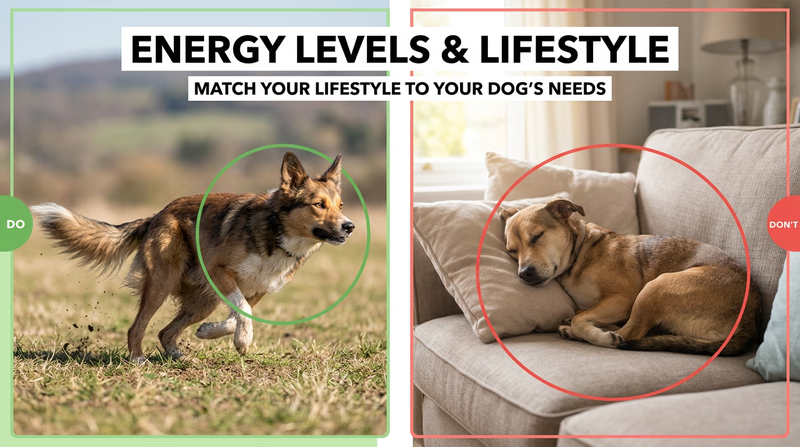
Energy Level and Exercise Needs
One of the biggest causes of family frustration is getting a dog that needs far more activity than expected. A high-drive working or herding breed may need serious daily exercise, training, and mental challenges. Without them, the dog may bark, chew, herd children, dig, or become destructive.
A lower-energy dog may still need walks and play, but the daily commitment will usually be different. Families should be honest about how much activity they can really provide in all seasons, not just on their best days.
Size and Strength
Size affects space, handling, food cost, travel, and safety. A giant dog in a small apartment creates different challenges from a toy breed in the same space. Strength matters too. A powerful dog that pulls hard on leash may be difficult for some family members to control.
Small dogs are not automatically easier. They can be fragile around rough play, harder to house-train in some cases, and more sensitive to weather or unsafe handling.
Grooming and Shedding
Some dogs need regular brushing, clipping, coat trimming, or more frequent baths. Others shed heavily and require regular cleanup even if they do not need fancy grooming. Families should think about coat care honestly. A beautiful coat becomes a problem fast if nobody wants to maintain it.
Trainability and Experience Level
Some dogs are very responsive to beginners. Others are smart but stubborn, sensitive, or intense, which can make them harder for a first-time owner. Families should consider whether they have time for classes, daily practice, and consistent rules.
Questions to Ask Before Choosing a Dog
A family should talk through these together
- How much time do we have every day? Exercise, training, play, and cleanup all take time.
- What is our home like? Apartment, fenced yard, rural property, stairs, and noise level all matter.
- Who will do the work? The dog needs daily care even when school, sports, or vacations get busy.
- What can we afford? Food, grooming, training, supplies, and vet bills add up.
- How much dog experience do we have? Some breeds are far more forgiving of beginner mistakes than others.
Both official videos below are useful because they frame the decision around fit, not just popularity.
Children, Other Pets, and Lifestyle
Families also need to think about who already lives in the home. A dog that is wonderful with adults may not be ideal around toddlers. A breed with high prey drive may need careful management around cats, rabbits, or other small animals. A family that travels constantly may struggle with a dog that hates boarding or separation.
Health Issues and Breed Traits
Some breeds are more likely to have certain health problems. Flat-faced breeds may struggle more in heat or during hard exercise. Large breeds can have orthopedic issues. Long-backed breeds may have more spinal concerns. This does not mean a family should avoid every breed with known risks, but they should go in with open eyes.
The Match Matters More Than the Trend
In Req 3b, you learned that responsible ownership means planning ahead. This page is that idea in action. Choosing well is part of caring well.
Next you will move from choosing a dog to tracking real daily care over time. That is where responsibility becomes a measurable routine.