Req 8 — Drafting Career Exploration
Drafting skills open doors to careers that most people do not even know exist. The ability to read, create, and modify technical drawings is valuable across dozens of industries — from designing skyscrapers to engineering spacecraft. This requirement asks you to explore three career paths and dive deep into one.
Step 1: Identify Three Career Opportunities
Here are careers that directly use drafting skills and knowledge. Choose three that interest you:
Design and Drafting Careers
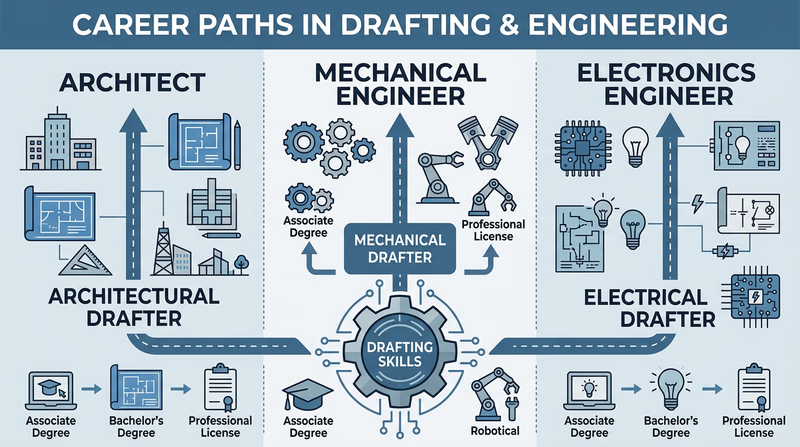
Architectural Drafter — Creates detailed drawings for buildings, from residential homes to commercial high-rises. Works closely with architects to turn design concepts into construction documents.
Mechanical Drafter — Produces drawings for manufactured products, machinery, and mechanical systems. Found in automotive, aerospace, consumer products, and industrial equipment companies.
Civil Drafter — Draws plans for roads, bridges, water systems, and land development projects. Works with civil engineers and surveyors.
Electrical/Electronics Drafter — Creates wiring diagrams, circuit board layouts, and electrical system plans for buildings, vehicles, and electronic devices.
Engineering Careers
Mechanical Engineer — Designs and analyzes mechanical systems. Uses CAD extensively for design, simulation, and documentation.
Civil Engineer — Plans infrastructure projects. Every road, bridge, and water treatment plant starts as a set of drawings.
Aerospace Engineer — Designs aircraft, spacecraft, and satellites. CAD and 3D modeling are essential daily tools.
Electrical Engineer — Designs circuits, power systems, and electronic devices. Uses schematic capture and PCB layout software.
Related Careers
Architect — Designs buildings and oversees construction. Architecture combines artistic vision with technical drafting.
Industrial Designer — Designs consumer products (furniture, appliances, tools) with a focus on form, function, and user experience. Heavy CAD use.
Surveyor — Measures and maps land boundaries and features. Survey data feeds directly into civil engineering drawings.
BIM Manager — Oversees Building Information Modeling processes for construction firms. A growing career that combines drafting, technology, and project management.
Step 2: Research One Career in Depth
Pick the career that interests you most and dig into the details. Your counselor will want you to address each of these areas:
Training and Education
- What degree or certificate is required? (Associate degree, bachelor’s degree, trade school certificate)
- What subjects should you study in high school to prepare? (Math, physics, computer science, art)
- Are there specific college programs or technical schools known for this field?
Certifications
- Are professional certifications required or recommended?
- Examples: ADDA (American Design Drafting Association) offers the Certified Drafter (CD) credential. Engineers typically need a PE (Professional Engineer) license. Architects need to pass the ARE (Architect Registration Examination).
- What does certification involve — exams, experience requirements, continuing education?
Experience
- How do people typically enter this career — internships, apprenticeships, entry-level positions?
- How many years of experience are needed to become fully proficient?
- Is a portfolio of work important for getting hired?
Expenses
- What does the education cost? (Tuition for a 2-year vs. 4-year program)
- Are there software costs? (Some employers provide software; freelancers must purchase their own)
- Are there professional membership or certification exam fees?
Employment Prospects
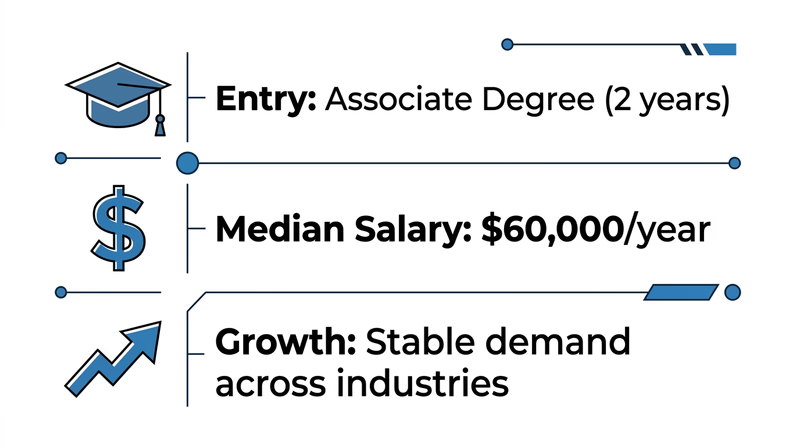
- Is this career growing, stable, or declining?
- Where are the jobs concentrated geographically?
- Are remote work opportunities available?
Salary and Advancement
- What is the typical starting salary?
- What can experienced professionals earn?
- What are the advancement paths? (Senior drafter, lead designer, project manager, engineering manager)
Career Research Checklist
What to cover in your discussion with your counselor
- Three career opportunities identified that use drafting skills.
- One career researched in depth.
- Education and training requirements described.
- Certification or licensing requirements identified.
- Typical entry path and experience needs explained.
- Education and startup costs estimated.
- Employment outlook assessed (growing, stable, or declining).
- Starting and experienced salary ranges found.
- Advancement opportunities and career goals described.
- Your personal interest level — would you consider this career?
Connecting This to Your Future
You do not need to decide your career at 14. But knowing that drafting skills lead to well-paying, creative, in-demand careers is valuable information. Whether you end up designing buildings, engineering cars, laying out circuit boards, or doing something entirely different, the spatial thinking and technical communication skills you developed in this badge will serve you well.