Req 1 — Electrical Emergencies
Electricity can injure you before you have time to think, which is why this requirement is really about building automatic habits. You need to know how to cut power, avoid becoming a second victim, treat injuries correctly, and respond to fires and storms. Each part of this requirement is connected by one big idea: slow down, spot the hazard, and make the scene safer before you try to help.
What this requirement covers
Seven emergency situations every Scout should be ready to discuss or demonstrate
- Turning power off: stopping the flow of electricity at the source.
- Rescuing safely: helping without touching the hazard yourself.
- Vehicle utility-wire danger: knowing when staying put is safer than getting out.
- Electrical shock first aid: caring for an unconscious person after the current is no longer a threat.
- Electrical burns: cooling and covering the injury correctly.
- Electrical fires: choosing the right response and the wrong things to avoid.
- Lightning safety: lowering your risk when a storm moves in fast.
Requirement 1a
A sparking outlet or a smoking appliance is not the time to start guessing which switch does what. If you know where your panel is and how the breakers are labeled, you can shut off power quickly and stop a bad situation from getting worse.
Most homes have a service panel — often called a breaker panel — that contains individual breakers for branch circuits and one main disconnect for the whole house. A particular circuit means one smaller breaker that controls a specific area or group of outlets. The whole house means the main breaker or main disconnect that shuts off power to nearly everything downstream.
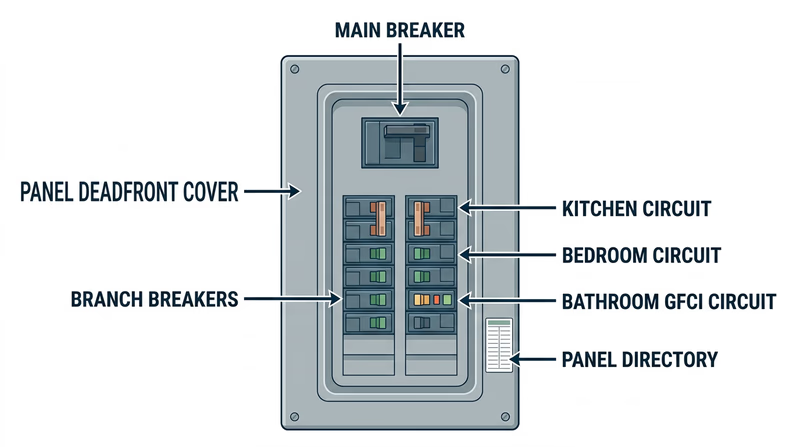
Turning Off One Circuit
If the problem is limited to one room or one device, go to the service panel and look for the breaker label. A well-labeled panel might say “kitchen counter outlets,” “garage,” or “bedrooms.” Move the correct breaker fully to the off position.
If the panel uses fuses instead of breakers, the faulty branch circuit is usually protected by an individual screw-in fuse or cartridge fuse. You should learn how your home is arranged, but for badge work, discussion and identification are more important than doing hands-on work inside the panel.
Turning Off the Whole House
If you cannot quickly identify the bad circuit, if water is involved, or if there is smoke, fire, or severe damage, it may be safer to shut off the main power. The main breaker is usually larger than the others and sits at the top or bottom of the panel. Switching it off cuts power to the branch circuits in the home.
Requirement 1b
The biggest mistake in an electrical rescue is touching the victim too soon. If the person is still part of the circuit, touching them can send the current through you too.
The first choice is always to shut off the power. If you can safely switch off the correct breaker, unplug the device, or use the main disconnect, do that first. Then call 911 and begin care.
If you cannot turn off the power immediately and your counselor is asking for a demonstration, the key point is that you must separate the person from the source without becoming part of the circuit yourself. That means using a dry, nonconductive object such as a wooden broom handle or dry fiberglass tool handle to push the wire away or move the person away from the wire.
Requirement 1c
A car can act like a protective shell if a power line falls on it. The electricity may travel over the outside of the vehicle and into the ground while the people inside remain safer than they would be if they stepped out normally.
The safest answer in most cases is stay in the car. Call 911, warn others to stay away, and wait for the utility company or emergency responders to say it is safe.
If fire or another immediate danger forces you to leave, you must get out without touching the car and ground at the same time. Open the door, keep your arms close, and jump clear with both feet together. Then shuffle away with short steps or hop with both feet together so you do not create a voltage difference across your body.
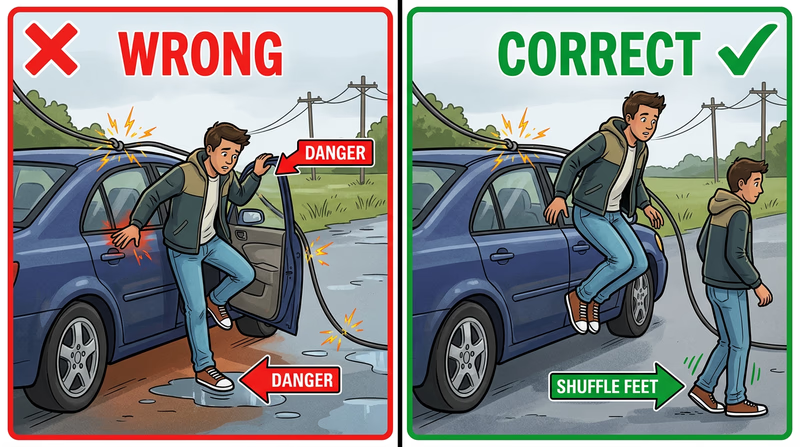
Vehicle and downed-wire safety
What to remember under stress
- Best choice: Stay inside unless fire or another life-threatening danger makes that impossible.
- Warn others: Tell everyone to stay far away from the vehicle and the wire.
- If you must exit: Jump clear without touching the car and ground at the same time.
- After landing: Shuffle away with small steps or hop away with feet together.
Requirement 1d
An unconscious electrical-shock victim may have breathing problems, cardiac arrest, burns, or a fall-related injury. Once the electrical hazard is gone, treat the person like any other seriously injured patient — but keep the shock mechanism in mind.
First, confirm the scene is safe. Then tap and shout to check responsiveness. If the person is unconscious, have someone call 911 or do it yourself on speaker phone. Check for normal breathing.
If the person is not breathing normally and you are trained, begin CPR and use an AED if one is available. If the person is breathing, place them in the recovery position only if you do not suspect a neck, back, or major fall injury. Monitor breathing closely until help arrives.
Requirement 1e
Electrical burns can look small on the surface but still cause serious damage deeper inside the body. That is why they should be treated carefully and taken seriously.
After the source of electricity is off and the scene is safe, cool the burned area with cool — not icy — running water for several minutes if that can be done safely. Remove jewelry or tight items near the injury before swelling starts, but do not pull away clothing that is stuck to the burn.
Cover the burn loosely with a clean, dry, nonstick dressing or sterile gauze. Keep the person warm and calm. Seek medical evaluation, especially if the burn is large, deep, on the face or hands, or was caused by household current or more.
Requirement 1f
An electrical fire is dangerous because the wiring or energized equipment can keep feeding the problem. The right response starts with removing the power source if you can do so safely.
If the fire is small and you can reach the breaker or unplug the device without risk, cut the power first. Then use the correct extinguisher — typically a Class C extinguisher for energized electrical equipment. If the fire is growing, producing a lot of smoke, or blocking your exit, get everyone out and call 911.
What to Remember
- Shut off power if it is safe to do so.
- Use the proper extinguisher.
- Keep an exit behind you.
- Evacuate early if the fire is not immediately controlled.
Requirement 1g
If you can hear thunder, you are close enough to be struck by lightning. An open field, hilltop, isolated tree, dock, or metal fence line becomes much more dangerous during a storm.
The best move is to get to a substantial building or a fully enclosed metal-roof vehicle as fast as you safely can. Avoid lone trees, open water, ridge tops, tents, picnic shelters, and metal objects. If you are trapped outside with no better shelter, move to a lower area away from tall isolated objects and spread your group out so one strike does not injure everyone at once.
Older advice sometimes mentioned a crouch position as if it were a safe solution. It is really only a last-ditch way to reduce risk when no real shelter exists. The true goal is always to reach safer shelter early.
National Weather Service — Lightning Safety Official lightning safety guidance for storms, vehicles, buildings, and outdoor activities.