Req 10b — Simple Electric Motor
A motor is one of the clearest examples of electricity turning into motion. Inside even a very simple motor, current creates magnetic forces that push a coil or armature around. That spinning motion is what powers fans, drills, toys, pumps, and countless tools.
What a Simple Motor Needs
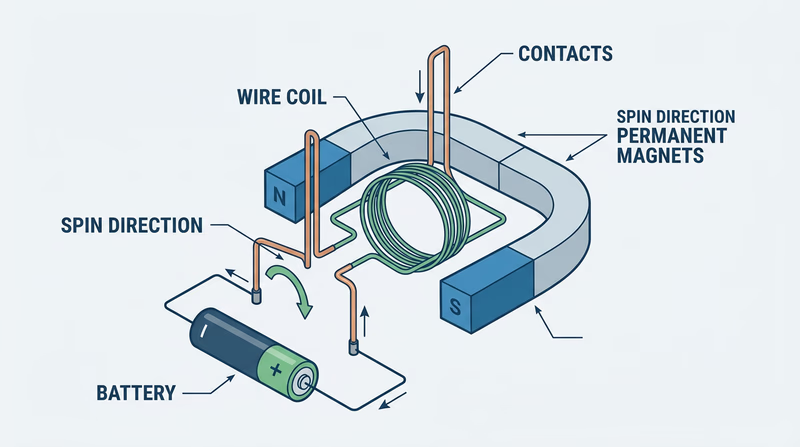
A basic classroom-style motor usually includes:
- battery or power source
- wire coil or armature
- magnets
- supports or contacts
- a way to keep current reversing or reconnecting at the right times
The exact design depends on whether you build from raw parts or use a kit, but the idea is the same: current in the coil interacts with a magnetic field and creates torque.
What to Watch For When It Runs
If your motor spins, even slowly, you have proven the principle. If it struggles, that is normal. Very simple motors are sensitive to balance, friction, contact quality, and battery strength.
Keys to a successful simple motor
Small details matter
- Keep the coil balanced so it can rotate freely.
- Use clean contacts so current reaches the coil reliably.
- Place the magnets correctly for strong interaction with the coil.
- Use a fresh battery because weak current can make the motor stall.
- Reduce friction anywhere the coil rests or turns.
What the Motor Teaches You
This project connects directly to Req 3 — Build an Electromagnet. In both cases, current creates magnetic force. The difference is that a motor uses that force in a repeating pattern so the motion continues instead of stopping after one pull.
Science Buddies — Build a Simple Electric Motor A step-by-step project explanation of how a simple motor works and what adjustments help it spin.