Req 10c — Build a Rheostat
A rheostat is a variable resistor. Instead of just turning a circuit on or off, it lets you change how much current flows. That makes it a great project for understanding control.
What a Rheostat Does
Resistance opposes current. When resistance increases, current decreases. When resistance decreases, current increases. A rheostat gives you a way to change that resistance on purpose.
In a simple demonstration circuit, a rheostat might make a bulb dim or brighten, or change the behavior of a buzzer or small motor.
Simple Build Idea
Many beginner rheostats use a resistive material and a movable contact. As the contact changes position, the length of resistive path in the circuit changes too. More resistive path means more resistance.
Even if your design is simple, your explanation should include the key point: the adjustable contact changes the effective resistance in the circuit.
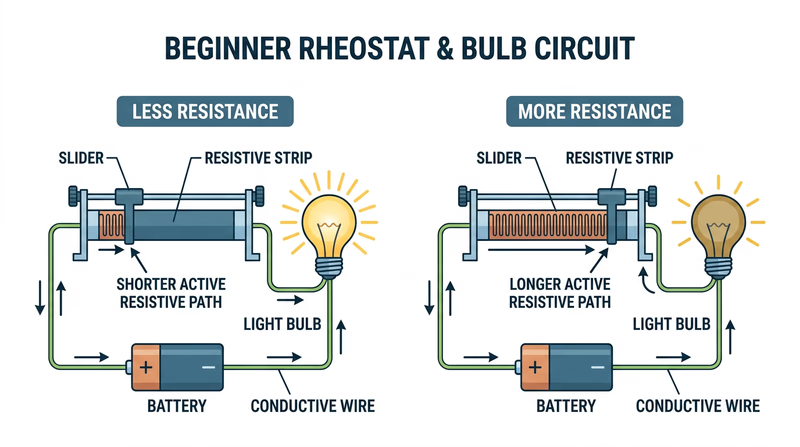
How to prove it works
Show the before-and-after effect clearly
- Set up a low-voltage circuit with your rheostat and a visible load.
- Start at one position and observe the load behavior.
- Move the contact to change the resistance.
- Observe the difference in brightness, sound, or speed.
- Explain why the change happened using the word resistance.
A rheostat is related to the resistance ideas from Req 9 — Essential Electrical Terms. This project lets you see that vocabulary turn into a real effect.