Req 10d — Single-Pole, Double-Throw Switch
A single-pole, double-throw (SPDT) switch has one input connection and two possible output connections. Instead of simply opening and closing a circuit, it chooses which of two paths the current will take.
What the Name Means
- Single-pole: one common input path.
- Double-throw: two possible output paths.
You can think of it like a railroad switch. One track comes in, but the switch sends the train onto one of two routes.
How to Demonstrate It
An easy way to show an SPDT switch working is to connect one battery source to the common terminal and two different loads to the two output terminals. When you flip the switch one way, load A works. Flip it the other way, and load B works.
That makes the switching action visible right away.
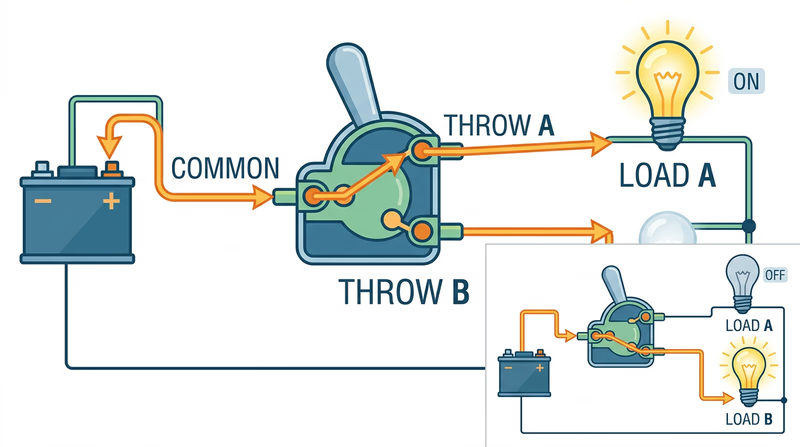
SPDT demonstration idea
Keep the routing obvious
- Connect the battery to the common side.
- Connect one load to throw A.
- Connect another load to throw B.
- Flip the switch to show current reaching only one load at a time.
- Explain which connection is common and which two are the alternate paths.
SPDT logic helps you understand more advanced switching ideas, including the 3-way lighting concept in Req 10e — How a 3-Way Switch Works.