Req 10e — How a 3-Way Switch Works
A 3-way lighting circuit lets two different switches control one light. That is useful in places like hallways, staircases, and large rooms with more than one entrance.
The Core Idea
A 3-way lighting setup uses two special switches. Each switch can connect its common terminal to one of two traveler wires. Depending on how both switches are positioned, the circuit to the light is either complete or broken.
That means either switch can change the state of the light. If the light is on, flipping either switch turns it off. If the light is off, flipping either switch turns it on.
Why It Works
A normal single-pole switch has only one path to open or close. A 3-way system uses two switching points and two traveler wires between them. The traveler wires act like alternate routes.
- If both switches connect through the same traveler path, the circuit is complete and the light turns on.
- If they connect through different paths, the circuit is broken and the light stays off.
This is really an application of SPDT switching logic from Req 10d — Single-Pole, Double-Throw Switch, just arranged so two switches work together.
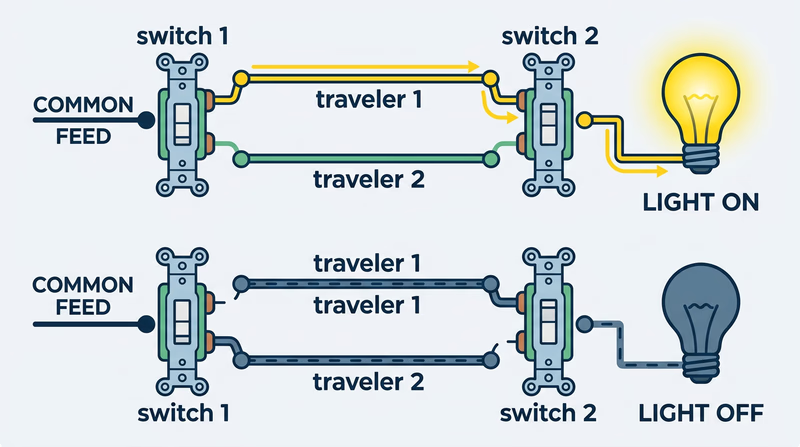
Best way to explain 3-way switching
Focus on path completion, not memorizing wire colors
- One light, two switches is the goal.
- Two traveler wires connect the switches.
- Each switch chooses a path for the current.
- Matching path = light on in a simple explanation model.
- Changing either switch changes whether the circuit is complete.