Req 10f — Series vs. Parallel Circuits
This option is one of the best hands-on lessons in the badge because it shows that wiring layout changes how a circuit behaves. You use the same battery, the same switch, and the same two lights — but you get very different results depending on whether the lights are in series or in parallel.
Series Circuit
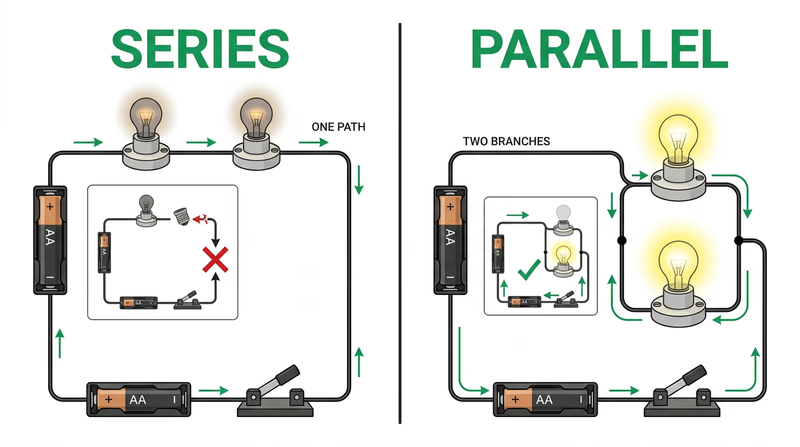
In a series circuit, the current has only one path. It must pass through the first light and then the second light before returning to the battery.
Because the two lights share the available voltage, they are often dimmer than a single light would be. If one bulb is removed or fails, the path is broken and both lights go out.
Parallel Circuit
In a parallel circuit, each light has its own branch path connected across the battery. The current can travel through either branch.
Each light gets the full battery voltage, so the bulbs usually shine brighter than they do in series. If one branch opens because one bulb fails or is removed, the other branch can still work.
What differences to discuss
These are the observations your counselor will want
- Brightness: series is usually dimmer; parallel is usually brighter.
- Number of paths: series has one path; parallel has multiple branches.
- Failure behavior: one failed bulb kills a series circuit but not the other branch of a parallel circuit.
- Real-world use: homes are wired more like parallel circuits so devices can work independently.
Why Homes Use Parallel Wiring
This requirement connects directly to household life. If your kitchen light burns out, your bedroom lights do not go dark too. That independence is one big advantage of parallel wiring.
Series circuits still matter, especially in demonstrations and some electronics, but for buildings, parallel wiring is usually much more practical.
Khan Academy — Series and Parallel Circuits A clear explanation of how circuit layout affects voltage, current paths, and what happens when components fail.