Req 11 — Electricity Careers
Every time you flipped a switch, traced a circuit, or talked about safety in this badge, you were touching skills that people use for their jobs every day. Electricity careers include hands-on trade work, utility system work, electronics, renewable energy, and engineering. Some paths start with apprenticeships. Others start with college, technical school, or military training.
Three Strong Career Examples
Electrician
Electricians install, maintain, and troubleshoot wiring, panels, lighting, controls, and equipment in homes, schools, businesses, and job sites. This path fits people who like practical problem-solving, tools, and working with real systems.
Power Line Worker
Line workers build and repair the systems that move electricity from substations to neighborhoods. It is physically demanding, safety-heavy work that often takes place outdoors and sometimes in bad weather.
Electrical Engineer or Electronics Technician
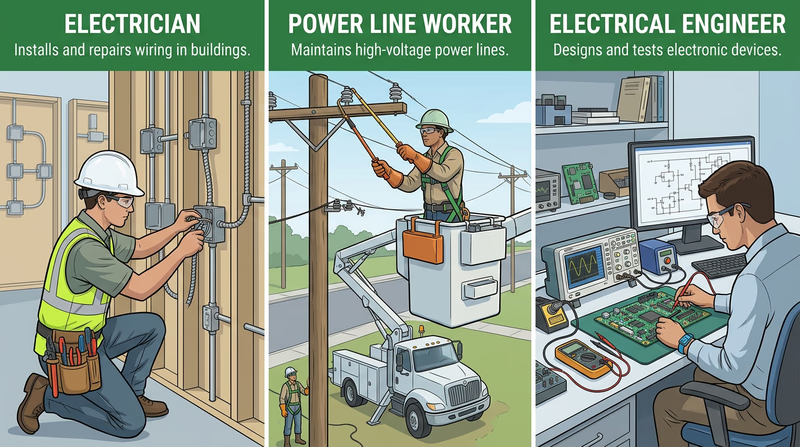
Electrical engineers and electronics technicians design, test, improve, or maintain devices and systems. Depending on the role, that might mean circuit boards, motors, solar systems, communications equipment, robotics, or industrial controls.
A Good Research Framework
Pick one career and organize your research around these questions:
Career research topics
Use these points to structure your counselor discussion
- Training path: apprenticeship, trade school, college, military, or employer training?
- Education needed: high school diploma, certificate, associate degree, or bachelor’s degree?
- Certification or licensing: state license, OSHA training, or specialty credentials?
- Experience and expenses: tools, tuition, books, fees, transportation, or unpaid training time?
- Job outlook and advancement: entry-level pay, long-term growth, and leadership opportunities?
Questions Worth Asking Yourself
As you research, do not just collect facts. Think about fit.
- Do you enjoy physical, hands-on work?
- Are you interested in math, design, and problem-solving?
- Would you rather work indoors, outdoors, or both?
- Do you want to build systems, maintain them, or design new ones?
This requirement is a great place to look back over the whole badge. If you loved the emergency and home-wiring parts, trade and utility careers might appeal to you. If you liked the motor, electromagnet, and circuit projects, electronics or engineering might be a better fit.
U.S. Bureau of Labor Statistics — Electrical and Electronics Occupations Career outlook information for electrical and electronics engineering, including education, pay, and job growth. U.S. Bureau of Labor Statistics — Electricians Career information for electricians, including training paths, wages, and outlook.