Req 5 — How an Electric Bell Works
An electric bell is a great badge example because it combines several ideas you already met: a battery provides current, a switch closes the circuit, and an electromagnet does mechanical work. Press the button and electricity turns into motion and sound almost instantly.
The Main Components
A basic battery-and-bell circuit usually includes these parts:
- Battery: provides the voltage that pushes current through the circuit.
- Wire: connects the parts into one continuous path.
- Switch or button: opens or closes the circuit.
- Electromagnet coil: becomes magnetic when current flows.
- Armature: a moving iron piece attracted by the electromagnet.
- Hammer or striker: attached to the armature and hits the bell.
- Bell or gong: the metal part that makes the sound.
- Contact screw or interrupter: breaks the circuit at the right moment so the armature can spring back.
How It Works Step by Step
When the switch is open, current cannot flow. Nothing moves.
When you close the switch, current flows from the battery through the wire and coil. The coil becomes an electromagnet and pulls the armature toward it. The striker hits the bell and makes a sound.
But the movement does something else too: it breaks the electrical contact at the interrupter. That stops the current. Without current, the coil loses magnetism. A spring or the armature’s own flexibility lets it move back to its starting point, which restores the contact. Current flows again, and the cycle repeats rapidly.
That repeating on-off cycle is why an electric bell can ring again and again while the button is held down.
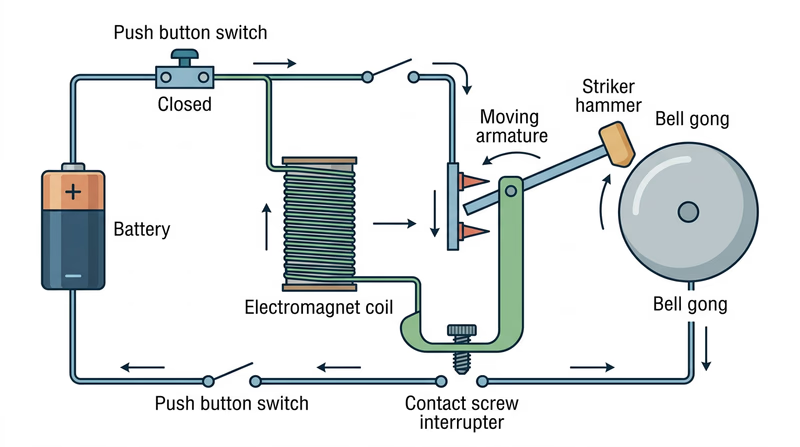
What your drawing should show
Focus on function, not artistic detail
- Power source: battery clearly labeled.
- Path: wires showing the circuit loop.
- Control: the switch or push button.
- Action part: coil, armature, striker, and bell.
- Interrupt point: where the moving armature opens and recloses the circuit.
Why Each Part Matters
The easiest way to explain the components to your counselor is by answering one question for each part: What job does it do?
The battery supplies energy. The wire gives current a path. The switch lets the user control the circuit. The coil turns electric current into magnetism. The armature turns magnetism into motion. The striker turns motion into sound. The bell amplifies the sound. The interrupter makes the action repeat.
That chain — energy to current to magnetism to motion to sound — is what makes this requirement so useful.
This requirement also connects directly to Req 3 — Build an Electromagnet. An electric bell is really an electromagnet project that has been turned into a practical device.
Britannica — Electric Bell A concise reference explaining the components and operating cycle of an electric bell.