Req 7 — Room Wiring Diagram
This requirement turns your home into a map-reading exercise. Instead of just using a room, you are learning to notice its electrical layout: where the loads are, how the switches control lighting, and which protective device serves each part of the room. That is the kind of observation that helps you understand a house as a system rather than a collection of separate gadgets.
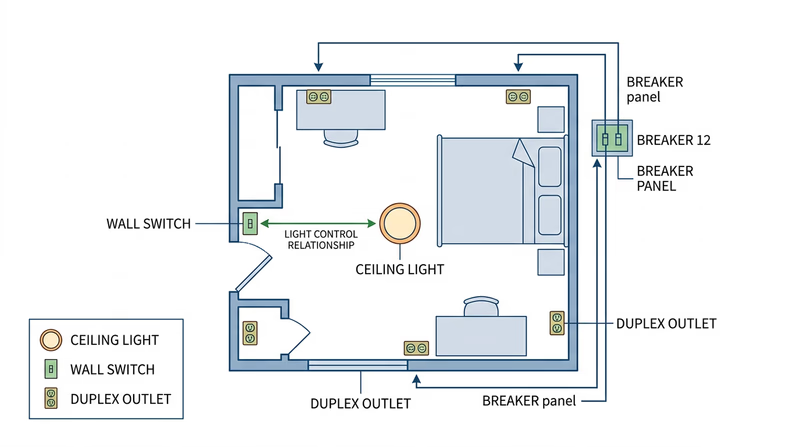
What a Good Diagram Includes
Your floor plan does not need to look like a professional blueprint. It does need to be clear enough that your counselor can follow it.
Include:
- the shape of the room,
- doors and windows for orientation,
- light fixtures,
- switches,
- wall outlets,
- special outlets if present, and
- the breaker or fuse number for each device or group.
If a switch controls a specific ceiling light or lamp outlet, show that connection with a simple line or note.
How to Build It Step by Step
Make your wiring diagram
A simple process works best
- Choose one room that is easy to observe safely.
- Sketch the room outline from a top-down view.
- Add fixed items like doors, windows, and closets so your diagram is easy to read.
- Mark every switch, outlet, and light fixture you can see.
- Test which switch controls which light by turning them on and off.
- Use your panel labels or family knowledge to identify the protecting breaker or fuse.
- Add labels neatly so the diagram is useful in discussion.
Tips for Identifying the Correct Breaker
Sometimes the panel labels are accurate and easy to use. Sometimes they are vague, like “front rooms” or “general outlets.” If you are working with an adult, you can identify the circuit by switching off one labeled breaker at a time and seeing which devices in the room lose power. Keep it safe and simple.
Do not take anything apart. You are only observing what turns off and on.
Why This Skill Matters
Knowing how a room is wired helps in real life. It makes troubleshooting easier when a light stops working, when a breaker trips, or when you are trying to avoid overloading a circuit. It also reinforces what you learned in Req 6 — Overloads, Fuses, and Breakers: every load in that room depends on a protective device somewhere upstream.
Family Handyman — Understanding Your Home's Electrical System A beginner-friendly overview of panels, circuits, outlets, and how home wiring is organized.