Req 8 — Reading Your Electric Bill
This requirement takes you from wires inside the house to the cost of the power coming into it. You will read a meter or bill, figure out how much energy was used, understand why the total is more than just the energy charge, and think about ways your family can conserve power without making life miserable.
Requirement 8a
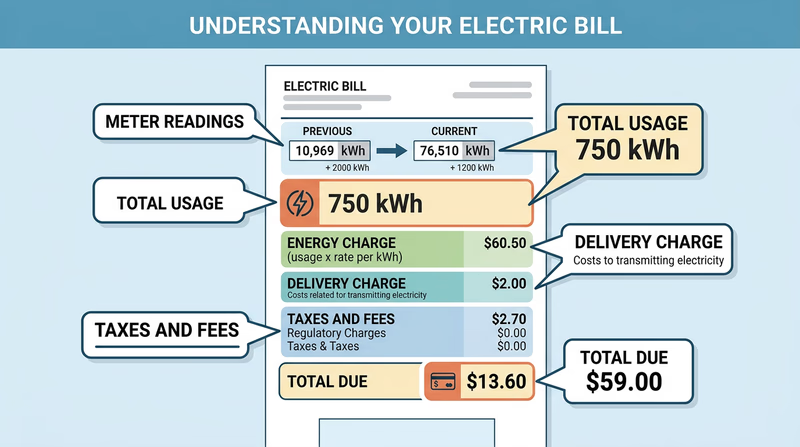
Most home electric bills measure energy, not just instant power. The usual unit is the kilowatt-hour (kWh). One kilowatt-hour means using 1,000 watts for one hour.
If your family used 750 kWh during a billing cycle and the energy rate was 15 cents per kWh, the energy portion of the bill would be:
750 × $0.15 = $112.50
If you are reading a meter directly, you are usually comparing the current reading to the previous reading. The difference tells you how much energy was used during that period.
Helpful reminder
- Power tells how fast energy is being used right now.
- Energy tells how much total electricity was used over time.
In everyday conversation, people often say “power bill,” but the bill mainly reflects energy consumption over the month.
Requirement 8b
The total on an electric bill is often larger than the energy-use line alone. Utilities may include:
- service charges for maintaining your account,
- delivery or transmission charges for bringing electricity to your home,
- fuel or generation adjustment charges that reflect changing production costs,
- local or state taxes, and
- public benefit or infrastructure fees that support programs or grid improvements.
These charges vary by state and utility, so your explanation should be based on the actual bill your family receives.
Requirement 8c
Energy conservation works best when it focuses on habits and high-impact devices. Good ideas usually save the most when they target things that run a lot, produce heat, or cool air.
Here are categories to think about with your family:
Five smart conservation strategies
Choose the ones that really fit your home
- Lighting: switch to LEDs and turn off lights in unused rooms.
- Heating and cooling: adjust the thermostat sensibly and keep filters clean.
- Hot water: take shorter hot showers and lower water-heater waste.
- Appliances: run dishwashers and laundry with full loads.
- Standby power: unplug unused chargers or use advanced power strips for electronics.
The strongest counselor discussion usually includes both what your family could do and what tradeoffs matter. For example, lowering the thermostat saves money, but comfort matters too. The real skill is balancing convenience, cost, and energy use.
U.S. Department of Energy — Energy Saver Practical home energy-saving advice covering lighting, heating and cooling, appliances, and everyday habits.