Req 1 — Safety Precautions
A short circuit can destroy a component in a fraction of a second. A soldering iron tip reaches over 600 degrees Fahrenheit. A capacitor can hold a dangerous charge long after a device has been unplugged. Electronics work is rewarding, but it demands respect for the real hazards involved. Understanding these precautions is not just a requirement — it is the foundation that makes everything else in this badge possible.
Electrical Hazards
Shock and Electrocution
Electric shock occurs when current flows through your body. The severity depends on the amount of current, the path it takes, and how long the exposure lasts. As little as 10 milliamps (0.01 amps) can cause painful muscle contractions. At 100 milliamps, the current can stop your heart.
- Never work on a live circuit. Always unplug devices or disconnect power before opening them up.
- Capacitors store charge. Large capacitors in televisions, monitors, and power supplies can hold a lethal charge for hours or even days after the device is unplugged. Never touch capacitor leads without properly discharging them first.
- Use one hand when possible. If current enters one hand and exits the other, it passes through your heart. Working with one hand behind your back (or in your pocket) is an old electrician’s trick that reduces this risk.
- Keep your work area dry. Water conducts electricity. Wet hands, damp floors, or spilled drinks near your workbench create a direct path for current to flow through your body.
Burns
Soldering irons operate between 600 and 800 degrees Fahrenheit. Burns are one of the most common injuries in electronics work.
- Always return the iron to its stand when you are not actively soldering.
- Never touch the tip or the metal barrel of a hot iron.
- Let solder joints cool before touching them — freshly soldered connections can cause blistering burns.
- Wear safety glasses. Solder can occasionally spit or splatter.
Fumes and Ventilation
When solder melts, the flux core releases fumes that can irritate your eyes, nose, and lungs. Lead-based solder (still used in many hobby applications) also releases small amounts of lead vapor.
- Work in a ventilated area. Open a window, use a fan to push fumes away from your face, or use a fume extractor.
- Wash your hands after handling solder, especially lead-based solder. Never eat or drink at your electronics workbench.
- Consider lead-free solder — it is slightly harder to work with, but it eliminates lead exposure.
Component Protection
Electronics safety is not just about protecting yourself — it is also about protecting the components you are working with.
Electrostatic Discharge (ESD)
Static electricity that you barely feel — the kind that shocks you when you touch a doorknob — carries thousands of volts. That tiny spark can permanently destroy sensitive components like integrated circuits and transistors.
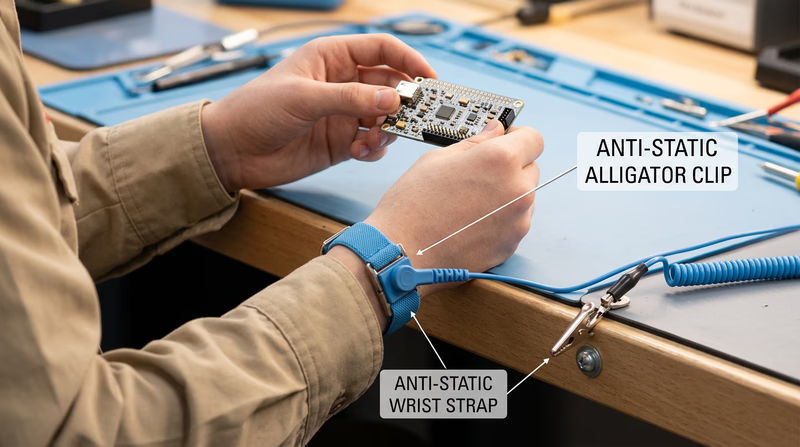
- Use an anti-static wrist strap connected to a grounded surface when handling sensitive components.
- Touch a grounded metal object before reaching into a bag of components.
- Store sensitive parts in anti-static bags (the gray or pink bags components come in).
- Avoid working on carpet — shuffling your feet on carpet generates significant static charge.
Heat Damage
Excessive heat from a soldering iron can destroy components before you even finish assembling your circuit. You will learn specific techniques for preventing heat damage in Req 3b, but the general rule is simple: get the solder joint done quickly and move on.
Polarity and Voltage
Many components are polarized — they must be installed in the correct direction. Inserting an LED, electrolytic capacitor, or diode backwards can destroy it instantly or cause it to fail later.
- Check polarity markings before inserting components. Look for flat edges on LEDs, stripe markings on diodes, and plus/minus markings on capacitors.
- Double-check voltage ratings. Applying too much voltage to a component rated for a lower value will damage or destroy it.
Workspace Safety
Safe Electronics Workspace
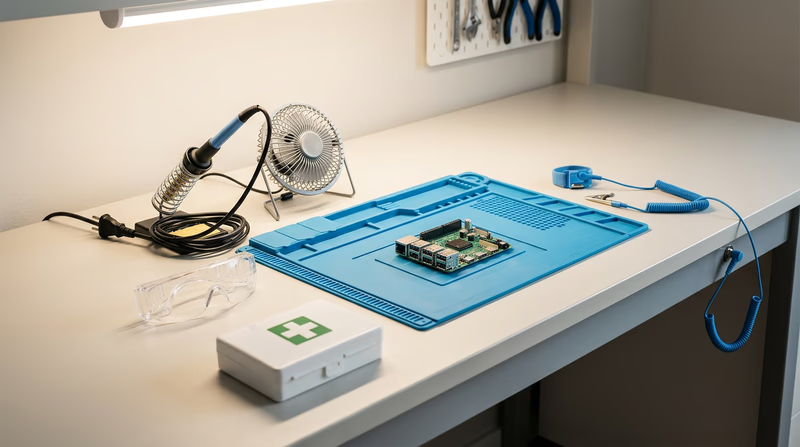
Set up your workbench for safe, productive work
- Well-lit work surface: Good lighting prevents mistakes and eye strain.
- Ventilation: A small fan or fume extractor positioned to carry fumes away from your face.
- Heat-resistant surface: A silicone soldering mat or ceramic tile protects your table.
- Organized tools: Each tool has a designated spot so you never reach blindly.
- Clear of clutter: Stray wires, loose components, and drinks do not belong near active circuits.
- Fire extinguisher nearby: A Class C extinguisher (rated for electrical fires) should be within reach.
- First-aid kit: Burns are the most common electronics injury — have burn gel and bandages ready.