 Getting Started
Introduction & Overview
Emergencies don’t send invitations. Fires, floods, tornadoes, and accidents can strike anyone, anywhere, at any time. The Emergency Preparedness merit badge teaches you how to think, plan, and act before, during, and after a crisis — so you can protect yourself, your family, and your community when it matters most.
Emergency preparedness is one of the core principles of Scouting. The Scout motto — “Be Prepared” — was written with exactly this kind of readiness in mind. This badge takes that motto and turns it into real-world skills you will carry for the rest of your life.
Then and Now
Then — Disaster by Instinct
For most of human history, people responded to emergencies by instinct alone. When a fire broke out, you ran. When a flood came, you climbed. When someone was injured, you did whatever came to mind. There were no emergency plans, no 911, no organized disaster response. Communities relied on each other, but preparation was rare and survival was uncertain.
- Purpose: React and survive
- Mindset: Hope for the best, deal with what comes
Now — Prepared by Design
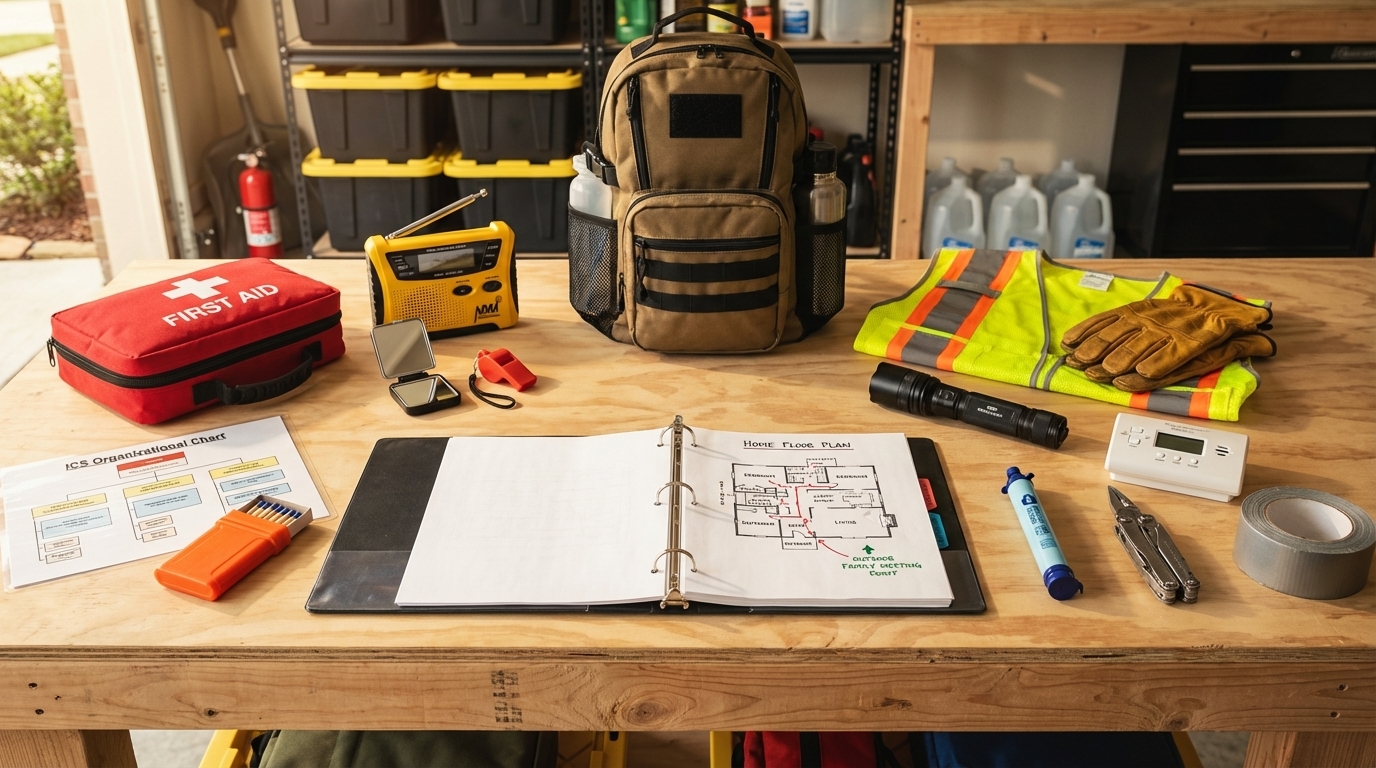
Today, emergency preparedness is a science. Governments, communities, and families create detailed plans to prevent, respond to, and recover from disasters. We have early warning systems, trained first responders, disaster kits, and national frameworks like NIMS and ICS that coordinate responses across entire regions. Being prepared is no longer about luck — it is about planning.
- Purpose: Prevent harm, protect lives, and recover faster
- Mindset: Think ahead, plan thoroughly, act decisively
Get Ready! The skills you learn in this badge could save a life — maybe even your own. All it takes is the willingness to learn, plan, and practice. Let’s get started.
Kinds of Emergencies
Emergencies come in many forms. Understanding the different categories helps you prepare for the wide range of situations you might face.
Natural Disasters
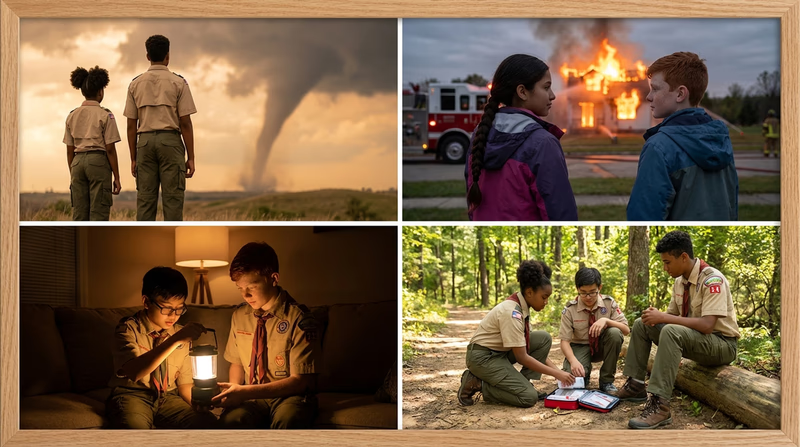
Nature is powerful and unpredictable. Tornadoes, hurricanes, earthquakes, floods, wildfires, and blizzards can cause widespread destruction. These events often affect entire communities and require coordinated response efforts.
Human-Caused Emergencies
Some emergencies are the result of human actions — whether accidental or intentional. House fires caused by cooking mistakes, automobile crashes, chemical spills, and acts of violence all fall into this category. Many of these can be prevented with awareness and planning.
Technological Emergencies
Power outages, gas leaks, nuclear plant incidents, and toxic chemical releases are examples of technological emergencies. These events often require specialized knowledge to respond safely — and sometimes the best response is to evacuate immediately.
Personal and Household Emergencies
Not every emergency makes the news. Food poisoning, a kitchen fire, a family member’s medical crisis, or getting lost in the backcountry — these personal emergencies demand the same level of preparedness and clear thinking as any large-scale disaster.
Now let’s explore the requirements for the Emergency Preparedness merit badge!