Extended Learning
A. Introduction
Congratulations — you have completed the Emergency Preparedness merit badge! You now have a framework for thinking about emergencies that most adults never learn. But emergency preparedness is not a one-time event. It is a lifelong practice of awareness, planning, and readiness. The resources below will help you take your skills to the next level.
B. Deep Dive: Community Emergency Response Teams (CERT)
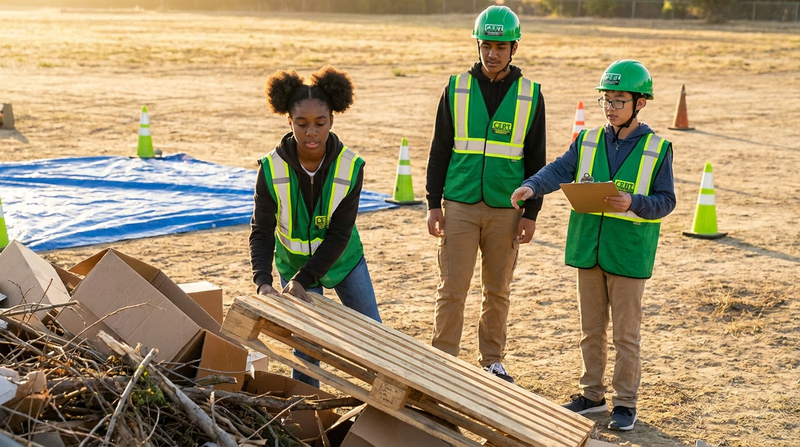
CERT is one of the best programs available for young people who want to go beyond the merit badge. Sponsored by FEMA and run by local fire departments, CERT trains civilians to help their neighbors during the critical hours between a disaster and the arrival of professional responders.
What you learn in CERT:
- Light search and rescue techniques
- Basic fire suppression with extinguishers
- Disaster medical operations (triage, first aid under pressure)
- Team organization using ICS principles
- Disaster psychology — helping people cope with stress and fear
How to get involved:
- Search for “CERT program” + your city or county name
- Many programs accept participants as young as 15 (Teen CERT programs)
- Training is typically free and runs over several weekends
- After training, you become a registered CERT volunteer in your community
C. Deep Dive: Emergency Communication
When disaster strikes, cell networks and the internet are often the first systems to fail. Understanding alternative communication methods is a valuable skill that extends far beyond this merit badge.
Amateur (Ham) Radio
Ham radio operators are often called “the communicators of last resort.” During hurricanes, earthquakes, and other major disasters, ham radio provides a reliable communication network when everything else goes dark.
- Getting started: You need to pass an exam to get your license (Technician class is the entry level). Study guides and practice exams are available free online.
- Cost: A basic handheld radio costs $25-$50. More capable base stations range from $200-$1,000.
- Organizations: The Amateur Radio Relay League (ARRL) is the national organization for ham radio operators. Many local clubs offer free classes and exam sessions.
NOAA Weather Radio
A dedicated weather radio receives continuous broadcasts from the National Weather Service, including severe weather warnings, watches, and emergency alerts. Every household should have one.
Wireless Emergency Alerts (WEA)
Your cell phone can receive WEA messages — those loud alerts about severe weather, AMBER alerts, and presidential alerts. Make sure this feature is enabled on your phone.
D. Real-World Experiences
FEMA Youth Preparedness Program
Red Cross Disaster Volunteering
National Weather Service Skywarn Spotter Training
Stop the Bleed Training
E. Deep Dive: Building Community Resilience
Community resilience is the ability of a community to prepare for, absorb, recover from, and adapt to adverse events. Scouts play a unique role in building resilience because of their training, their organization, and their values.
How Scouts build community resilience:
- Teaching others: Share what you have learned with younger Scouts, your school, or your neighborhood. A family preparedness workshop is an excellent Eagle Scout project idea.
- Volunteering: Join local emergency response teams, volunteer at shelters, or assist with community disaster drills.
- Leading by example: When your neighbors see a young person who is prepared and knowledgeable, it inspires them to prepare too.
- Staying current: Emergency preparedness evolves. New threats emerge (cyberattacks, pandemics), new technologies help (drones for search and rescue, AI for disaster prediction), and best practices change. Stay informed.
F. Organizations
The federal agency responsible for coordinating disaster preparedness, response, and recovery across the United States. FEMA offers free training courses, including the CERT program.
Provides disaster relief, emergency shelter, first aid training, and blood services. The Red Cross is often the first nonprofit on the scene after a disaster.
FEMA’s public-facing preparedness website with guides for building emergency kits, making family plans, and preparing for specific disaster types.
Provides weather forecasts, warnings, and emergency alerts. Their Skywarn program trains volunteer severe weather spotters across the country.
A FEMA-supported program that trains civilians in basic disaster response skills — fire safety, light search and rescue, team organization, and disaster medical operations.
The national association for amateur radio operators. ARRL supports emergency communication, education, and licensing for ham radio enthusiasts of all ages.
A coalition of organizations that coordinate planning, mitigation, response, and recovery efforts during disasters. Members include the Red Cross, Salvation Army, and many faith-based organizations.