Req 1a — Five Aspects of Emergency Preparedness
Before you can prepare for an emergency, you need a framework — a way of thinking about emergencies that covers every angle. The five aspects of emergency preparedness give you that framework. Think of them as five lenses you can use to examine any emergency situation, from a kitchen fire to a hurricane.
These five aspects are not random — they follow the logical order of a crisis. Some happen before the emergency, some during, and some after. Together, they create a complete picture of what it means to be truly prepared.
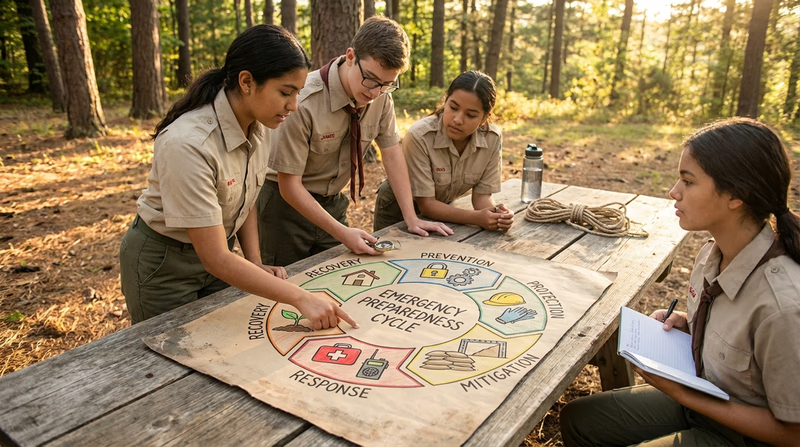
1. Prevention — Stop It Before It Starts
Prevention means taking action to avoid an emergency in the first place. This is always your first and best line of defense. Many emergencies — especially human-caused ones — can be prevented entirely with awareness and good habits.
Key questions to ask yourself:
- What could go wrong in this situation?
- What actions can I take right now to stop this from happening?
- Are there hazards I can remove or reduce?
Examples:
- Installing and testing smoke detectors prevents undetected fires.
- Storing flammable liquids away from heat sources prevents accidental ignition.
- Wearing a seatbelt prevents injuries in a crash.
- Checking weather forecasts before a hike prevents getting caught in a storm.
2. Protection — Shield Yourself and Others
Protection means putting safeguards in place that reduce the chance of harm if an emergency does occur. While prevention tries to stop the event, protection prepares you to survive it.
Key questions to ask yourself:
- If this emergency happens, what will protect me and my family?
- What equipment, structures, or systems are in place to keep people safe?
- What protective actions should I take right now?
Examples:
- A storm shelter protects your family during a tornado.
- Fire-resistant building materials protect a home from wildfire.
- Life jackets protect boaters during a capsizing.
- Helmets and proper gear protect you during outdoor activities.
3. Mitigation — Reduce the Damage
Mitigation means taking steps to reduce the severity of an emergency’s impact. Even when you cannot prevent an emergency or fully protect against it, you can lessen the damage it causes.
Key questions to ask yourself:
- If this emergency happens, what actions can reduce the harm?
- How can I minimize property damage, injuries, or loss of resources?
- What long-term steps can be taken to reduce future risk?
Examples:
- Elevating a home in a flood zone mitigates flood damage.
- Trimming trees near power lines mitigates storm-related outages.
- Learning CPR mitigates the impact of a cardiac emergency.
- Keeping a fire extinguisher in the kitchen mitigates the spread of a cooking fire.
4. Response — Act When It Happens
Response is what you do during and immediately after an emergency. This is the moment when your training, planning, and preparation pay off. A good response saves lives and prevents a bad situation from getting worse.
Key questions to ask yourself:
- What should I do first?
- Who needs help, and how can I help them safely?
- Who should I contact for professional assistance?
- What is my role in this situation?
Examples:
- Calling 911 is often the most important first response.
- Evacuating a building during a fire is a response action.
- Administering first aid to an injured person is a response.
- Following your family’s shelter-in-place plan during a chemical spill is a response.
5. Recovery — Get Back on Your Feet
Recovery is everything that happens after the immediate danger has passed. It is the process of returning to normal — or building a new normal. Recovery can take hours, days, or even years depending on the severity of the emergency.
Key questions to ask yourself:
- What are the immediate needs of those affected?
- How do we restore safety, shelter, and basic services?
- What can we learn from this emergency to be better prepared next time?
- What emotional or psychological support might people need?
Examples:
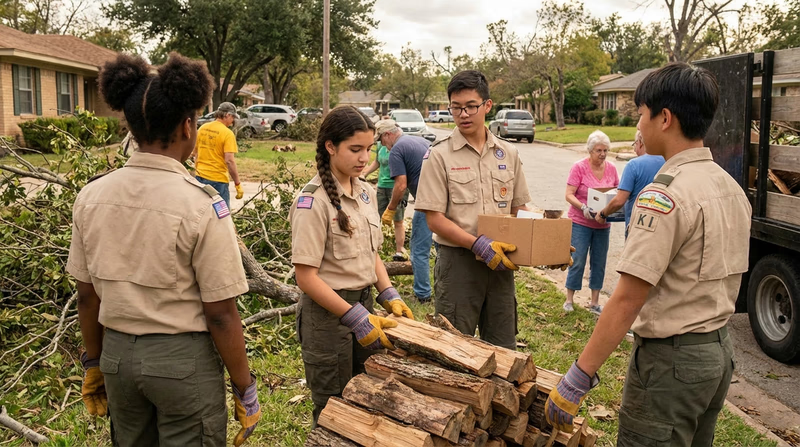
- Cleaning up debris after a storm is part of recovery.
- Filing insurance claims after property damage is part of recovery.
- Conducting an after-action review to learn what went right and wrong is recovery.
- Providing emotional support to those affected by a traumatic event is recovery.
Putting It All Together
These five aspects are not separate steps that happen one at a time. They overlap and reinforce each other. A strong emergency plan addresses all five:
| Aspect | When | Focus |
|---|---|---|
| Prevention | Before | Stop the emergency from happening |
| Protection | Before | Shield people and property |
| Mitigation | Before & During | Reduce the damage |
| Response | During | Take action to save lives |
| Recovery | After | Restore and rebuild |