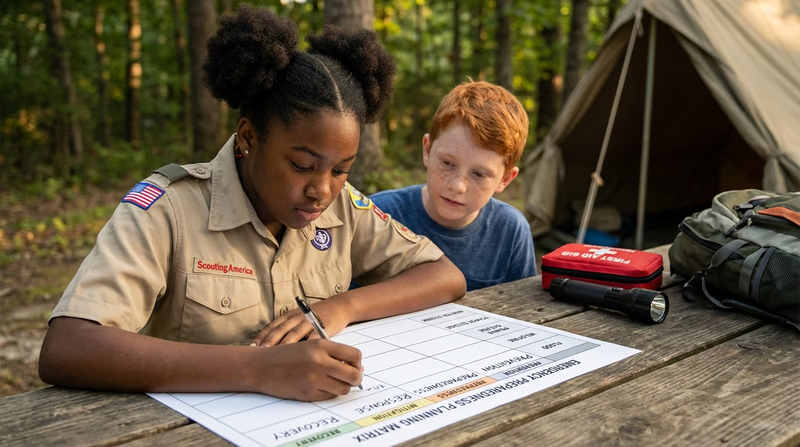
Req 1b — 10 Emergency Scenarios
This is one of the biggest requirements in the merit badge — and one of the most important. You will choose 10 emergency situations from the list of 21 below and analyze each one through the five aspects you learned in Requirement 1a: Prevention, Protection, Mitigation, Response, and Recovery.
The goal is not to memorize a list of answers. The goal is to build a way of thinking that you can apply to any emergency — even ones not on this list.
Building Your Chart
Your chart should have six columns:
| Emergency Situation | Prevention | Protection | Mitigation | Response | Recovery |
|---|---|---|---|---|---|
| (scenario name) | What can stop this from happening? | What safeguards protect people? | How can damage be reduced? | What do you do when it happens? | How do you get back to normal? |
You can use a spreadsheet, a poster, a notebook — whatever works for you and your counselor. The key is to think through each column for each scenario.
The 21 Emergency Scenarios
Below are all 21 scenarios organized by category. Choose any 10 to include in your chart. The brief guidance for each scenario will help you think through the five aspects — but remember, your chart should reflect your own thinking and research.
Fire Emergencies
1. Home Stovetop or Oven Fire
Kitchen fires are the number one cause of home fires. Grease fires are especially dangerous because water makes them worse. Know the difference between grease fires and other cooking fires — the response is completely different.
Think about: What causes most kitchen fires? What type of fire extinguisher works on grease? Why should you never throw water on a grease fire?
2. Home Flammable Liquid Fire
Flammable liquids — gasoline, paint thinner, lighter fluid — can ignite quickly and burn intensely. These fires spread fast and produce toxic fumes. Proper storage is the key to prevention.
Think about: Where should flammable liquids be stored? What type of fire extinguisher is rated for flammable liquid fires (Class B)? Why is ventilation important?
12. Fire or Explosion in a Public Place
Fires in public buildings — malls, schools, theaters — create unique dangers because of crowds and unfamiliar layouts. Knowing where exits are before an emergency begins is critical.
Think about: Why should you always locate exits when entering a public building? What does “run, hide, fight” mean in this context? How do stampedes happen, and how can they be avoided?
14. Wildland Fire
Wildfires can move faster than a person can run, especially when driven by wind. They destroy homes, ecosystems, and communities. Defensible space around homes and early evacuation are lifesavers.
Think about: What is “defensible space” and why does it matter? When should you evacuate versus shelter in place? What causes most wildfires?
Weather & Natural Disaster Emergencies
15. Avalanche (Snowslide or Rockslide)
Avalanches can bury a person in seconds. In mountainous winter terrain, understanding avalanche conditions and carrying the right gear can mean the difference between life and death.
Think about: What conditions cause avalanches? What equipment should you carry in avalanche country (beacon, probe, shovel)? What should you do if caught in an avalanche?
16. Earthquake
Earthquakes strike without warning. Buildings can collapse, roads can crack, and aftershocks can continue for days. Knowing what to do in the first few seconds is critical.
Think about: What does “Drop, Cover, and Hold On” mean? Why should you stay away from windows? What should you do after the shaking stops?
17. Tsunami
Tsunamis are triggered by underwater earthquakes or volcanic eruptions. A wave can travel across an ocean at jet speed and arrive with little warning. Coastal communities must know the signs and evacuation routes.
Think about: What natural warnings signal a tsunami (ocean suddenly recedes)? How high should you go to be safe? Why is speed more important than distance?
18. Major Flooding or Flash Flood with Water Outage
Floods are the most common natural disaster in the United States. Flash floods can develop in minutes. Just six inches of moving water can knock you off your feet, and two feet can carry away a vehicle.
Think about: Why should you never walk or drive through floodwater? Where is the safest place during a flood? How do you purify water if the supply is contaminated?
19. Hurricane with Power Outage
Hurricanes bring sustained winds, torrential rain, storm surge, and often tornadoes. Power outages can last for days or weeks. Preparation before the storm arrives is essential.
Think about: When should you evacuate versus shelter in place? What supplies do you need for an extended power outage? Why is storm surge often more dangerous than wind?
20. Tornado
Tornadoes can form in minutes and destroy entire neighborhoods in seconds. They are most common in “Tornado Alley” but can occur anywhere. Knowing where to shelter is the most important thing you can do.
Think about: Where is the safest place in your home during a tornado? Why should you avoid windows? What is the difference between a tornado watch and a tornado warning?
21. Lightning Storm
Lightning kills about 20 people per year in the United States and injures hundreds more. Most lightning deaths happen outdoors, and many are preventable.
Think about: What is the 30/30 rule for lightning safety? Where should you go if you are caught in the open? Why are open fields, hilltops, and tall trees dangerous?
Vehicle & Travel Emergencies
5. Automobile Crash
Car crashes are a leading cause of death for young people. Knowing how to respond at the scene — checking for injuries, calling 911, and avoiding further danger — can save lives.
Think about: What should you do first at a crash scene? When is it safe to move an injured person? Why should you turn off the vehicle’s engine?
6. Vehicle Stalled in the Desert
A stalled vehicle in the desert puts you at risk of dehydration, heat stroke, and exposure. The vehicle itself is your best shelter — it provides shade, is visible to rescuers, and stores supplies.
Think about: Why should you stay with your vehicle? How much water does a person need in desert heat? What signals can you use to attract attention?
7. Vehicle Trapped in a Blizzard
Getting trapped in a blizzard can happen suddenly. Visibility drops to zero, roads become impassable, and temperatures plummet. Your vehicle becomes your shelter — but carbon monoxide from a running engine is a deadly risk.
Think about: Why should you crack a window if running the engine for heat? What supplies should you carry in your car during winter? How do you signal for help in a whiteout?
Outdoor & Backcountry Emergencies
8. Backcountry Injury
Injuries in the backcountry — sprains, fractures, snake bites, allergic reactions — are complicated by the fact that you may be hours from medical help. Self-reliance and a well-stocked first aid kit are essential.
Think about: What should your backcountry first aid kit include? When should you try to hike out versus stay and signal for help? How do you stabilize a fracture with improvised materials?
9. Boating or Water Accident
Capsizing, falling overboard, or swamping a boat can lead to drowning, hypothermia, or being stranded on the water. Life jackets save lives — but only if you are wearing one.
Think about: Why should you always wear a life jacket? What should you do if your boat capsizes? How does cold water affect your ability to swim?
Preventing and Managing Boating Accidents Learn the proper response to capsizing, swamping, and falling overboard.Chemical, Toxic & Technological Emergencies
3. Gas Leak in or Near a Home
Natural gas is odorless, but utility companies add a rotten-egg smell (mercaptan) so you can detect leaks. A gas leak can cause an explosion, fire, or suffocation. Knowing the signs and response is critical.
Think about: What does a gas leak smell like? What should you avoid doing (no flames, no light switches)? How do you turn off the main gas valve?
10. Toxic Chemical Spills and Releases
Chemical spills can occur at industrial facilities, during transportation, or even in your home with household cleaners. Toxic fumes can be invisible and deadly.
Think about: What household chemicals should never be mixed? How do you shelter in place during a chemical release? What does an emergency broadcast tell you to do?
11. Nuclear Power Plant Emergency
Nuclear emergencies are rare, but communities near nuclear plants must have evacuation plans in place. Radiation is invisible and requires specialized detection equipment.
Think about: How far is the nearest nuclear power plant from your home? What does “shelter in place” mean during a nuclear emergency? What is potassium iodide and when is it used?
Personal Safety Emergencies
4. Food Poisoning
Food poisoning affects millions of people every year. Improper food handling, storage, and cooking temperatures are the most common causes. Prevention through safe food practices is the best defense.
Think about: What temperature kills most harmful bacteria? How long can perishable food sit at room temperature? What are the signs of food poisoning and when should you seek medical help?
13. Violence in a Public Place
Active violence situations are terrifying but survivable. The “Run, Hide, Fight” framework gives you a clear decision tree. Awareness of your surroundings is your most important tool.
Think about: What are the three options in “Run, Hide, Fight” and in what order should you consider them? Why is knowing the exits in any building important? How can you help others while keeping yourself safe?